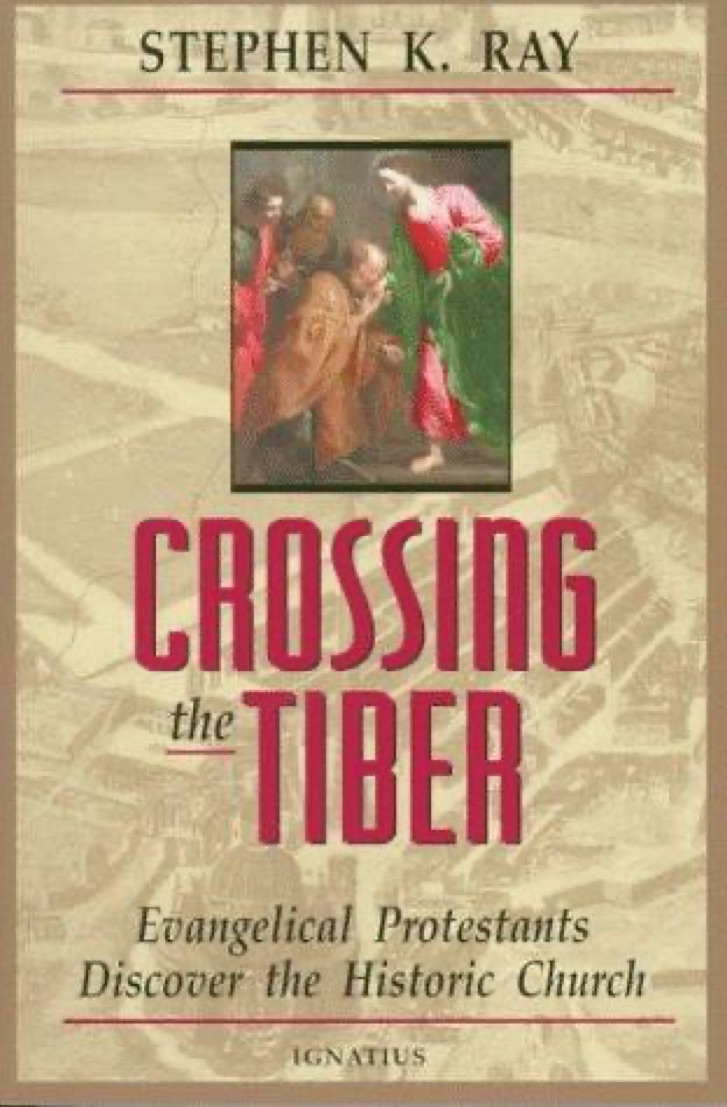
Crossing the Tiber: Evangelical Protestants Discover the Historical Church
Applying the lessons from "Crossing the Tiber: Evangelical Protestants Discover the Historical Church" by Stephen K. Ray to your life can be a transformative exercise in intellectual rigor and the pursuit of objective truth. Here are some ways you might integrate these lessons:
-
Commit to Deep Due Diligence: - Just as Ray refused to accept surface-level explanations of history, you should apply a high standard of research to your own professional and personal transitions. Whether you are vetting a new healthcare venture or a legal strategy, look past the prevailing narrative to examine primary sources and original data before making a definitive move.
-
Challenge Your Foundational Assumptions: - Ray’s journey was fueled by a willingness to question the "Sola Scriptura" framework he had lived in for decades. In leadership and entrepreneurship, you must periodically audit your most basic operating assumptions—the things you take for granted as "just the way it is"—to ensure they still hold up under scrutiny in a changing market or environment.
-
Value Historical Continuity and Legacy: - The book emphasizes that new innovations should be grounded in a respect for what came before. In your roles as a pilot or physician, you can respect the "checklists" and traditions of the past while seeking to improve them, recognizing that true progress is built upon the successes and failures of those who paved the way.
-
Prioritize Unity and Structural Integrity: - Ray realized that without a central authority, fragmentation is inevitable; this is a vital lesson for a serial entrepreneur. When building organizations like NextCare or MeMD, you understand that clear leadership and a unified vision are essential to prevent the "theological drift" or mission creep that can dismantle even the most successful companies.
-
Maintain Integrity Under Pressure: - Crossing the Tiber involved significant social and familial risk for Ray, yet he prioritized his convictions over his comfort. You can apply this by standing firm in your ethical and professional principles, even when those decisions are unpopular or require a difficult pivot from a long-held career path.
-
The Role of Mentorship and Ancestry: - Ray found guidance in the "Early Church Fathers," treating them as mentors across time. You should cultivate a "personal board of directors"—both living mentors and historical figures—whose wisdom can provide a stabilizing perspective when you are navigating the complexities of law, medicine, or venture capital.
By integrating these lessons, you reinforce a life of "Stay Hungry, Stay Humble" by acknowledging that no matter how much you have achieved, there is always a deeper layer of truth to uncover. Embracing the discomfort of a paradigm shift when the evidence demands it is the hallmark of a true lifelong learner, leading to a more grounded and authentic existence across all your personal and professional endeavors.
What the book covers
"Crossing the Tiber: Evangelical Protestants Discover the Historical Church" by Stephen K. Ray is a deeply researched and personal exploration of the theological and historical foundations of the Catholic faith. Ray, a former devout Evangelical Baptist, recounts his family’s conversion to Roman Catholicism after a rigorous, multi-year investigation into the writings of the Early Church Fathers and the origins of Christian doctrine. The book serves as both a memoir of spiritual transformation and a dense apologetic work that challenges the premises of the Reformation while defending the historical continuity of the Catholic Church.
Summary:
-
The Catalyst for Investigation: - Stephen Ray begins by detailing his deep roots in the Baptist tradition and his initial hostility toward Catholic teaching, which he viewed as unscriptural and laden with man-made tradition. His journey started when a close friend converted to Catholicism, prompting Ray to set out on a mission to prove his friend wrong using only the Bible and historical evidence. - This section highlights the intellectual honesty required to question one’s foundational worldview when presented with anomalies or contradictions. Ray describes how he and his wife committed to following the truth regardless of the personal, social, or professional costs, emphasizing that a search for truth must be exhaustive and uncompromising.
-
The Collapse of Sola Scriptura: - A major turning point in the book is Ray’s examination of the Protestant doctrine of Sola Scriptura (Scripture alone) and its historical viability. He argues that the early Christians did not have a completed New Testament for several centuries and instead relied on Oral Tradition and the authority of the apostolic succession to maintain the integrity of the Gospel. - Ray posits that the Bible itself points toward the Church as the "pillar and foundation of the truth," suggesting that the authority to interpret Scripture must reside within a continuous, visible institution rather than individual interpretation. This realization forced him to reconcile his reliance on the Bible with the historical reality of how the Bible was canonized.
-
The Witness of the Early Church Fathers: - Ray dedicates a significant portion of the book to the writings of the Ante-Nicene Fathers, such as Ignatius of Antioch, Clement of Rome, and Justin Martyr. He discovers that these early leaders held views on the priesthood, the Eucharist, and church hierarchy that were remarkably Catholic in nature and predated the Middle Ages. - By analyzing these primary sources, Ray demonstrates that the "Early Church" often cited by Evangelicals actually practiced a sacramental and liturgical form of worship. This historical discovery shattered his previous assumption that the Catholic Church was a later corruption of a simpler, non-sacramental primitive Christianity.
-
The Sacraments of Baptism and the Eucharist: - The book provides an in-depth analysis of Baptism and the Eucharist, contrasting the symbolic view of his Baptist upbringing with the sacramental realism of the historical Church. Ray examines the Greek text of the New Testament and the writings of the first centuries to argue for the Real Presence of Christ in the Eucharist. - He explores the concept of Baptismal Regeneration, arguing that the early Christians viewed baptism not just as an outward sign of an inward grace, but as a transformative event. This shift in understanding was pivotal in his decision to leave the Baptist denomination and seek entry into the Catholic Church.
-
The Petrine Office and Unity: - Ray addresses the role of the Papacy, tracing the development of the Bishop of Rome’s authority from the Apostle Peter through the early centuries. He argues that a visible, unified Church requires a visible head to prevent the theological fragmentation he observed within the thousands of Protestant denominations. - He concludes that the unity of the Church is not merely spiritual or invisible, but a tangible reality intended by Christ. This drive for unity and historical continuity becomes the final bridge he must cross to enter the Catholic fold.
Ultimately, Ray’s work stands as a testament to the power of historical inquiry and the pursuit of intellectual consistency. It invites readers to look beyond contemporary religious divisions and engage directly with the primary sources of Western Christian history to find a coherent and ancient foundation for faith.