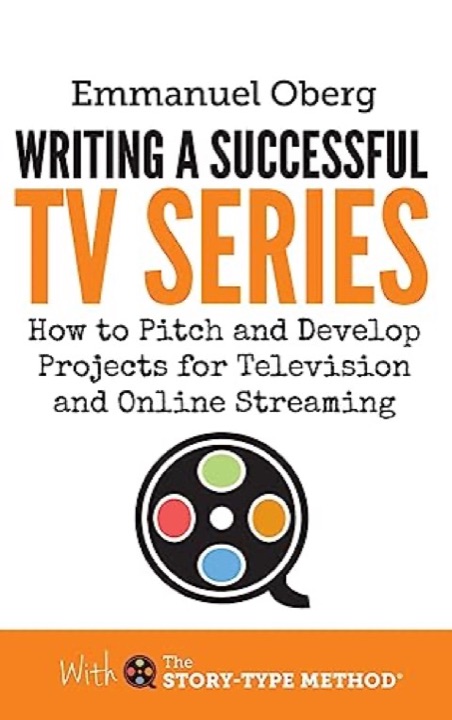
Writing a Successful TV Series: How to Pitch and Develop Projects for Television and Online Streaming
Applying the lessons from "Writing a Successful TV Series: How to Pitch and Develop Projects for Television and Online Streaming" by Emmanuel Oberg to your life can be a masterclass in strategic planning, persuasion, and the management of complex, long-term projects. Here are some ways you might integrate these lessons:
- Master the "Story Engine" of Your Ventures: - In any entrepreneurial project or clinical initiative, you must identify the "engine"—the core value proposition and repeatable processes—that will sustain the project over time. Just as Oberg warns against a series that runs out of steam, you should ensure your business models have the internal mechanics to remain relevant and generative beyond the initial launch phase.
- Utilize the "Bible" Concept for Leadership: - Whether in law, medicine, or aviation, clarity is paramount; you can adopt the "Series Bible" approach by creating comprehensive, foundational documents for your organizations. By articulating the mission, the "characters" (team roles), and the long-term roadmap with the same precision Oberg demands of a showrunner, you ensure total alignment across your team.
- Apply the Story-Type Method to Communication: - Improve your bedside manner or boardroom presence by identifying whether a situation is character-led (focused on people’s needs), plot-led (focused on the sequence of events), or theme-led (focused on underlying values). Tailoring your communication style to the "type" of interaction required allows you to connect more effectively with patients, clients, and investors.
- Perfect Your Professional Pitch: - Use Oberg’s pitching frameworks to refine how you present new ideas to venture capitalists or stakeholders. Focus on the "hook" and the sustainability of your proposal, ensuring you can explain not just why an idea is good today, but how it will scale and evolve in the future, much like a series that promises multiple seasons of growth.
- Navigate High-Stakes Environments with Structure: - In fields like emergency medicine or aviation where pressure is high, relying on a proven methodology—like the Story-Type Method—can reduce cognitive load. By having a structured way to analyze "narratives" or situations, you can make faster, more accurate decisions when the stakes are high and the situation is changing in real-time.
- Embrace Serialized Growth: - Shift your mindset from "one-off" accomplishments to serialized growth. Just as streaming platforms favor long-form arcs, view your career as a series of connected seasons where each phase builds upon the last, ensuring that your personal and professional development has a consistent and compelling narrative arc.
By integrating these lessons, you move beyond mere technical expertise into the realm of visionary leadership. Understanding the mechanics of how stories are built and sustained allows you to craft your own career and business ventures with the same intentionality and narrative power as a hit television series, ensuring that your life’s work is both impactful and enduring.
What the book covers
"Writing a Successful TV Series: How to Pitch and Develop Projects for Television and Online Streaming" by Emmanuel Oberg is an essential manual for understanding the architecture of serialized storytelling in the modern era. Oberg applies his unique Story-Type Method® to the specific demands of television, offering creators a technical yet accessible roadmap for crafting narrative "engines" that can sustain multiple seasons. The book serves as both a creative guide for writers and a strategic blueprint for producers and executives looking to identify projects with high commercial and artistic potential.
Summary:
- The Story-Type Method and Narrative Foundation: - Oberg introduces his proprietary Story-Type Method, which categorizes narratives based on whether they are driven by character, plot, or theme. He argues that understanding these foundations is critical because each type requires a different structural approach to resonate with an audience’s psychological needs, drawing parallels to Maslow’s hierarchy of needs. - By identifying the core "story-type" early in the development process, creators can avoid common pitfalls such as inconsistent character motivations or lack of narrative tension, ensuring the series has a clear identity that can be successfully marketed to broadcasters.
- Developing the Story Engine: - Central to the book is the concept of the "story engine," the internal mechanism that generates conflict and story loops week after week. Oberg breaks down how character relationships, professional environments, and central themes interact to create a sustainable source of drama. - A successful engine ensures that the series does not run out of steam after the initial premise is exhausted, providing the structural "legs" necessary for a multi-season arc that keeps viewers returning to the screen.
- Crafting the Series Bible: - Oberg provides a detailed breakdown of the "Series Bible," the foundational document used to sell and manage a show. He emphasizes that a professional bible must include a compelling logline, a clear tone, detailed character biographies, and a roadmap for the first season and beyond. - This document acts as the DNA of the series, allowing everyone from the showrunner to the network executives to stay aligned on the creative vision while serving as the primary sales tool during the pitching phase.
- The Pilot Episode vs. The Series: - The author explores the delicate balance of writing a pilot episode that introduces the world and characters while simultaneously launching the series engine. He distinguishes between the "premise pilot," which shows how the situation begins, and the "tonal pilot," which drops the viewer into an existing world. - Oberg cautions against front-loading too much exposition, suggesting instead that the pilot should focus on the primary conflict and the unique "voice" of the show to hook both the audience and potential buyers.
- Navigating the Global Streaming Landscape: - The book addresses the tectonic shifts in the industry caused by streaming platforms like Netflix and Amazon. Oberg discusses how "binge-watching" has changed narrative structure, moving away from episodic "procedurals" toward highly serialized, novelistic television. - He analyzes how these platforms require a different approach to pacing and cliffhangers, and how creators can leverage the global reach of streaming to pitch stories with international appeal and diverse narrative structures.
- The Art of the Pitch and Industry Strategy: - Oberg provides practical advice on the pitching process, focusing on how to communicate the "essential" elements of a series in high-pressure environments. He highlights the importance of understanding the needs of the broadcaster or streamer and tailoring the presentation to fit their specific brand. - This section includes strategies for handling feedback, managing development cycles, and maintaining the creative integrity of a project as it moves through the corporate hierarchy of a studio or network.
The significance of Oberg’s work lies in its ability to demystify the development process through a rigorous, methodology-driven approach. By treating storytelling as a craft with identifiable mechanics rather than just an intuitive art, Oberg empowers creators to build series that are not only creatively fulfilling but also structurally sound and commercially viable in a hyper-competitive global market.