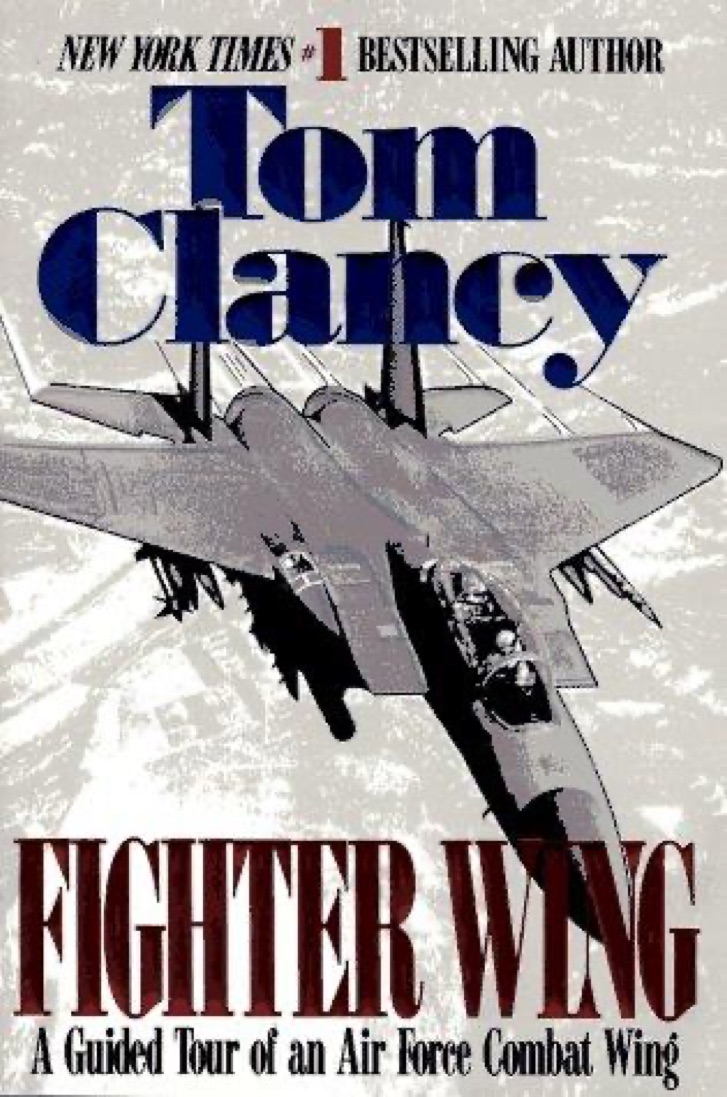
Fighter Wing: A Guided Tour of an Air Force Combat Wing
Applying the lessons from "Fighter Wing: A Guided Tour of an Air Force Combat Wing" by Tom Clancy and John Gresham to your life can be a transformative exercise in understanding the synergy between specialized expertise and integrated systems. Here are some ways you might integrate these lessons:
- The Composite Team Model: - In your ventures, whether in medicine or business, you should move beyond siloed departments toward a "composite wing" approach. By integrating diverse specialists—doctors, lawyers, and entrepreneurs—into a single, agile unit with a unified mission, you create a force that is more effective than the sum of its parts.
- Mastery of the Hardware: - Just as a pilot must know every switch in the cockpit, you must achieve deep technical mastery of your industry's tools. Whether it’s the legal nuances of a VC deal or the logistics of urgent care, your leadership is built on a foundation of knowing exactly how your "aircraft" functions under pressure.
- The OODA Loop in Decision Making: - You should apply the tactical concept of the OODA Loop to your professional life to maintain a competitive edge. By observing market shifts, orienting your resources, deciding quickly, and acting decisively, you can out-maneuver larger, slower organizations that lack air-combat levels of agility.
- High-Stakes Checklists and Standards: - Emulate the aviation culture of rigorous checklists and zero-tolerance for avoidable errors. In healthcare and law, where the margin for error is thin, adopting the pilot's mindset of disciplined preparation ensures that "hunger" for success is always balanced by the "humility" of careful execution.
- Logistical Excellence as a Competitive Moat: - Recognize that the most visible successes—the "dogfights" of the business world—are won or lost in the logistics. You should prioritize the support structures of your companies, ensuring that your frontline staff has the resources and maintenance required to stay in the air.
- Situational Awareness (SA): - Cultivate a high level of situational awareness to avoid "target fixation." In entrepreneurship, it is easy to become so focused on one metric that you lose track of the broader environment; stay focused on the horizon to anticipate threats before they enter your immediate space.
By integrating these lessons, you develop a leadership style that is both technically precise and strategically versatile. Success is not merely about the individual pilot's skill, but the coordination of a complex system that remains hungry for the win while staying humble enough to respect the variables of the mission.
What the book covers
"Fighter Wing: A Guided Tour of an Air Force Combat Wing" by Tom Clancy and John Gresham is an exhaustive, technical, and human-centric exploration of the United States Air Force's operational capabilities during the mid-1990s. Focusing specifically on the 366th Wing—the "Gunfighters"—at Mountain Home Air Force Base, the book serves as a definitive primer on the hardware, strategy, and personnel required to maintain air superiority. It blends Clancy’s trademark attention to technical detail with a narrative that captures the intensity and precision of modern aerial warfare.
Summary:
- The Evolution of Airpower: - The book opens by tracing the development of combat aviation from World War I dogfights to the stealth-dominated era of the late 20th century. It emphasizes how technological leaps in propulsion, avionics, and materials science transformed the airplane from a reconnaissance tool into the primary instrument of global power projection.
- The 366th Wing - The Composite Concept: - A significant portion of the book is dedicated to the unique structure of the 366th Wing, which was the Air Force's first "composite wing." This unit integrated diverse platforms—including F-15C Eagles, F-15E Strike Eagles, F-16C Fighting Falcons, and KC-135 tankers—into a single, rapidly deployable force capable of handling air-to-air and air-to-ground missions simultaneously.
- Hardware and Systems Deep-Dive: - Clancy provides meticulous breakdowns of the era's cutting-edge aircraft, specifically focusing on the F-15 Eagle and the F-16. He explains complex systems such as fly-by-wire technology, radar-warning receivers, and the sophisticated munitions—like the AMRAAM and JDAM—that redefined the lethality of the American fighter pilot.
- The People Behind the Stick: - Beyond the machines, the narrative explores the rigorous training and psychology of the pilots and ground crews. It details the physiological toll of high-G maneuvers, the intense competitive environment of pilot training, and the immense responsibility placed on the shoulders of relatively young officers and enlisted specialists.
- Tactical Operations and Scenarios: - The authors layout the doctrine of modern air combat, explaining concepts like "The Loop" (Observe, Orient, Decide, Act) and the importance of situational awareness. The book includes a speculative combat scenario involving a regional conflict, demonstrating how a composite wing would be deployed, supported, and sustained in a high-threat environment.
- Logistics and Support Infrastructure: - Clancy highlights the often-overlooked logistical tail that allows a fighter wing to function, from the maintenance crews working in all conditions to the massive fuel and ordnance requirements. This section underscores the reality that air superiority is as much a victory of supply chain management as it is of piloting skill.
This work remains a seminal piece of military non-fiction for its ability to demystify the complex machinery of the Air Force. It illustrates the symbiotic relationship between technological innovation and human discipline, providing a window into the professional standards required for excellence in high-stakes environments.