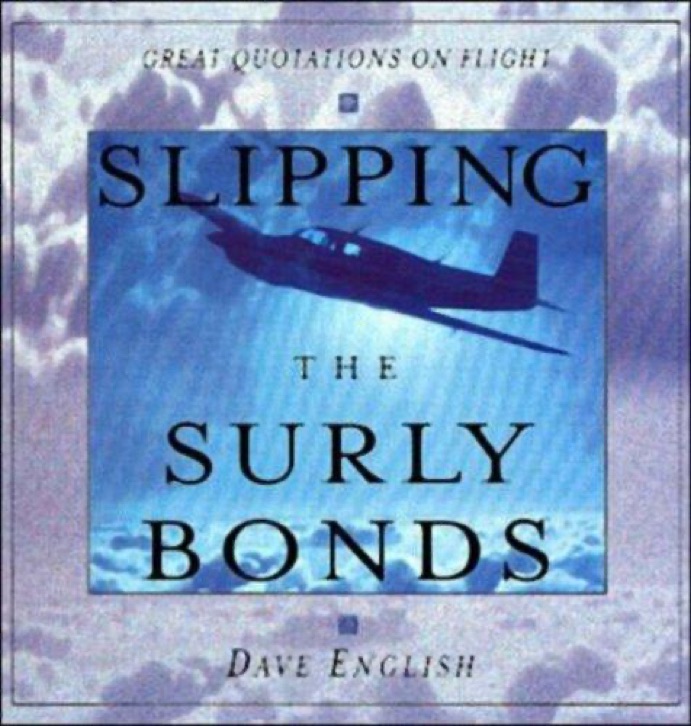
Slipping the Surly Bonds: Great Quotations on Flight
Applying the lessons from "Slipping the Surly Bonds: Great Quotations on Flight" by Dave English to your life can be a transformative exercise in refining your approach to leadership, risk, and personal excellence. Here are some ways you might integrate these lessons:
- Cultivate "Pilot-in-Command" Decisiveness: - In both the emergency department and the boardroom, you must adopt the mindset of a Pilot-in-Command (PIC). This means taking ultimate responsibility for the outcome of a situation, regardless of the variables. You should practice making clear, firm decisions based on the best available data, understanding that in high-stakes environments, hesitation is often more dangerous than a calculated but imperfect action.
- Embrace the Discipline of the Checklist: - Aviation’s safety record is built on the humble checklist, a tool that compensates for human fallibility. You can integrate this into your medical practice and business ventures by stripping away ego and ensuring that even the most "routine" procedures are governed by rigorous standards. This prevents the "complacency creep" that often leads to errors in complex, high-reliability organizations.
- Maintain a "God’s Eye View" of Your Ventures: - Just as flight provides a unique perspective on the landscape, you should periodically distance yourself from the daily grind to view your businesses and life from a higher altitude. This "aerial perspective" allows you to see patterns, obstacles, and opportunities that are invisible from the ground, helping you navigate the long-term trajectory of your career rather than just the immediate weather.
- Balance Audacity with Humility: - The book highlights that the best pilots are those who respect the power of the elements. In entrepreneurship and medicine, you must remain "hungry" for progress while staying "humble" before the complexities of human biology and market forces. Acknowledging what you do not know is the first step toward safety and eventual mastery.
- Turn Every "Landing" into a Learning Opportunity: - Every quote about a failed flight or a close call in the book is a lesson paid for in experience. You should treat your setbacks in law or venture capital as expensive "flight data" to be analyzed. By conducting honest "after-action reports" on your own performance, you turn potential failures into the foundational knowledge for your next successful takeoff.
- Communicate with Cockpit Clarity: - Effective flight depends on clear, concise communication, often referred to as the "sterile cockpit" rule. You should strive to eliminate ambiguity in your professional interactions, ensuring that your team understands the mission and the "flight plan" without the interference of ego or unnecessary jargon, especially during critical phases of operation.
By integrating these lessons, you will develop a framework for high-performance living that mirrors the precision and passion of the world’s greatest aviators. Whether navigating a complex medical emergency or steering a new startup through turbulent markets, the wisdom of the skies provides a reliable compass for a life lived with purpose, discipline, and excellence.
What the book covers
"Slipping the Surly Bonds: Great Quotations on Flight" by Dave English is an expansive and deeply researched anthology that captures the essence of aviation through the words of those who lived it. Curated by a professional pilot and writer, the book serves as a definitive reference for the history, philosophy, and technical reality of flight, spanning from ancient myths to the modern era of supersonic travel and space exploration. It organizes thousands of quotes into thematic categories, providing a narrative of human ambition and the relentless pursuit of the horizon through the perspectives of pilots, poets, and engineers alike.
Summary:
- The Foundations of Ambition: - English begins by chronicling the period when flight was purely a matter of imagination and dangerous experimentation. This section highlights the intellectual courage of figures like Leonardo da Vinci and the Wright brothers, who had to overcome not just physical gravity but the heavy weight of public skepticism and scientific doubt. - The quotes selected emphasize that flight was born from a mix of rigorous scientific inquiry and a primal, almost spiritual, desire to transcend human limitations. This serves as a reminder that every great industry begins with a visionary who is willing to be called a fool while pursuing an impossible dream.
- The Pilot’s Mindset and Ego: - A significant portion of the book is dedicated to the unique psychology required to command an aircraft, exploring the delicate balance between necessary self-confidence and the humility required to survive the environment. It delves into the "right stuff"—that intangible quality that allows a human to remain calm while hurtling through the air at high speeds. - Through the words of record-breakers and test pilots, English illustrates that a pilot's greatest asset is not just technical skill, but a specific type of situational awareness. These entries focus on the mental toughness and decisive action needed when things go wrong at thirty thousand feet, where there is no room for hesitation.
- The Harsh Reality of Risk Management: - The book does not shy away from the inherent dangers of aviation, featuring sobering reflections on accidents, mechanical failures, and the unforgiving nature of the sky. This section serves as a meditation on high-stakes risk management, showing how every tragedy in aviation history has been used to build a safer, more resilient future. - It emphasizes the concept that in the air, there is no room for "good enough," and that the margin between a routine landing and a catastrophe is often found in the preparation and discipline maintained long before the wheels leave the tarmac.
- The Theater of Aerial Combat: - English compiles quotes from the aces of World War I and World War II, capturing the visceral experience of dogfighting and the intense camaraderie of the squadron. These passages provide deep insight into leadership under extreme pressure and the ethical complexities of technological warfare. - These entries highlight the evolution of the fighter pilot from a "knight of the air" to a highly integrated component of a complex military machine, reflecting broader shifts in how humans interact with lethal technology and the bonds formed in the face of death.
- The Poetry and Transcendence of Flight: - Perhaps the most moving sections are those that focus on the sheer beauty of the skies, drawing on the literary contributions of pilot-authors like Antoine de Saint-Exupéry and Beryl Markham. These quotes explore the "lonely impulse of delight" and the perspective-shifting experience of seeing the world from above, far removed from earthly concerns. - This theme underscores the idea that flight is more than mere transportation; it is a transformative experience that fundamentally changes one's relationship with the earth and the perceived limitations of the human condition.
- The Leap into the Final Frontier: - The book concludes with reflections from astronauts and astrophysicists on the move from atmospheric flight to space travel. This section connects the early, fragile "crates" of the Wright brothers to the complex systems of the Apollo missions and the International Space Station. - It suggests that the drive to slip the "surly bonds" of Earth is an inherent part of human evolution, moving from the atmosphere to the stars as part of a continuous, logical journey of discovery and species-wide growth.
The significance of "Slipping the Surly Bonds" lies in its ability to synthesize a century of technical progress into a singular, human narrative. By focusing on the words of the participants rather than just dates and facts, English provides a soul to the machinery of aviation, making it an essential read for anyone who seeks to understand the intersection of technology, courage, and the eternal human spirit.