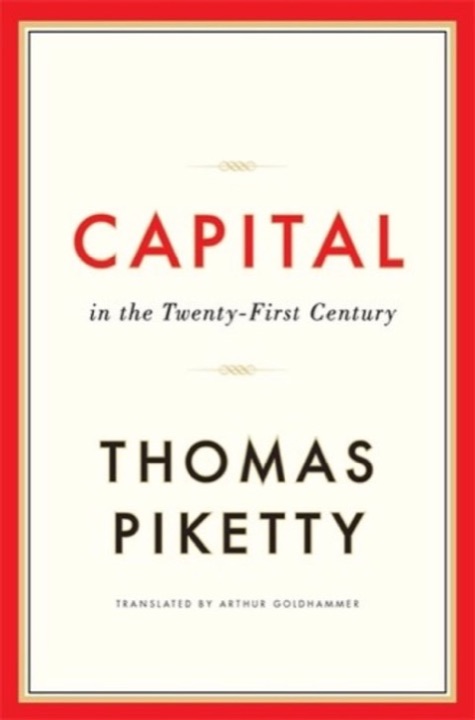
Capital in the Twenty-First Century
Applying the lessons from Thomas Piketty's "Capital in the Twenty-First Century" to your life involves considering how the dynamics of wealth and income inequality might influence your personal and professional decisions. Here are some ways you might integrate these insights:
-
Awareness and Advocacy: Given your passion for social issues like equality and your involvement in activism, you can use Piketty's data-driven analysis to advocate for policies that address economic inequality. This might involve supporting progressive taxation or transparency in wealth, aligning with your values of kindness and empathy.
-
Investment and Wealth Management: Understanding the capital/income ratio and the dynamics of r > g can inform your personal financial decisions. You might consider how your investments align with ethical considerations and whether they contribute to broader societal goals, such as supporting sustainable or socially responsible businesses.
-
Philanthropy and Giving: With your belief in kindness and empathy, you might explore philanthropic efforts that address the root causes of inequality. This could involve supporting educational initiatives, healthcare access, or other programs that help level the playing field for those less fortunate.
-
Education and Mentorship: As someone who values lifelong learning and personal growth, you can mentor others to understand the historical context of economic inequality. Sharing knowledge and encouraging critical thinking can empower others to make informed decisions and advocate for change.
-
Personal Reflection and Growth: Reflect on how your own experiences and achievements, such as your resilience and persistence, can be leveraged to address inequality. Consider how your personal growth journey can inspire others to overcome challenges and strive for a more equitable society.
-
Community Engagement: Engage with your local community to understand how economic inequality manifests at a grassroots level. This involvement can help you identify specific areas where you can make a tangible impact, whether through volunteering, advocacy, or supporting local initiatives.
-
Global Perspective: Given your interest in traveling and experiencing different cultures, you can broaden your understanding of global inequality. This perspective can inform your advocacy efforts and help you connect with international movements working towards economic justice.
By integrating these lessons into your life, you can contribute to a more equitable society while staying true to your core values of kindness, empathy, and resilience.
What the book covers
"Capital in the Twenty-First Century" by Thomas Piketty is a comprehensive analysis of wealth and income inequality in Europe and the United States since the 18th century. The book combines historical data with economic theory to explore the dynamics of capital accumulation and distribution, and it has sparked widespread discussion about economic inequality.
Summary:
Historical Analysis:
- Data Collection: Piketty uses extensive historical data, primarily from France, the UK, the US, and other developed countries, to track the evolution of wealth and income over the past few centuries.
- The Capital/Income Ratio: He introduces the concept of the capital/income ratio (β), which measures the total value of capital relative to the annual income of a country. Historically, this ratio has been high, indicating that wealth is concentrated in the hands of a few.
- The Return on Capital vs. Economic Growth: Piketty argues that when the rate of return on capital (r) exceeds the rate of economic growth (g), wealth inequality increases. This is summarized in the formula r > g, which suggests that inherited wealth grows faster than wealth earned from labor.
Key Themes:
- The Role of Capital: Capital, in the form of real estate, stocks, bonds, and other assets, plays a crucial role in economic inequality. Those who own capital can accumulate wealth faster than those who rely solely on labor income.
- Historical Trends: Piketty identifies two major periods of reduced inequality in the 20th century: the aftermath of the World Wars and the Great Depression, which led to economic policies that redistributed wealth.
- The Return of Inequality: Since the 1970s, inequality has been rising again, driven by policies favoring capital over labor, globalization, and technological change.
Policy Recommendations:
- Progressive Taxation: Piketty advocates for a global progressive tax on wealth to curb inequality. He suggests that such a tax would prevent the concentration of wealth and provide governments with resources to invest in education, healthcare, and infrastructure.
- Transparency in Wealth: He calls for greater transparency in financial and real estate markets to better track wealth and enforce taxation.
- Rethinking Capitalism: Piketty encourages a reevaluation of capitalism to ensure it benefits a broader segment of society, rather than just the wealthy elite.
Key Takeaways and Lessons:
- Inequality is Structural: Economic inequality is not just a result of individual choices or market forces but is deeply embedded in the structure of capitalism.
- Historical Context Matters: Understanding the historical context of wealth accumulation and distribution is crucial for addressing contemporary inequality.
- Policy Intervention is Necessary: Without intervention, the natural tendency of capitalism is to concentrate wealth, which can undermine democratic institutions and social stability.
- Global Solutions Required: Given the global nature of capital, solutions to inequality must also be global, requiring international cooperation and policy coordination.
- Data-Driven Analysis: Piketty's work underscores the importance of data in understanding economic phenomena and shaping effective policy responses.
Overall, "Capital in the Twenty-First Century" challenges readers to reconsider the dynamics of wealth and inequality and to think critically about the future of economic policy and capitalism.