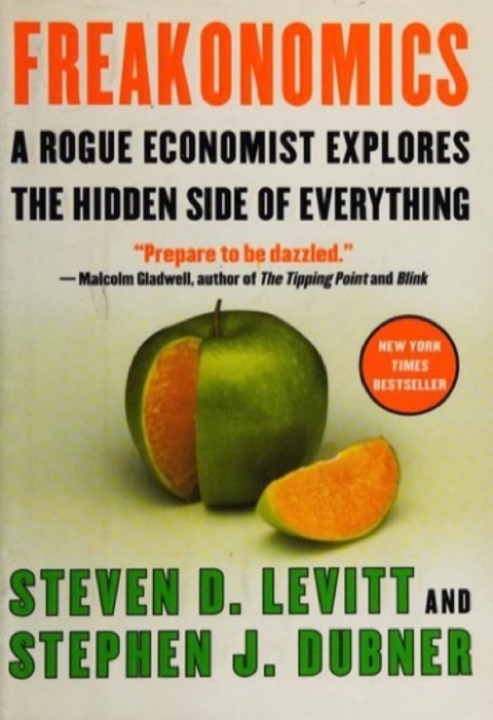
Freakonomics
Applying the lessons from "Freakonomics" by Steven Levitt and Stephen Dubner to your life involves embracing a mindset of curiosity, questioning assumptions, and using data-driven analysis to uncover hidden truths. Here’s how you might integrate these lessons into your personal and professional life:
-
Understand and Leverage Incentives: - Recognize the incentives that drive your own behavior and those around you. Whether in your personal relationships, professional environment, or activism work, consider how incentives can be structured to encourage positive outcomes. For example, in your advocacy work, think about what incentives could motivate others to join your cause or change their behavior.
-
Use Data to Challenge Conventional Wisdom: - Approach problems and decisions with a data-driven mindset. When faced with a challenge, gather as much information as possible and analyze it to uncover patterns or insights that might not be immediately obvious. This can be particularly useful in your medical career, where data can guide treatment decisions and improve patient outcomes.
-
Recognize the Power of Information: - Be aware of how information asymmetry can affect interactions and decisions. In your role as a physician, ensure that patients have access to the information they need to make informed decisions about their health. In your personal life, strive for transparency and open communication to build trust and understanding.
-
Question Assumptions: - Cultivate a habit of questioning assumptions and seeking evidence-based conclusions. This can help you avoid falling into the trap of conventional wisdom and make more informed decisions. For instance, when considering new opportunities or challenges, ask yourself what assumptions you’re making and whether they are supported by evidence.
-
Acknowledge the Complexity of Human Behavior: - Recognize that human behavior is influenced by a multitude of factors, including socioeconomic conditions. In your interactions with others, whether in your family, friendships, or professional life, approach situations with empathy and an understanding of the broader context that may be influencing behavior.
-
Focus on Socioeconomic Factors: - Consider how socioeconomic factors impact outcomes in your advocacy work and personal life. Use this understanding to inform your efforts to promote equality and social justice. For example, when working on issues related to domestic abuse or human trafficking, consider how socioeconomic conditions contribute to these problems and tailor your strategies accordingly.
By applying these lessons, you can enhance your ability to navigate complex situations, make informed decisions, and contribute positively to the world around you. Embrace a mindset of curiosity and continuous learning, and use data and economic principles to explore the hidden side of everyday life.
What the book covers
"Freakonomics: A Rogue Economist Explores the Hidden Side of Everything" by Steven D. Levitt and Stephen J. Dubner is a groundbreaking book that applies economic theory to diverse and often unconventional subjects. The book challenges conventional wisdom and explores the hidden side of various phenomena, using data and economic principles to uncover surprising insights.
Summary:
Introduction: The book begins by introducing the idea that economics is, at its core, the study of incentives. Levitt and Dubner argue that understanding incentives is key to understanding human behavior. They propose that by looking at the world through the lens of economics, one can uncover hidden truths about how things work.
Chapter 1: What Do Schoolteachers and Sumo Wrestlers Have in Common? This chapter explores the concept of cheating and how incentives can lead to dishonest behavior. The authors analyze data from Chicago public school teachers and sumo wrestlers in Japan to demonstrate how individuals respond to incentives, even if it means bending the rules. They show how data can reveal patterns of cheating and how incentives can be structured to minimize dishonest behavior.
Chapter 2: How Is the Ku Klux Klan Like a Group of Real-Estate Agents? Levitt and Dubner examine the power of information and how it can be used to manipulate or control others. They discuss how the Ku Klux Klan maintained power through secrecy and how real estate agents use information asymmetry to their advantage. The chapter highlights the importance of information in shaping economic and social interactions.
Chapter 3: Why Do Drug Dealers Still Live with Their Moms? This chapter delves into the economics of drug dealing, challenging the stereotype of the wealthy drug dealer. Through an analysis of a crack cocaine gang's financial records, the authors reveal that most street-level dealers earn very little, akin to minimum wage, and live with their parents. The chapter illustrates the economic structure of drug gangs and the risks and rewards involved.
Chapter 4: Where Have All the Criminals Gone? Levitt and Dubner explore the dramatic drop in crime rates in the 1990s, challenging popular explanations such as increased policing and tougher gun laws. They controversially argue that the legalization of abortion in the 1970s played a significant role in reducing crime, as it led to fewer children being born into adverse conditions that might predispose them to criminal behavior.
Chapter 5: What Makes a Perfect Parent? This chapter investigates the factors that contribute to successful parenting and child development. The authors analyze data from various studies to determine which parental actions have a significant impact on a child's future success. They conclude that many commonly held beliefs about parenting are not supported by data, and that socioeconomic factors often play a more significant role.
Chapter 6: Perfect Parenting, Part II; or: Would a Roshanda by Any Other Name Smell as Sweet? The final chapter examines the impact of names on a person's life outcomes. Levitt and Dubner analyze data to determine whether a person's name can affect their success. They find that while names can reflect cultural and socioeconomic backgrounds, they do not significantly determine a person's future.
Key Takeaways and Lessons:
-
Incentives Matter: Understanding incentives is crucial to understanding behavior. People respond to incentives in predictable ways, and these responses can be analyzed to uncover hidden truths.
-
Data Can Reveal Hidden Patterns: By analyzing data, one can uncover patterns and insights that challenge conventional wisdom. Data-driven analysis can lead to surprising conclusions.
-
Information is Power: Access to information can significantly influence behavior and outcomes. Those who control information can wield significant power over others.
-
Conventional Wisdom is Often Wrong: Many commonly held beliefs are not supported by data. It's important to question assumptions and seek evidence-based conclusions.
-
Complexity of Human Behavior: Human behavior is complex and influenced by a multitude of factors. Economic principles can help untangle this complexity, but they are not the sole determinants of behavior.
-
Socioeconomic Factors Play a Significant Role: Socioeconomic conditions often have a more profound impact on outcomes than individual actions or characteristics, such as names or specific parenting techniques.
"Freakonomics" encourages readers to look beyond the obvious and question the status quo, using data and economic principles to explore the hidden side of everyday life.