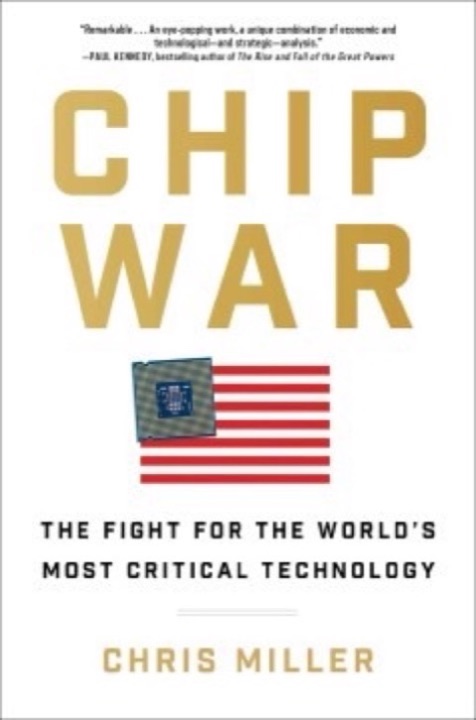
Chip War: The Quest to Dominate the World's Most Critical Technology
Applying the lessons from "Chip War: The Quest to Dominate the World's Most Critical Technology" by Chris Miller to your life involves drawing parallels between the strategic importance of semiconductors and your personal and professional endeavors. Here are some ways you might integrate these lessons:
-
Strategic Importance and Prioritization: - Just as semiconductors are critical to global power dynamics, identify the key aspects of your life that are most important to your personal and professional success. Prioritize these areas and invest time and resources into nurturing them, much like nations prioritize semiconductor capabilities.
-
Innovation and Continuous Learning: - The semiconductor industry thrives on continuous innovation and investment in research and development. Apply this mindset to your personal growth by embracing lifelong learning and staying open to new experiences and knowledge. Your commitment to being in a constant state of beta aligns well with this lesson.
-
Resilience and Adaptability: - The semiconductor industry's ability to navigate challenges like supply chain vulnerabilities and geopolitical tensions highlights the importance of resilience. Reflect this in your life by maintaining your resilience and adaptability, especially in the face of adversity or unexpected changes.
-
Global Collaboration and Balance: - While the semiconductor industry benefits from global collaboration, it also faces competition. In your interactions and relationships, strive for a balance between collaboration and maintaining your independence. This could mean working with others while also standing firm in your values and beliefs.
-
Supply Chain Resilience and Diversification: - The book emphasizes the need for supply chain resilience. In your life, this could translate to diversifying your skills and interests to ensure you're not overly reliant on one aspect of your life for fulfillment or success. This aligns with your varied interests, from flying to cooking to exercising.
-
Strategic Decision-Making: - The strategic policymaking in the semiconductor industry can inspire you to approach decisions with careful consideration and analysis. Your decision-making process, which involves gathering information and seeking input, already reflects this strategic approach.
-
Embracing Technological Advancements: - As someone who is forward-thinking about technology, continue to leverage technological advancements to improve your life and the lives of those around you. This could involve staying informed about emerging technologies and considering how they might impact your personal and professional goals.
-
Ethical Considerations and Social Impact: - The book discusses the geopolitical significance of semiconductors. Similarly, consider the broader social impact of your actions and decisions. Your passion for social issues like equality and your involvement in advocacy work reflect this lesson.
By integrating these lessons into your life, you can enhance your personal and professional endeavors, ensuring they are strategically aligned with your values and goals.
What the book covers
"Chip War: The Quest to Dominate the World's Most Critical Technology" by Chris Miller is a comprehensive exploration of the global semiconductor industry, its history, and its geopolitical significance. The book delves into the technological, economic, and strategic dimensions of semiconductors, which are the building blocks of modern electronics and critical to national security and economic power.
Summary:
-
Historical Context: - The book traces the origins of the semiconductor industry, starting from the invention of the transistor in the mid-20th century to the development of integrated circuits. - It highlights the role of key figures and companies, such as Bell Labs, Fairchild Semiconductor, Intel, and others, in advancing semiconductor technology.
-
Technological Evolution: - Miller discusses the rapid technological advancements in chip design and manufacturing, emphasizing Moore's Law, which predicts the doubling of transistors on a chip approximately every two years. - The narrative covers the shift from simple transistors to complex microprocessors and the increasing importance of software in chip functionality.
-
Economic Impact: - The book examines how semiconductors have become a cornerstone of the global economy, driving innovation in various sectors, including consumer electronics, automotive, telecommunications, and more. - It discusses the industry's supply chain, highlighting the concentration of manufacturing capabilities in specific regions, particularly East Asia.
-
Geopolitical Significance: - Miller explores the strategic importance of semiconductors in national security, noting how countries like the United States, China, and others view chip technology as critical to military and economic dominance. - The book details the ongoing "chip war" between the U.S. and China, focusing on trade tensions, export controls, and efforts to achieve technological self-sufficiency.
-
Challenges and Future Directions: - The narrative addresses challenges facing the semiconductor industry, such as supply chain vulnerabilities, intellectual property theft, and the immense capital investment required for cutting-edge manufacturing. - It also considers future trends, including the potential of emerging technologies like quantum computing and artificial intelligence to reshape the industry.
Key Takeaways and Lessons:
-
Strategic Importance: Semiconductors are not just technological components but are strategic assets that influence global power dynamics. Nations must prioritize semiconductor capabilities to maintain economic and military competitiveness.
-
Innovation and Investment: Continuous innovation and substantial investment in research and development are crucial for maintaining leadership in the semiconductor industry. This includes fostering talent and building resilient supply chains.
-
Global Collaboration and Competition: While global collaboration has historically driven semiconductor advancements, increasing geopolitical tensions necessitate a balance between cooperation and competition.
-
Supply Chain Resilience: The COVID-19 pandemic and geopolitical conflicts have highlighted the fragility of semiconductor supply chains. Diversification and regional manufacturing capabilities are essential for resilience.
-
Policy and Regulation: Governments play a critical role in shaping the semiconductor landscape through policies on trade, intellectual property, and investment. Strategic policymaking can bolster national interests and industry growth.
In conclusion, "Chip War" provides a detailed analysis of the semiconductor industry's past, present, and future, emphasizing its critical role in shaping global technology and power structures. The book serves as a call to action for stakeholders to address the challenges and opportunities in this pivotal sector.