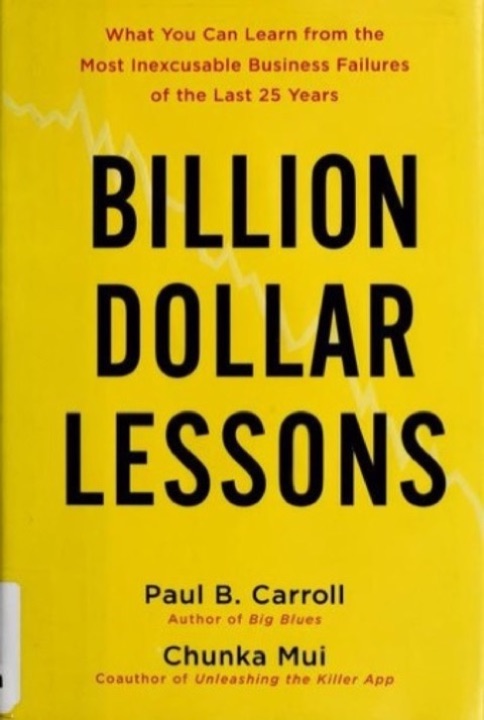
Billion Dollar Lessons: What You Can Learn from the Most Inexcusable Business Failures of the Last Twenty-five Years
Applying the lessons from "Billion Dollar Lessons" to your life involves drawing parallels between the strategic errors discussed in the book and your personal experiences, decisions, and aspirations. Here’s how you might integrate these insights:
-
Illusion of Synergy: Just as companies overestimate the benefits of mergers, you might reflect on personal or professional collaborations. Ensure that partnerships or joint ventures are based on realistic expectations and mutual benefits. This could apply to friendships, professional relationships, or even family dynamics.
-
Faulty Financial Engineering: Avoid overly complex strategies in your personal finances or career planning. Embrace simplicity and transparency, ensuring that your financial decisions are sustainable and aligned with your long-term goals.
-
Stubbornness and Arrogance: Stay adaptable and open to change. Your belief in lifelong learning and being in a constant state of beta aligns well with this lesson. Continue to embrace feedback and be willing to pivot when necessary, whether in personal growth or professional endeavors.
-
New Product Failures: Before embarking on new projects or hobbies, conduct thorough research and ensure there is genuine interest or demand. This could apply to your aspiration of skydiving or any new venture you consider.
-
Technology Traps: Be cautious with new technologies. While you are forward-thinking about technological advancements, ensure that any tech you adopt aligns with your values and goals, enhancing rather than complicating your life.
-
Customer and Market Misjudgments: In your interactions and relationships, strive to understand the needs and perspectives of others. This aligns with your core values of kindness and empathy, ensuring that your actions are considerate and responsive to those around you.
Personal Application
-
Due Diligence in Relationships: Just as companies should conduct due diligence in mergers, apply this to your relationships. Ensure that they are based on mutual respect and understanding, and be willing to reassess them if they no longer serve your well-being.
-
Simplicity in Life Choices: Embrace simplicity in your daily routines and decisions. This could mean streamlining your activities to focus on what truly matters, such as spending time with family or pursuing meaningful hobbies.
-
Adaptability and Humility: Continue to foster a mindset of adaptability. Your experiences with near-death situations have already reinforced the importance of living with purpose and humility.
-
Thorough Research and Planning: Before trying new activities, like skydiving, ensure you are well-prepared and informed. This approach can help you make the most of new experiences while minimizing risks.
-
Prudent Technology Use: Stay informed about technological advancements, but be selective about what you integrate into your life. Focus on tools that enhance your productivity and align with your goals.
-
Understanding and Empathy: Your core values of kindness and empathy are crucial. Continue to apply these in all interactions, ensuring that you are responsive to the needs and battles of others.
By integrating these lessons into your life, you can enhance your decision-making, strengthen your relationships, and continue to grow personally and professionally.
What the book covers
"Billion Dollar Lessons: What You Can Learn from the Most Inexcusable Business Failures of the Last Twenty-five Years" by Paul B. Carroll and Chunka Mui is a comprehensive exploration of major business failures and the lessons they offer. The authors analyze a variety of case studies to uncover the common pitfalls and strategic errors that led to these costly mistakes. Here’s a detailed summary of the book along with key takeaways and lessons:
Overview
The book examines over 750 business failures, focusing on the root causes rather than just the symptoms. Carroll and Mui aim to provide insights into how companies can avoid similar fates by learning from the mistakes of others. The authors categorize these failures into several themes, each representing a different type of strategic error.
Key Themes and Case Studies
-
Illusion of Synergy: Many companies overestimate the benefits of mergers and acquisitions. The authors discuss cases where expected synergies never materialized, leading to significant financial losses.
-
Faulty Financial Engineering: Some businesses rely too heavily on complex financial strategies that ultimately backfire. The book highlights examples where financial manipulation led to disastrous outcomes.
-
Stubbornness and Arrogance: Companies often fail due to an inability to adapt or admit mistakes. The authors provide instances where corporate leaders ignored market signals or clung to failing strategies.
-
New Product Failures: The book explores how poor market research, inadequate testing, or misjudging consumer needs can doom new products.
-
Technology Traps: Companies sometimes invest heavily in new technologies without fully understanding their implications or market readiness, leading to failure.
-
Customer and Market Misjudgments: Misreading customer needs or market trends can lead to strategic blunders. The authors discuss how companies failed to align their offerings with market demands.
Key Takeaways and Lessons
-
Due Diligence in Mergers and Acquisitions: Companies should conduct thorough due diligence and have realistic expectations about synergies when pursuing mergers or acquisitions.
-
Simplicity in Financial Strategies: Avoid overly complex financial engineering. Transparency and simplicity can prevent unforeseen complications.
-
Adaptability and Humility: Businesses must remain flexible and willing to change course when necessary. Leaders should foster a culture that encourages questioning and innovation.
-
Thorough Market Research: Before launching new products, companies should invest in comprehensive market research to ensure there is genuine demand.
-
Prudent Technology Investments: Evaluate the readiness and applicability of new technologies before making significant investments. Ensure alignment with business goals and market needs.
-
Understanding Customer Needs: Continuously engage with and understand your customer base to ensure products and services meet their evolving needs.
Conclusion
"Billion Dollar Lessons" serves as a cautionary tale for business leaders, emphasizing the importance of learning from past mistakes. By analyzing these failures, Carroll and Mui provide valuable insights into strategic planning and risk management. The book encourages companies to be vigilant, adaptable, and customer-focused to avoid the costly errors of their predecessors.