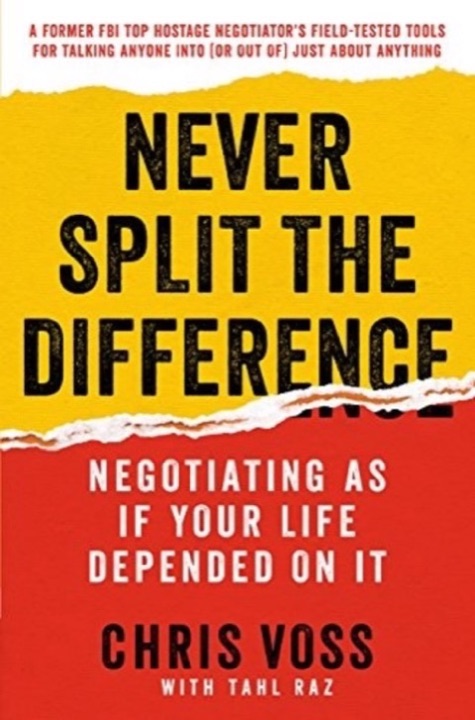
Never Split the Difference: Negotiating as if Your Life Depended on It
Applying the lessons from "Never Split the Difference" by Chris Voss to your life can enhance your negotiation skills and improve your interactions in both personal and professional settings. Here’s how you might integrate these insights:
-
Tactical Empathy in Personal Relationships: - Use tactical empathy to deepen your connections with family and friends. By understanding their emotions and perspectives, you can build stronger bonds and resolve conflicts more effectively.
-
Active Listening with Loved Ones: - Practice active listening with your children and grandchild. Use techniques like mirroring to show that you value their thoughts and feelings, fostering open and honest communication.
-
Labeling Emotions in High-Stress Situations: - When dealing with stressful situations, such as emergencies in the ER, label the emotions of those involved to diffuse tension and create a calm environment.
-
Creating Illusions of Control in Professional Settings: - In your role as a physician, use calibrated questions to guide conversations with patients or colleagues, giving them a sense of control while steering discussions toward productive outcomes.
-
Accusation Audit in Advocacy Work: - When advocating for social issues like equality or anti-human trafficking, preemptively address potential objections to disarm critics and build trust with your audience.
-
Bending Reality in Negotiations: - Use anchoring techniques when negotiating contracts or agreements, whether in your medical practice or personal endeavors, to set favorable terms.
-
Embracing "No" in Decision-Making: - View "no" as an opportunity to explore underlying concerns, whether in personal decisions or professional negotiations, allowing you to adjust your approach and find mutually beneficial solutions.
-
Achieving the "That's Right" Moment: - Strive for "that's right" moments in conversations with colleagues or family, ensuring that your perspective is understood and aligned with theirs.
-
Nonverbal Communication in Daily Interactions: - Pay attention to your body language and tone, especially in high-stakes situations like emergency medicine, to convey authority and empathy.
-
Handling Difficult People with Empathy:
- Use empathy and composure when dealing with challenging individuals, whether in the ER or in personal interactions, to redirect conversations toward positive outcomes.
-
Applying Lessons to Personal Growth:
- Reflect on your daily interactions and evaluate how you can apply these negotiation techniques to improve your communication and relationships.
By integrating these strategies into your life, you can enhance your ability to navigate complex situations, build stronger relationships, and achieve your personal and professional goals.
What the book covers
"Never Split the Difference: Negotiating as if Your Life Depended on It" by Chris Voss is a comprehensive guide on negotiation techniques, drawing from Voss's extensive experience as a former FBI hostage negotiator. The book combines psychological insights, practical advice, and real-life anecdotes to teach readers how to negotiate effectively in both professional and personal settings.
Summary:
-
Introduction to Tactical Empathy: - Voss introduces the concept of "tactical empathy," which involves understanding the emotions and mindset of the other party to build rapport and influence their decisions. This is foundational to effective negotiation.
-
The Importance of Listening: - Active listening is emphasized as a critical skill. Voss introduces the "Mirroring" technique, which involves repeating the last few words the other person said to encourage them to elaborate and feel heard.
-
Labeling Emotions: - Voss discusses the power of labeling emotions to diffuse tension and create a connection. By acknowledging and naming the emotions of the other party, negotiators can demonstrate understanding and reduce defensiveness.
-
Creating Illusions of Control: - The book highlights the strategy of asking calibrated questions that begin with "how" or "what." These questions give the other party the illusion of control while steering the conversation in a desired direction.
-
The Accusation Audit: - Voss advises negotiators to preemptively address potential objections or negative perceptions by openly acknowledging them. This technique can disarm the other party and build trust.
-
Bending Reality: - The concept of anchoring is discussed, where the first offer sets the tone for the negotiation. Voss suggests using extreme anchors to shift the negotiation in your favor.
-
The Power of "No": - Contrary to common belief, Voss argues that hearing "no" can be beneficial. It provides clarity and allows negotiators to explore underlying concerns and objections.
-
The "That's Right" Moment: - Achieving a "that's right" response from the other party indicates alignment and understanding. This is a powerful affirmation that the negotiator has successfully communicated their perspective.
-
Bargaining Techniques: - Voss introduces the Ackerman model, a systematic approach to making offers. It involves setting a target price, making calculated concessions, and using precise, non-round numbers to convey credibility.
-
Nonverbal Communication:
- The book emphasizes the importance of body language and tone of voice. Voss advises negotiators to maintain a calm demeanor and use a "late-night FM DJ voice" to convey authority and empathy.
-
Dealing with Difficult People:
- Strategies for handling aggressive or irrational counterparts are discussed. Voss suggests maintaining composure, using empathy, and redirecting the conversation to productive topics.
Key Takeaways and Lessons:
-
Empathy and Understanding: Successful negotiation hinges on understanding the other party's emotions and motivations. Empathy is a powerful tool for building rapport and trust.
-
Active Listening: Truly listening to the other party can reveal valuable information and create opportunities for influence.
-
Strategic Questioning: Asking the right questions can guide the negotiation and uncover hidden interests.
-
Embrace "No": Hearing "no" is not a dead end but an opportunity to explore deeper issues and adjust strategies.
-
Preparation and Planning: Effective negotiation requires thorough preparation, including understanding the other party's needs and setting clear objectives.
-
Flexibility and Adaptability: Negotiators must be willing to adapt their strategies based on the dynamics of the conversation.
-
Emotional Control: Maintaining composure and managing emotions is crucial, especially in high-stakes situations.
Overall, "Never Split the Difference" provides a wealth of practical techniques and insights that can be applied to various negotiation scenarios, emphasizing the importance of empathy, preparation, and strategic communication.