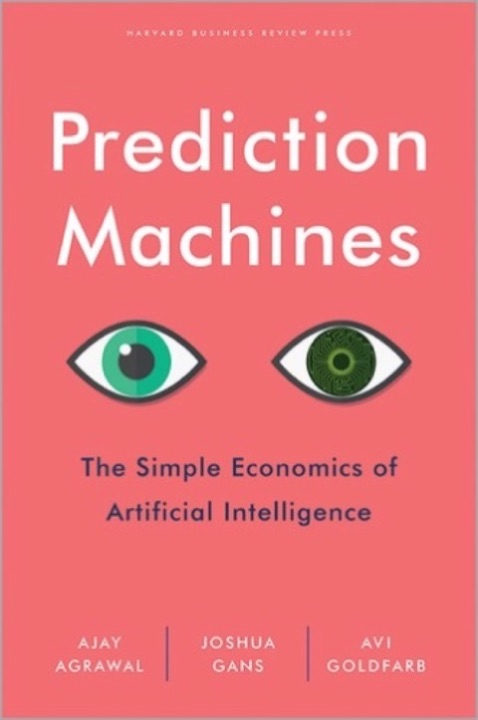
Prediction Machines: The Simple Economics of Artificial Intelligence
Applying the lessons from "Prediction Machines: The Simple Economics of Artificial Intelligence" to your life involves leveraging AI's predictive capabilities to enhance decision-making and improve various aspects of your personal and professional endeavors. Here are some ways you might integrate these insights:
-
Enhancing Decision-Making: - Use AI tools to improve prediction accuracy in areas that matter to you, such as financial planning, healthcare decisions, or even travel safety. For instance, AI can help analyze market trends for better investment decisions or assess health data for proactive healthcare management.
-
Integrating AI in Hobbies and Interests: - Given your interest in flying, consider using AI-powered flight planning tools that predict weather patterns and optimize flight paths for safety and efficiency. - In cooking, explore AI-driven recipe recommendations that predict ingredient combinations based on your preferences and dietary needs.
-
Professional Application: - As a physician, you can integrate AI into your practice to enhance diagnostic accuracy and patient care. AI can assist in predicting patient outcomes and personalizing treatment plans. - Use AI to streamline administrative tasks, allowing you to focus more on patient interaction and care.
-
Balancing AI with Human Judgment: - While AI can provide valuable predictions, continue to rely on your human judgment and empathy, especially in areas like patient care and personal relationships. AI should complement, not replace, your decision-making skills.
-
Strategic Use of AI in Advocacy: - In your advocacy work against domestic abuse and human trafficking, leverage AI to predict and identify patterns that could help prevent these issues or aid in resource allocation.
-
Ethical Considerations: - Stay informed about the ethical implications of AI, particularly in healthcare and privacy. Advocate for responsible AI use that aligns with your values of kindness and empathy.
-
Continuous Learning: - Embrace AI as a tool for lifelong learning. Use AI-driven platforms to stay updated on medical advancements, social issues, and personal interests.
-
Personal Growth and Reflection: - Reflect on how AI can help you live more in the moment by automating routine tasks and freeing up time for activities you enjoy, like spending time with family or pursuing new experiences like skydiving.
By thoughtfully integrating AI into your life, you can enhance your decision-making, improve efficiency, and continue to align your actions with your core values and aspirations.
What the book covers
"Prediction Machines: The Simple Economics of Artificial Intelligence" by Ajay Agrawal, Joshua Gans, and Avi Goldfarb is a comprehensive exploration of how artificial intelligence (AI), particularly machine learning, is transforming the economic landscape. The authors, who are professors at the University of Toronto's Rotman School of Management, focus on the economic implications of AI as a tool for prediction, which they argue is the core function of AI technologies.
Summary:
-
The Role of Prediction in Decision-Making: - The book posits that prediction is a fundamental component of decision-making. AI enhances our ability to predict outcomes by processing vast amounts of data more efficiently than humans can. - By improving prediction accuracy, AI reduces uncertainty, which is a critical factor in economic decision-making.
-
The Economics of AI: - The authors introduce the concept of AI as a "prediction machine" and discuss how the cost of prediction is decreasing due to advancements in AI technologies. - As prediction becomes cheaper, its value increases, leading to new applications and business models.
-
Impact on Jobs and Skills: - AI's ability to predict affects labor markets by automating tasks that involve routine prediction, potentially displacing certain jobs while creating new opportunities in AI development and implementation. - The book emphasizes the importance of complementing AI with human judgment and decision-making skills, which remain crucial.
-
AI and Decision-Making: - The authors explore how AI changes the decision-making process by providing better predictions, which can lead to improved outcomes in various sectors, including healthcare, finance, and transportation. - They highlight the importance of understanding the limitations of AI predictions and the need for human oversight.
-
Strategic Implications for Businesses: - Businesses need to adapt to the changing landscape by integrating AI into their operations and decision-making processes. - The authors discuss strategies for leveraging AI, such as focusing on areas where prediction can add the most value and rethinking business models to incorporate AI capabilities.
-
Policy and Ethical Considerations: - The book addresses the broader societal implications of AI, including privacy concerns, ethical considerations, and the need for regulatory frameworks to manage AI's impact. - The authors advocate for policies that encourage innovation while protecting public interests.
Key Takeaways and Lessons:
-
AI as a Prediction Tool: AI's primary function is to enhance prediction capabilities, which can lead to significant economic benefits by reducing uncertainty in decision-making.
-
Complementarity with Human Skills: While AI can automate certain tasks, human judgment and decision-making remain essential. The future workforce will need to develop skills that complement AI technologies.
-
Strategic Business Integration: Companies should focus on integrating AI into their operations to improve efficiency and create new value propositions. This requires a strategic approach to identifying areas where AI can have the most impact.
-
Ethical and Policy Considerations: As AI becomes more prevalent, it is crucial to address ethical concerns and develop policies that balance innovation with societal needs.
-
Continuous Learning and Adaptation: The rapid pace of AI development necessitates continuous learning and adaptation by individuals, businesses, and policymakers to harness AI's potential effectively.
Overall, "Prediction Machines" provides a framework for understanding the economic implications of AI and offers practical insights for leveraging AI technologies in various sectors. The authors emphasize the transformative potential of AI while highlighting the need for thoughtful integration and ethical considerations.