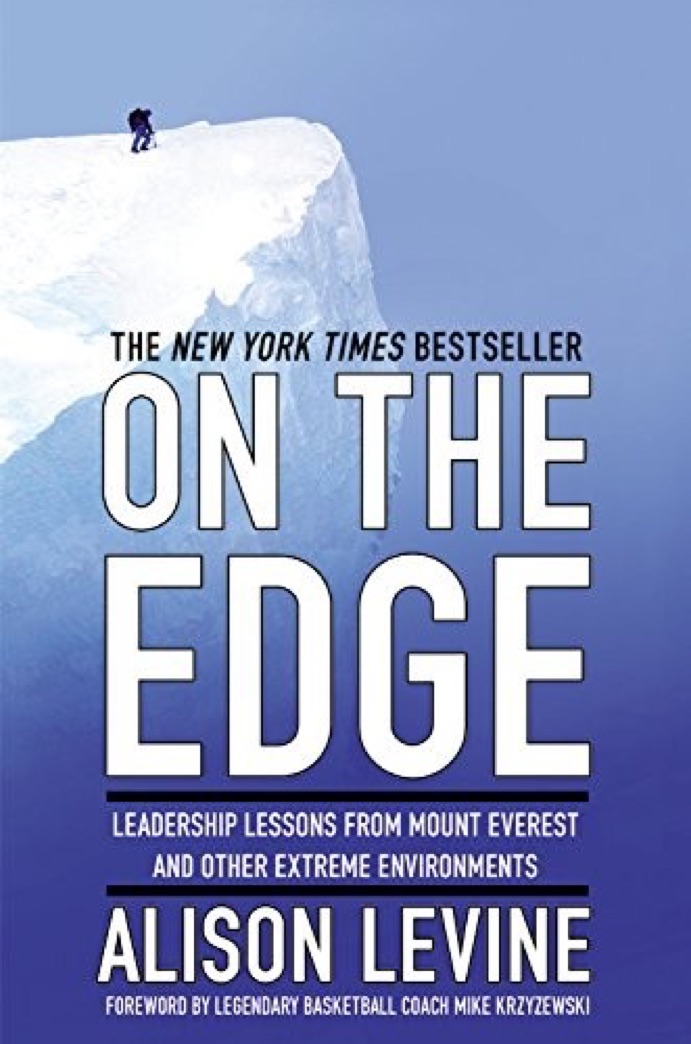
On the Edge: Leadership Lessons from Mount Everest and Other Extreme Environments
Applying the lessons from "On the Edge" by Alison Levine to your life can be a transformative exercise in developing psychological fortitude and strategic agility. Here are some ways you might integrate these lessons:
-
Master the Art of the Pivot: In your work as an entrepreneur and venture capitalist, you must treat every setback as an essential "acclimatization" period. When a market shifts or a business model stalls, do not view the retreat as a defeat, but as the necessary time required to regroup for a more informed ascent. Use these moments to reassess your resources and team health.
-
Cultivate Situational Leadership in the ER: When you are in the trauma bay, the "captain of the ship" should be whoever has the best view of the critical variable at that moment. Integrate Levine’s "lead from any level" philosophy by encouraging your staff and residents to speak up and take initiative when they spot a critical change, regardless of their rank. This flattens the hierarchy in ways that directly save lives.
-
Utilize Fear for Checklist Discipline: In the cockpit, fear of a system failure should not lead to panic but to a rigorous adherence to your pre-flight checks. Apply Levine’s view of fear to your aviation practice by letting it drive an obsessive dedication to safety protocols. Let the "edge" sharpen your focus, ensuring that your humility before the elements translates into the technical precision required for a safe landing.
-
Develop "Mountain Sense" in Business: Just as a climber reads the clouds, you must read the subtle signals in the healthcare and tech sectors. Move away from rigid five-year plans that assume a static environment; instead, build "scrappy" organizations that can change direction in a single afternoon based on the shifting landscape. Training your "mountain sense" means staying deeply connected to the front lines to catch the first scent of a changing wind.
-
Avoid the Trap of "Summit Fever": Whether you are closing a major VC deal or pursuing a complex legal victory, never let the desire for the "win" override your core values or the well-being of your partners. Recognize when the cost of the summit—be it ethical, financial, or personal—is too high. This level of self-awareness ensures that you "stay humble" even when the peak is in sight, protecting your long-term legacy.
-
Embrace Your Role as a Lifelong Learner: View every expedition, whether a new medical venture or a legal challenge, as a learning opportunity rather than just a credential. Levine’s journey shows that the most valuable assets you bring back from the mountain are the insights into your own resilience. Focus on the growth that occurs during the "climb" to sustain the hunger necessary to pursue the next challenge.
By integrating these lessons, you position yourself to thrive in environments that would paralyze others. You learn that the "edge" is not a place to be feared, but a vantage point from which the most significant growth and leadership occur, allowing you to stay hungry for the next peak while remaining humble before the challenges of the climb.
What the book covers
"On the Edge: Leadership Lessons from Mount Everest and Other Extreme Environments" by Alison Levine is a compelling fusion of high-altitude adventure and executive leadership strategy. Levine, who served as the team captain of the first American Women's Everest Expedition and has scaled the highest peak on every continent, uses her harrowing experiences in extreme environments to illustrate how to lead in volatile, uncertain, and complex worlds. The book argues that survival and success in business, much like on a mountain, depend on agility, resilience, and the ability to make critical decisions under pressure when the stakes are literally life and death.
Summary:
-
The Necessity of Tactical Backtracking: - Levine explains that in high-altitude climbing, one must often descend to a lower camp after reaching a higher one to allow the body to acclimatize. In a professional context, this translates to the understanding that progress is not always linear; sometimes, stepping back to regroup or pivot is a strategic necessity rather than a sign of failure. - You must recognize that losing ground can be a deliberate part of a long-term strategy. This requires shedding the ego-driven need for constant forward motion and embracing the "base camp" moments that prepare an organization for the final push.
-
The Perils of Complacency in the "Death Zone": - The book highlights that most accidents happen on the descent, after the goal has been reached, because climbers relax their guard. Levine warns leaders that the period of greatest risk often follows a major success, where overconfidence leads to a breakdown in protocol and situational awareness. - Leaders must maintain a state of "constructive paranoia," ensuring that their teams remain as vigilant during the routine phases of a project as they were during the initial launch. Complacency is a silent killer that can dismantle years of hard-earned progress in a single moment of inattention.
-
Leadership as a Distributed Responsibility: - On a mountain, the person at the front of the line is the leader for that moment, regardless of who holds the official title. Levine emphasizes that every team member must be prepared to take charge based on their immediate vantage point and the specific challenges they are facing. - This "leadership from every chair" model requires a culture where hierarchies are fluid and information flows freely. It empowers individual contributors to make critical decisions when they are the ones closest to the problem, rather than waiting for orders from a detached headquarters.
-
Harnessing Fear as a Strategic Asset: - Rather than advocating for fearlessness, Levine argues that fear is a vital tool for survival that keeps a leader sharp and focused. The goal is not to eliminate fear but to prevent it from turning into paralysis by maintaining constant, purposeful movement. - By acknowledging fear, you can use the resulting adrenaline to enhance performance and awareness. The key is to keep moving; even a small step in any direction can break the cycle of panic and allow for clearer decision-making under extreme stress.
-
The Fallacy of the Fixed Plan: - Levine recounts how sudden storms or changing ice conditions can render months of planning useless in minutes. She stresses the importance of "mountain sense"—the ability to read the environment and make real-time adjustments based on current conditions rather than an outdated roadmap. - Successful leaders are those who can balance a clear long-term vision with the flexibility to scrap their tactical plans at a moment's notice. Rigidity in the face of shifting variables is a recipe for disaster in both mountaineering and the global marketplace.
-
Decision-Making with Imperfect Information: - In extreme environments, one rarely has all the data desired before they must act. Levine illustrates how waiting for perfect clarity often leads to missed windows of opportunity or increased exposure to danger. - Developing the confidence to act on "enough" information is a hallmark of high-stakes leadership. It involves trusting your training and your team's collective intuition to navigate the fog of competition or crisis.
-
Defining Success Beyond the Summit: - Levine’s own story includes a failed first attempt at Everest where she had to turn back just a few hundred feet from the top. She argues that the character built during the struggle and the safety of the team are more important metrics of success than reaching the peak itself. - True leadership is measured by the ability to make the hard choice to protect the team over the glory of the goal. Reaching the summit is optional; getting everyone back down alive is mandatory, and this philosophy should guide every ethical business or medical endeavor.
Levine concludes that the summits we reach are ultimately less important than the resilience we build during the climb. Her insights offer a roadmap for anyone navigating the "extreme environments" of modern industry, providing a bridge between the physical courage of an explorer and the psychological fortitude of a world-class leader.