The Innovators Dilemma
Applying the lessons from "The Innovator's Dilemma" by Clayton Christensen to your life involves embracing change, being open to new ideas, and balancing your current strengths with the potential for future growth. Here are some ways you might apply these principles:
-
Embrace Disruption: Just as companies must adapt to disruptive innovations, you can embrace changes and new experiences in your personal life. This could mean trying new activities, like skydiving, or exploring different perspectives that challenge your current beliefs.
-
Balance Current Strengths with New Opportunities: While you have strong values and beliefs that guide you, remain open to new opportunities that might initially seem outside your comfort zone. This could involve exploring new hobbies, learning new skills, or engaging with different communities.
-
Create Space for Experimentation: Just as companies create separate units to explore disruptive technologies, you can carve out time and space in your life for experimentation and personal growth. This might involve setting aside time for new learning experiences or personal projects that don't fit into your usual routine.
-
Focus on Emerging Trends: Stay informed about emerging trends and technologies that could impact your life or career. This forward-thinking approach aligns with your interest in leveraging technology for the betterment of mankind.
-
Cultivate Flexibility and Adaptability: Encourage a mindset of flexibility and adaptability, allowing you to respond effectively to unexpected challenges or opportunities. This aligns with your belief in being in a constant state of beta and aspiring to be a lifelong learner.
-
Learn from Failures: Embrace failures as learning opportunities, much like how companies learn from unsuccessful ventures. Reflect on past experiences to gain insights and improve future decisions.
-
Maintain Strong Leadership and Vision: Continue to lead your life with a strong vision and purpose, recognizing the potential of new experiences and guiding yourself toward meaningful goals.
-
Invest in Relationships and Community: Just as companies focus on emerging markets, invest in building and nurturing relationships with diverse groups of people. This aligns with your passion for social issues and advocacy work.
By applying these lessons, you can navigate personal and professional challenges with resilience and adaptability, ensuring that you continue to grow and thrive in a rapidly changing world.
What the book covers
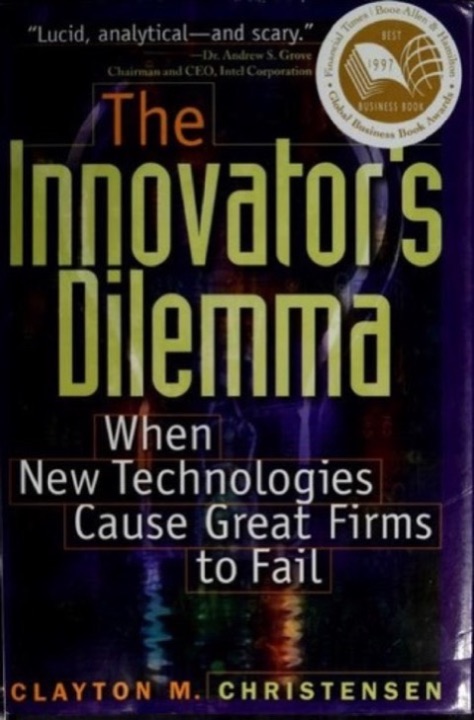
"The Innovator's Dilemma: When New Technologies Cause Great Firms to Fail" by Clayton M. Christensen is a seminal work in the field of business and innovation. Published in 1997, the book explores why successful companies often fail to capitalize on new waves of innovation and how they can avoid this fate. Here is a thorough summary of the book, including key takeaways and lessons:
Summary:
Introduction:
Christensen introduces the concept of "disruptive innovation," which refers to new technologies or business models that initially serve a niche market but eventually overtake established products or services. He contrasts this with "sustaining innovations," which improve existing products for current customers.
The Innovator's Dilemma:
The central dilemma is that companies tend to focus on sustaining innovations to satisfy their most profitable customers, which can lead them to ignore or underestimate disruptive innovations. This focus on current customer needs and profitability metrics often blinds them to emerging technologies that initially seem inferior but eventually capture the market.
Case Studies:
Christensen uses several case studies from industries like disk drives, mechanical excavators, and retail to illustrate how leading companies failed to adapt to disruptive innovations. These examples show that even well-managed firms with excellent customer focus and strong R&D can fall victim to disruptive technologies.
Characteristics of Disruptive Innovations:
- Initially Lower Performance: Disruptive technologies often underperform compared to existing solutions in the short term.
- New Market Creation: They create new markets or reshape existing ones by offering simpler, more affordable, or more convenient solutions.
- Gradual Improvement: Over time, these innovations improve and begin to meet the needs of mainstream customers.
Organizational Challenges:
Christensen discusses how organizational structures and processes designed for sustaining innovations can hinder a company's ability to embrace disruptive technologies. He emphasizes the importance of recognizing and overcoming these internal barriers.
Strategies for Managing Disruption:
- Separate Units: Create independent units within the company to explore and develop disruptive technologies without being constrained by the existing business model.
- Focus on Emerging Markets: Pay attention to emerging markets and customer segments that are not currently served by existing products.
- Flexibility and Experimentation: Encourage a culture of experimentation and flexibility to adapt to changing technological landscapes.
Key Takeaways and Lessons:
-
Disruption is Inevitable: Companies must recognize that disruption is a natural part of technological and market evolution. Ignoring it can lead to obsolescence.
-
Customer-Centric Pitfalls: While focusing on current customer needs is important, it can also blind companies to emerging opportunities. Firms must balance current demands with future possibilities.
-
Innovate Beyond Core Competencies: Companies should not rely solely on their existing strengths. Exploring new technologies and business models is crucial for long-term survival.
-
Organizational Adaptability: Firms need to develop structures and processes that allow for flexibility and responsiveness to disruptive changes.
-
Leadership and Vision: Strong leadership is required to recognize the potential of disruptive innovations and to steer the organization towards embracing them.
-
Invest in Learning: Continuous learning and adaptation are essential. Companies should invest in understanding new technologies and market dynamics.
-
Embrace Failure as Learning: Failure should be seen as an opportunity to learn and improve, rather than a setback.
"The Innovator's Dilemma" remains a critical resource for understanding how to navigate the challenges of innovation and maintain competitive advantage in rapidly changing industries.