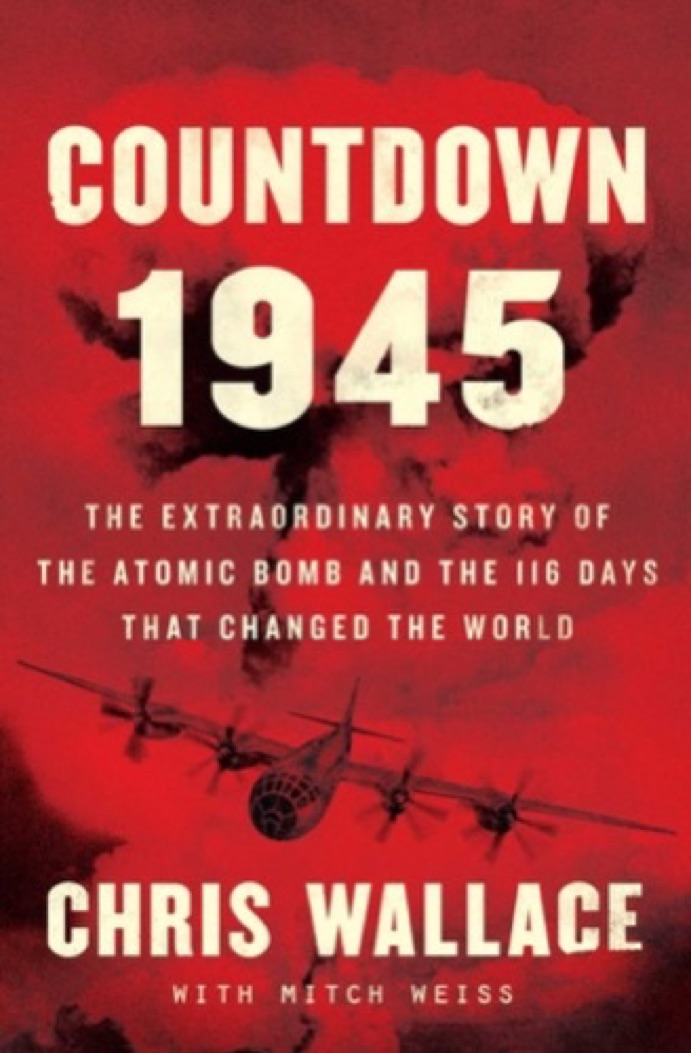
Countdown 1945: The Extraordinary Story of the Atomic Bomb and the 116 Days That Changed the World
Applying the lessons from "Countdown 1945: The Extraordinary Story of the Atomic Bomb and the 116 Days That Changed the World" by Chris Wallace and Mitch Weiss to your life can be a powerful way to understand the weight of leadership and the importance of rapid learning under pressure. Here are some ways you might integrate these lessons:
- Prepare for the Unexpected Transition: - In your career as a physician, entrepreneur, or pilot, you must remain in a state of constant readiness to step into higher-stakes roles. Truman’s ascent shows that you may be required to master complex systems—whether a new medical protocol or a venture capital portfolio—with almost no lead time. Success in these moments depends on your ability to "stay hungry" for information while remaining humble enough to rely on expert advisors.
- Manage the Ethics of Innovation: - Whether you are building a healthcare startup or a new technology firm, you will face the dilemma of how your innovations might be used or misused. You must proactively establish an ethical framework for your work, ensuring that the "disruption" you cause serves a greater human good rather than just a technical or financial milestone.
- Cultivate Operational Excellence: - Taking a page from Colonel Paul Tibbets, you should demand a culture of precision in your professional life. In high-risk environments like the ER or the cockpit, excellence is the only acceptable standard. Use checklists, rigorous training, and clear communication to ensure that your team can execute complex missions with zero margin for error.
- Synthesize Divergent Expert Perspectives: - Truman had to balance the conflicting views of scientists, generals, and diplomats. You must develop the skill of listening to specialized experts in law, medicine, and business, and then distilling that information into a single, decisive path forward. Effective leadership is often about making the best possible choice in the face of incomplete or conflicting data.
- Acknowledge the Human Consequences of Strategy: - Every high-level decision you make as an entrepreneur or leader has a real impact on people’s lives. You must never let the "data" or the "strategy" obscure the human element. Maintaining empathy for those affected by your decisions—whether they are employees, patients, or competitors—is essential for long-term moral and professional integrity.
- Embrace the Discipline of the Deadline: - The "countdown" nature of the Manhattan Project forced a level of focus that eliminated bureaucratic waste. You can apply this by setting strict timelines for your own projects, creating a sense of urgency that forces your team to prioritize the most impactful actions and move past the "paralysis of analysis."
By integrating these lessons, you will develop a more robust approach to leadership that balances the cold requirements of strategy with the warm necessities of ethics and human impact. This book serves as a reminder that while the scale of our decisions may not always be global, the principles of courage, preparedness, and responsibility remain universal.
What the book covers
"Countdown 1945: The Extraordinary Story of the Atomic Bomb and the 116 Days That Changed the World" by Chris Wallace and Mitch Weiss is a gripping, fast-paced narrative history that chronicles the tense months leading up to the atomic bombing of Hiroshima. The book begins on April 12, 1945, the day Harry S. Truman unexpectedly ascended to the presidency, and follows the monumental secret he inherited: the Manhattan Project. By focusing on a diverse cast of characters—from political leaders and physicists to the airmen tasked with the mission—the authors reconstruct the high-stakes decisions and scientific breakthroughs that ushered in the nuclear age.
Summary:
- The Unexpected President: - When Franklin D. Roosevelt died, Harry Truman was a Vice President who had been kept entirely in the dark regarding the nation's most secret weapon. The book details his rapid indoctrination into the Manhattan Project, emphasizing the staggering responsibility placed on a man who had only been in office for eighty-two days before making one of history's most difficult decisions. - Truman’s early days were defined by a steep learning curve, as he had to evaluate the progress of the bomb while managing the final stages of the war in Europe and the mounting casualties in the Pacific.
- The Scientific Race at Los Alamos: - J. Robert Oppenheimer and his team of scientists at the Los Alamos laboratory are depicted as working under immense psychological and temporal pressure. The narrative explores the technical hurdles of both the uranium and plutonium designs, highlighting the intersection of theoretical physics and industrial-scale engineering. - The authors also touch upon the moral friction within the scientific community, as some researchers began to question the long-term global implications of the weapon they were creating.
- The Military Preparation and the Enola Gay: - The story follows Colonel Paul Tibbets, the commander of the 509th Composite Group, who was responsible for the aerial delivery of the bomb. Tibbets had to hand-pick his crew and oversee the modification of B-29 bombers to carry a weapon unlike any ever deployed. - This section illustrates the rigorous training and extreme secrecy required for the mission, showcasing the operational excellence necessary to execute a flight that had no room for error.
- The Potsdam Conference and the Big Three: - Truman traveled to Germany to meet with Winston Churchill and Joseph Stalin to shape the post-war world. While there, he received the coded message that the Trinity test in New Mexico was a success, giving him a new and terrifying leverage in international diplomacy. - The book explores the geopolitical chess match between the Allied leaders and the drafting of the Potsdam Declaration, which served as Japan’s final warning before the atomic strike.
- The Ethics of the Decision: - Wallace and Weiss delve into the meetings of the Interim Committee, where advisors debated whether to give a non-combat demonstration of the bomb or to use it on a military-industrial target. The driving force behind the eventual decision was the projection of massive American casualties—potentially over a million—if a land invasion of Japan were required. - The narrative treats the decision not as a foregone conclusion, but as a grueling calculation of lives lost versus lives saved.
- The Trinity Test and the Final Order: - The climax of the developmental phase occurs in the New Mexico desert with the Trinity test. The successful detonation confirmed that the scientists' theories worked in practice, leading Truman to authorize the use of the weapon against Japan while aboard the USS Augusta. - The transition from a secret laboratory experiment to a deployed weapon of war is portrayed through the eyes of those who witnessed the first mushroom cloud and realized the world had entered a new era.
- The Mission to Hiroshima: - The book concludes with a minute-by-minute account of the flight of the Enola Gay. From the takeoff from Tinian Island to the release of "Little Boy," the authors provide a cockpit view of the mission, contrasted with the harrowing experiences of survivors on the ground in Hiroshima. - This final section humanizes the immense scale of the destruction, providing a sobering look at the reality of nuclear warfare.
"Countdown 1945" is a masterclass in narrative non-fiction, humanizing a monumental historical event by focusing on the individuals who shaped it. It underscores the heavy weight of command and the unintended consequences of technological breakthroughs, making it essential reading for anyone interested in the intersection of power, science, and morality.