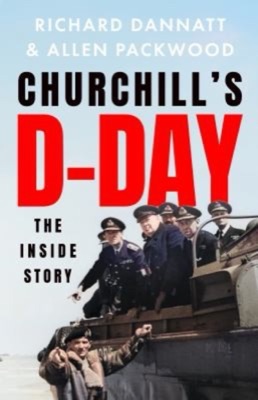
Churchill's D-Day: The Inside Story
Applying the lessons from "Churchill's D-Day: The Inside Story" by Richard Dannatt and Allen Packwood to your life can be a transformative exercise in understanding high-stakes decision-making and the complexities of human leadership. Here are some ways you might integrate these lessons:
- Master the Art of Strategic Patience: - Like Churchill, you must resist the pressure to act prematurely when the stakes are existential. In business or medicine, wait for the "force multiplier" moment where your preparation meets opportunity, rather than rushing into a high-risk venture out of a sense of false urgency or ego.
- Leverage History to Inform the Present: - Churchill used his past failures at Gallipoli as a filter for future risks. You should cultivate a "historical mindset" within your own ventures, analyzing past industry downturns or personal setbacks not to breed fear, but to build more resilient systems and better-informed risk assessments.
- Balance Vision with Technical Granularity: - Great leaders often hover between the 30,000-foot view and the microscopic details. Follow Churchill’s example by championing the "Mulberry harbors" of your organization—those logistical or technical innovations that, while unglamorous, are the actual engines of your strategic success.
- Manage Powerful Egos with Diplomacy: - Whether dealing with board members, co-founders, or senior partners, recognize that friction is inevitable in high-performance teams. Use Churchill’s approach of rigorous debate followed by ultimate alignment to ensure that diverse perspectives strengthen the final plan rather than fracturing the organization.
- Embrace the Role of the Informed Dissenter: - Do not be afraid to challenge the prevailing consensus if your intuition and data suggest a different path. Churchill’s initial skepticism of a premature invasion frustrated his allies, but his insistence on thoroughness arguably saved the mission from a catastrophic military defeat.
- Acknowledge the Human Cost of Your Decisions: - Leadership is never just about spreadsheets or strategic maps; it is about people. By maintaining a connection to the individuals impacted by your decisions—whether they are employees, patients, or investors—you preserve the empathy required to lead with integrity and stay humble amidst your success.
By integrating these lessons, you can develop a leadership style that is both courageous and calculated. Recognizing that even the most iconic leaders faced profound doubt allows you to navigate your own professional "D-Days" with a clearer head, a stronger heart, and a deeper commitment to the long-term success of your mission.
What the book covers
"Churchill's D-Day: The Inside Story" by Richard Dannatt and Allen Packwood is a meticulously researched examination of Winston Churchill's pivotal role in Operation Overlord. Drawing from the vast resources of the Churchill Archives Centre, the authors provide a nuanced look at the Prime Minister's strategic anxieties, personal frustrations, and ultimately, his unwavering resolve. The book dismantles myths of Churchill’s blind enthusiasm, instead revealing a leader haunted by the ghosts of World War I who demanded perfection before committing to the invasion of Normandy.
Summary:
- Strategic Hesitation and Historical Trauma: - Churchill was deeply cautious about a cross-channel invasion, primarily due to the catastrophic failure of the Gallipoli campaign in 1915 and the carnage of the Western Front. The authors describe his initial preference for a "Mediterranean strategy," where he advocated for attacking the "soft underbelly" of Europe to avoid the mass casualties he feared would result from a direct assault on the Atlantic Wall.
- The Tension Between Allied Commanders: - The book explores the complex dynamics between Churchill and the American high command, particularly Generals Eisenhower and Marshall. While the Americans pushed for a 1942 or 1943 invasion, Churchill’s insistence on delay allowed for the buildup of overwhelming force and the refinement of logistical plans, though it created significant friction within the Grand Alliance.
- The Battle of the Atlantic as a Prerequisite: - Packwood and Dannatt emphasize that Churchill viewed the defeat of the U-boat threat as the essential precursor to D-Day. He understood that without total control of the shipping lanes, any cross-channel attempt was doomed to fail, highlighting his strategic focus on the global maritime supply chain over immediate tactical wins.
- Logistical Innovations and ‘Mulberry’ Harbors: - The narrative details Churchill's fascination with technical solutions to military problems, specifically his famous "Action This Day" memos that bypassed bureaucracy. He was a driving force behind the development of Mulberry harbors—portable, temporary ports that allowed the Allies to offload supplies without immediately capturing a major French port, a feat of engineering that proved critical to the campaign's success.
- The Intelligence War and Deception: - The authors detail the Prime Minister's involvement in Operation Fortitude, the massive deception campaign designed to convince the Germans that the invasion would land at the Pas-de-Calais. Churchill understood that the success of the physical invasion depended entirely on the mastery of the information space and the maintenance of absolute secrecy.
- Churchill’s Personal Frontline Ambitions: - One of the book's most compelling sections involves Churchill’s insistence on witnessing the invasion from a Royal Navy vessel. The authors recount the correspondence where King George VI eventually had to forbid Churchill from going, arguing that if the Prime Minister risked his life, the King felt duty-bound to do the same, effectively grounding them both for the sake of the nation's stability.
- The Moral Weight of Leadership: - As D-Day approached, the authors depict a man carrying an immense emotional burden, revealed through his private papers and sleepless nights. Churchill’s concern for the lives of the young men being sent into the "deadly hazard" of the beaches contrasts his public persona of the "British Bulldog" with a deeply reflective and anxious leader.
This volume serves as a vital correction to the simplified narrative of Churchill as a purely gung-ho war leader. By showcasing his doubts and his dedication to detail, Dannatt and Packwood provide a comprehensive portrait of a statesman who balanced grand strategy with a profound sense of responsibility toward his soldiers and his country.