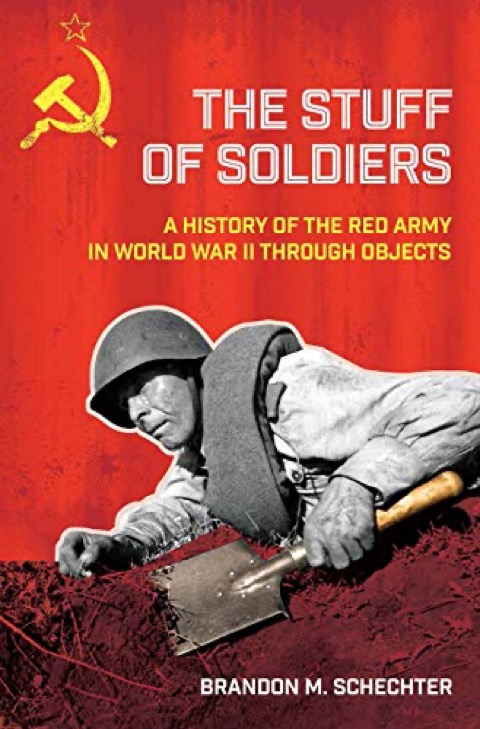
The Stuff of Soldiers: A History of the Red Army in World War II through Objects
Applying the lessons from "The Stuff of Soldiers: A History of the Red Army in World War II through Objects" by Brandon Schechter to your life can be a profound exercise in understanding how the tangible tools we use define our culture and our capacity for endurance. Here are some ways you might integrate these lessons:
-
Master the Materiality of Your Profession: - Just as the Red Army soldier relied on his kit for survival, you must master the "stuff" of your trades. Whether it is the specialized medical equipment in an ER, the cockpit interface of a complex aircraft, or the legal frameworks of a venture capital deal, your competence is inextricably linked to how well you understand and maintain the tools at your disposal.
-
Cultivate Resilience Through Scarcity: - The Soviet experience demonstrates that immense achievements often come from environments of extreme limitation. In entrepreneurship, especially in the early stages of a startup, embrace the constraints. Use scarcity as a catalyst for innovation and resourcefulness, learning to do more with the fundamental "kit" you have rather than waiting for ideal conditions.
-
Leverage Shared Artifacts to Build Culture: - Leadership involves creating a shared identity. Recognize the power of symbols—whether it’s a company logo, a specific clinical protocol, or a shared ritual—to unify a diverse team. Like the Soviet uniform, these markers can help align individual efforts toward a singular, mission-critical objective.
-
Recognize the Emotional Value of Communication: - In the digital age, we often forget the weight of the physical. The Red Army's "triangle letters" remind us that the medium of communication matters. Whether you are leading a team or nurturing family relationships, remember that tangible gestures—a handwritten note or a physical token of appreciation—carry a weight that digital messages cannot replicate.
-
Navigate the Ethics of Success and "Trophies": - As you move through your career and acquire the "trophies" of success—wealth, accolades, or influence—be mindful of how these objects change your perspective. Like the soldiers entering Germany, new material wealth can distort your original mission. Stay humble and ensure your acquisitions serve your values rather than redefining them.
-
Prioritize the Logistics of Human Care: - Real leadership is often found in the unglamorous work of logistics—ensuring people are fed, equipped, and supported. In medicine and business, success is built on the reliable delivery of the basics. Don't let your vision for the future distract you from the essential material needs of your team in the present.
By integrating these lessons, you develop a deeper appreciation for the interplay between the physical world and human willpower, ensuring that your own "stuff"—your tools, your environment, and your symbols—is intentionally aligned with your highest goals of service and leadership.
What the book covers
"The Stuff of Soldiers: A History of the Red Army in World War II through Objects" by Brandon Schechter is a deeply researched material history that examines the lives of Soviet soldiers during the Great Patriotic War. Rather than focusing on grand strategy or high-level politics, Schechter reconstructs the war through the tangible items that defined the daily existence of millions of men and women. The book explores how objects like spoons, greatcoats, and rifles were not merely survival tools but were instrumental in forging a collective Soviet identity and transforming a diverse peasantry into a modern fighting force.
Summary:
-
The Material World of the Soldier: - Schechter begins by detailing the scarcity of the Soviet economy and how the Red Army became the primary distributor of goods for millions. For many rural recruits, the army provided the first high-quality, standardized material goods they had ever owned, making the state the ultimate provider of both life and the means to sustain it.
-
Uniforms and the Transformation of Identity: - The book explores the transition from civilian clothes to the gymnastiorka (tunic) and the iconic greatcoat. Schechter argues that the uniform served as a "second skin" that erased individual ethnic and class backgrounds, creating a unified Soviet persona while simultaneously signaling the soldier's rank and status within the military hierarchy.
-
The Culture of the Mess and the Spoon: - One of the most intimate objects discussed is the personal spoon, often carried in the boot. Schechter describes how eating became a communal ritual and how the distribution of bread and the legendary "100 grams" of vodka were central to maintaining morale and social order among the ranks.
-
Weaponry as Personal and Political Tool: - The author examines the relationship between the soldier and his arms, from the Mosin-Nagant rifle to the PPSh submachine gun. These objects were treated with a mix of reverence and utility, serving as the soldier's primary means of agency and a physical manifestation of the Soviet industrial effort to repel the German invasion.
-
The Power of the Written Word: - Letters and newspapers are treated as physical objects that bridged the gap between the front lines and the home front. The "triangle letters" (folded without envelopes) were precious artifacts that maintained emotional bonds and allowed the state to manage the narrative of the war through censorship and propaganda.
-
Trophies and the Encounter with the West: - As the Red Army pushed into Eastern Europe and Germany, soldiers encountered a level of material wealth they had never seen. Schechter analyzes the "trophy" culture—clocks, clothing, and household goods taken back to the USSR—and how these objects challenged Soviet ideological perceptions of the capitalist West.
-
The Aftermath and Material Memory: - The book concludes by looking at how these wartime objects transitioned into relics of memory. Medals, scarred equipment, and personal belongings became the foundation of a post-war identity that centered on the shared sacrifice of the Great Patriotic War, serving as tangible proof of the victory and the regime's legitimacy.
"The Stuff of Soldiers" provides a unique and necessary lens on the Second World War, proving that the history of conflict is not just a story of ideas and maps, but a story of the physical things we carry into battle and the meaning we imbue within them.