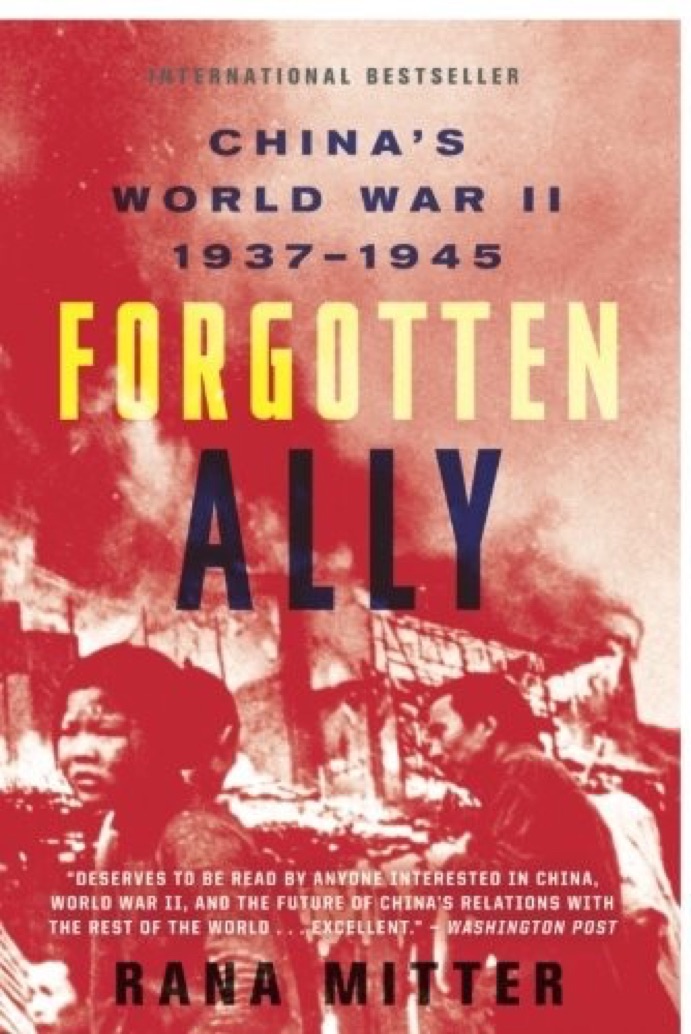
Forgotten Ally: China's World War II, 1937-1945
Applying the lessons from "Forgotten Ally: China's World War II, 1937-1945" by Rana Mitter to your life can be a transformative exercise in understanding resilience, strategic compromise, and the long-term impact of crisis management. Here are some ways you might integrate these lessons:
-
Resilience Through Attrition: - In your ventures and medical practice, you must recognize that success is often a matter of enduring longer than the competition or the crisis. Just as China traded space for time, you can strategically sacrifice short-term gains or comfort to ensure the long-term survival of a project, understanding that endurance is a form of victory in itself.
-
Navigating Dysfunctional Alliances: - Whether in venture capital or complex legal negotiations, you will encounter partners whose goals differ from your own. Learn from the Stilwell-Chiang dynamic that technical expertise (Stilwell) without cultural empathy and political alignment (Chiang) leads to gridlock; success requires bridge-building and a deep understanding of your partner’s internal pressures.
-
The Ethical Weight of Leadership: - Leadership often involves choosing between two tragic options, such as the Nationalist decision to flood the Yellow River. In medicine and business, you must be prepared for the moral weight of "least-bad" decisions, ensuring you have a clear ethical framework to guide you when every available path involves significant cost or sacrifice.
-
Preparing for the Post-Crisis Reality: - The war was not just about defeating an external enemy but also about who would control the peace. As an entrepreneur, you should always look beyond the immediate fire-fight or market downturn to ask: "How am I positioning my organization to lead once the current crisis resolves?"
-
The Importance of Unified Vision: - The friction between the Nationalists and Communists during the United Front is a cautionary tale for any board or leadership team. You must ensure that your team is not just working toward a common enemy, but is aligned on a positive, shared vision for the future to prevent internal collapse when external pressure subsides.
-
Acknowledge Hidden Contributions: - Just as China was the "forgotten" ally, many critical contributors in your organizations may go unrecognized. As a leader, make it a habit to identify and elevate the "forgotten allies" in your teams—those whose steady, behind-the-scenes work provides the foundation for more visible successes.
By integrating these lessons, you can develop a more nuanced approach to leadership that values historical context and strategic patience. Understanding the depths of Chinese resilience and the complexities of their struggle provides a powerful template for managing large-scale organizations through periods of extreme volatility and change.
What the book covers
"Forgotten Ally: China's World War II, 1937-1945" by Rana Mitter is a magisterial re-evaluation of China's critical role during the global conflict against the Axis powers. Mitter argues that China’s resistance against the Japanese invasion was the "forgotten" fourth pillar of the Allied victory, alongside the efforts of the United States, Britain, and the Soviet Union. The book provides a comprehensive narrative of the eight-year struggle that fundamentally reshaped Chinese society, claimed millions of lives, and laid the ideological and political groundwork for the modern global order.
Summary:
-
The Outbreak of Total War: - The book details the 1937 Marco Polo Bridge Incident which escalated into a full-scale Japanese invasion, forcing the Chinese Nationalist government to face a technologically superior military. Mitter describes the brutal fall of Shanghai and the subsequent Nanjing Massacre, events that galvanized Chinese national identity through shared suffering and resistance.
-
The Strategic Retreat to Chongqing: - As coastal cities fell, Chiang Kai-shek moved the capital deep into the interior to Chongqing, adopting a "trading space for time" strategy. This period was defined by a scorched-earth policy, where the Nationalists destroyed infrastructure and resources to prevent Japanese use, often at a catastrophic cost to their own civilian population.
-
The Rise of the Communist Alternative: - While the Nationalists bore the brunt of conventional warfare, Mao Zedong and the Communists consolidated power in the remote base of Yan'an. They utilized guerrilla tactics and land reform to build a grassroots movement, positioning themselves as the more disciplined and ideologically coherent alternative to the beleaguered Nationalist administration.
-
Environmental and Humanitarian Catastrophe: - Mitter highlights the 1938 breaching of the Yellow River dikes—a desperate military move by the Nationalists to halt the Japanese advance—which resulted in massive flooding and hundreds of thousands of deaths. This event, combined with the Henan famine of 1942, severely undermined the government's legitimacy and demonstrated the horrific trade-offs made during the war.
-
The Fractious Alliance with the West: - The arrival of American aid and advisors, most notably General Joseph "Vinegar Joe" Stilwell, introduced a period of intense friction. Mitter explores the personality clashes and differing strategic priorities between Stilwell and Chiang Kai-shek, illustrating how mutual distrust hampered the Allied effort in the China-Burma-India theater.
-
The Internal Struggle for China's Soul: - The book examines the "United Front" between Nationalists and Communists as a fragile and often performative alliance. In reality, both sides were constantly maneuvering for advantage in the post-war era, leading to internal skirmishes and a lack of unified command that exacerbated the country's military vulnerabilities.
-
The Long-Term Consequences and Legacy: - Mitter concludes by tracing how the exhaustion of the Nationalist state and the mobilization of the Communist peasantry led directly to the 1949 Revolution. He argues that China's massive contribution to the war effort—holding down over half a million Japanese troops—was largely erased from Western memory during the Cold War but remains central to China's modern geopolitical self-image.
By placing China at the center of the World War II narrative, Mitter restores a sense of historical balance to the conflict. The book serves as a sobering reminder of the immense human cost of the war in Asia and provides a necessary lens through which to understand the contemporary political motivations of the People’s Republic of China.