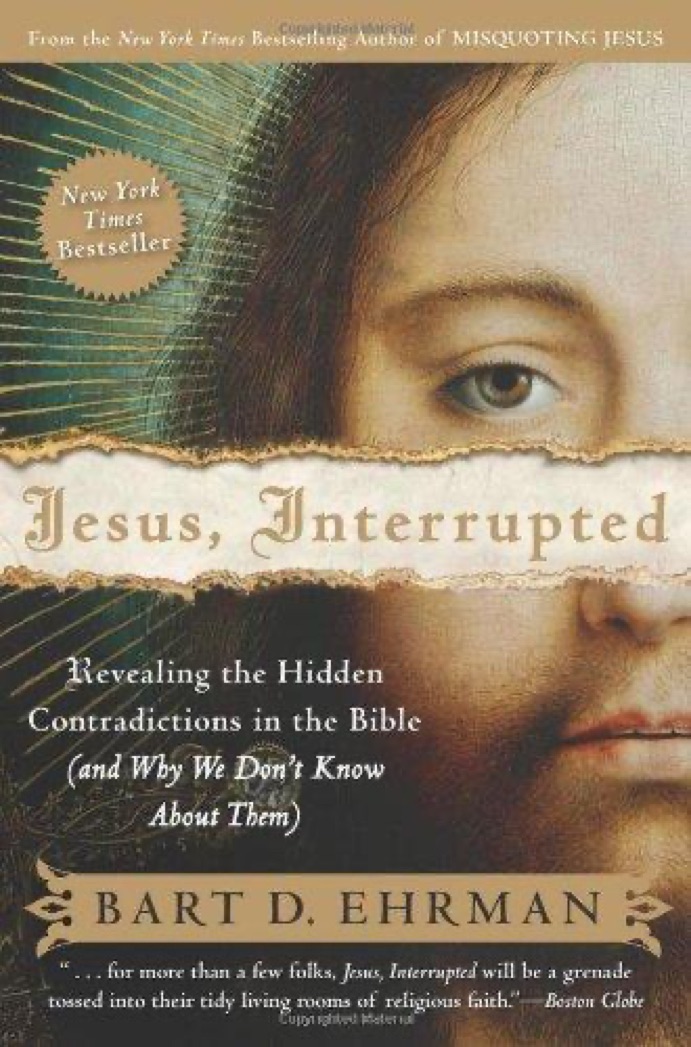
Jesus, Interrupted: Revealing the Hidden Contradictions in the Bible (and Why We Don't Know About Them)
Applying the lessons from "Jesus, Interrupted: Revealing the Hidden Contradictions in the Bible (and Why We Don't Know About Them)" by Bart D. Ehrman to your life can be a powerful exercise in developing a truly critical and analytical mindset. Here are some ways you might integrate these lessons:
-
Exercise Rigorous Source Verification: - Just as Ehrman examines the provenance of biblical manuscripts, you should apply a high standard of due diligence to the information you receive in business and medicine. Whether evaluating a new medical study or a startup’s pitch deck, look past the "authorized version" of the story to verify the underlying data and its historical consistency.
-
Embrace Intellectual Honesty and Humility: - Adopting the mantra "Stay Hungry, Stay Humble" requires the courage to follow evidence even when it contradicts long-held beliefs or traditional wisdom. In leadership, being willing to admit that a foundational strategy is based on flawed assumptions is not a sign of weakness, but a prerequisite for authentic growth and course correction.
-
Synthesize Divergent Perspectives: - The presence of four different Gospel accounts reminds you that every witness has an agenda and a unique vantage point. In complex legal or corporate environments, avoid the trap of looking for a single "perfect" narrative; instead, learn to synthesize multiple, sometimes conflicting, reports to build a more comprehensive and realistic picture of the situation.
-
Recognize the Evolution of Systems: - Understanding that core doctrines often emerge from historical necessity rather than static design helps you navigate organizational change. As a serial entrepreneur, you can better manage your company’s culture and mission by recognizing how they naturally evolve over time in response to internal tensions and external pressures.
-
Identify the "Interrupted" Narrative in Strategy: - Often, what is presented as a smooth, linear success story is actually full of interruptions, pivots, and revisions. Recognizing these gaps in your own professional history or the history of your industry allows you to better anticipate future disruptions and understand the human elements that drive institutional change.
-
Communicate with Transparency: - Ehrman critiques the gap between what experts know and what the public is told. In your roles as a physician and a VC leader, aim to close the gap between your specialized knowledge and your stakeholders' understanding, ensuring that your teams and patients are equipped with the full, unvarnished truth.
By integrating these lessons, you will sharpen your ability to navigate a world of complex data and conflicting narratives with the precision of a pilot and the analytical depth of a scholar. This approach ensures that your leadership remains grounded in reality and your pursuit of knowledge stays unencumbered by unexamined tradition.
What the book covers
"Jesus, Interrupted: Revealing the Hidden Contradictions in the Bible (and Why We Don't Know About Them)" by Bart D. Ehrman is a rigorous yet accessible introduction to the historical-critical method of biblical analysis. Ehrman, a leading New Testament scholar, outlines the significant discrepancies, historical inconsistencies, and varied theological agendas present within the books of the New Testament. The book serves as a bridge between the specialized world of academic biblical scholarship and the general public, challenging the traditional view of the Bible as a monolithic and perfectly harmonious divine document.
Summary:
-
The Discrepancies in the Gospel Narratives: - Ehrman demonstrates that the Gospels of Matthew, Mark, Luke, and John often provide conflicting accounts of the same events, ranging from the details of Jesus's birth to the timing and nature of his crucifixion. He argues that these are not mere oversights but represent the unique perspectives and theological priorities of each individual author writing for a specific community.
-
The Historical Jesus vs. the Johannine Christ: - The book highlights the stark contrast between the "Synoptic" Jesus of the first three Gospels—who speaks in parables about the coming Kingdom of God—and the Jesus of the Gospel of John, who speaks in long discourses about his own divine identity. Ehrman explains why historians believe the Synoptic account is more representative of the historical figure, while John reflects a later, more evolved Christology.
-
Authorship and the Reality of Pseudepigrapha: - Ehrman examines the scholarly consensus that many books in the New Testament were likely not written by the apostles to whom they are attributed, such as the letters of Peter and several of the Pauline epistles. He discusses the ancient practice of writing in the name of a respected authority to gain a wider audience, a concept known as pseudepigrapha, or what some modern critics might call forgery.
-
The Scribal Evolution of the Text: - Because the original manuscripts of the New Testament no longer exist, the text has been preserved through centuries of hand-copying, leading to thousands of variations. Ehrman describes how scribes sometimes intentionally altered the text to settle theological disputes, harmonize different accounts, or clarify difficult passages, thereby shaping the doctrine of the early church through the pen.
-
The Development of Core Christian Doctrines: - The author traces the historical progression of ideas like the Trinity and the absolute divinity of Jesus, showing that these were not fully formed in the earliest Christian writings. Instead, they emerged through centuries of intense debate, political maneuvering, and the eventual selection of certain texts over others during the formation of the official biblical canon.
-
The Scholarly Gap Between Academy and Pew: - A central theme of the book is the observation that while these historical findings are standard curriculum in major seminaries and universities, they are rarely shared with the average churchgoer. Ehrman argues for greater intellectual transparency, suggesting that an honest engagement with the Bible’s human origins can lead to a more profound, if different, understanding of faith and history.
By deconstructing the traditional narrative of biblical inerrancy, "Jesus, Interrupted" provides a vital historical framework for understanding the origins of Western religious thought. It underscores the importance of treating ancient texts with the same critical scrutiny applied to any other historical document, revealing a complex and deeply human story of religious evolution.