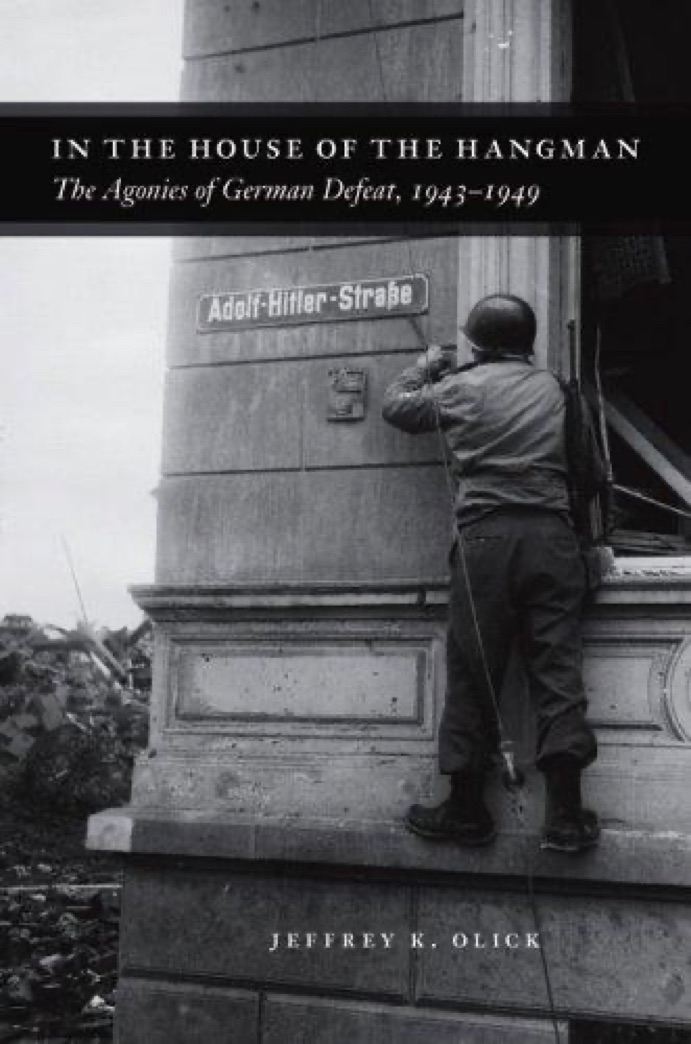
In the House of the Hangman: The Agonies of German Guilt, 1943-2005
Applying the lessons from "In the House of the Hangman: The Agonies of German Guilt, 1943-2005" by Jeffrey K. Olick to your life can be a powerful exercise in ethical leadership and organizational integrity. Here are some ways you might integrate these lessons:
- Practice Radical Transparency in Leadership: - Just as Germany had to move from denial to public accountability to regain international trust, you must be willing to confront and own the failures within your own organizations. In medicine or business, "staying humble" means admitting when a system has failed and leading the charge to rectify the cultural roots of that failure rather than hiding behind a "policy of silence."
- Understand the Long Tail of Reputation: - Olick demonstrates that reconstructing a reputation takes decades, not days. Whether you are navigating a legal dispute or a business setback, you should recognize that your legacy is built on how you handle your worst days; consistent, honest engagement with your history is the only way to build a brand that lasts.
- Bridge Generational and Cultural Divides: - The 1968 shift in Germany proves that new perspectives are necessary to break stagnant cultural patterns. You should actively seek out the voices of younger partners or "outsiders" in your venture firm or medical practice, as they often see the blind spots and ethical compromises that long-standing leadership may have become accustomed to over time.
- Utilize Symbolic Gestures for Cultural Alignment: - Like the "politics of regret," your leadership should use symbolic acts to reinforce your values. This might mean making a public stand on a difficult ethical issue or prioritizing a mission-driven project over short-term profit, signaling to your team and the market that your drive is balanced by a deep moral compass.
- Institutionalize Accountability Systems: - Do not rely on individual memory or conscience alone; build systems of accountability. In high-stakes fields like aviation or surgery, Olick’s study suggests that unless responsibility is woven into the institutional fabric through checklists, reviews, and open discourse, the same errors will eventually repeat under the guise of "normalization."
- Reconcile Competing Identities: - Germany had to balance being a modern economic powerhouse with being a nation of penance. You must similarly learn to integrate your various roles—physician, pilot, entrepreneur, attorney—ensuring that the lessons of one (like the safety protocols of aviation) inform the ethics and operations of the others, creating a cohesive and high-integrity professional identity.
By integrating these lessons, you transform the "agonies" of past mistakes into the bedrock of a more resilient and respected future. Embracing the discomfort of hard truths allows you to lead with a level of authenticity that denial can never achieve, ensuring that your pursuit of success remains grounded in a commitment to doing what is right, even when it is difficult.
What the book covers
"In the House of the Hangman: The Agonies of German Guilt, 1943-2005" by Jeffrey K. Olick is a profound sociological and historical investigation into how a nation processes catastrophic moral failure. Olick meticulously charts West Germany's evolution from the immediate post-war state of denial and shock to a sophisticated, albeit painful, culture of public apology and historical accountability. By analyzing political rhetoric, judicial proceedings, and public debates, the book demonstrates how a society’s relationship with its darkest chapters is never static, but is instead constantly renegotiated to meet the needs of the present and the future.
Summary:
- The Burden of Collective Guilt: - Olick begins by examining the immediate aftermath of the Third Reich, where the concept of "German guilt" was first articulated by intellectual figures like Karl Jaspers. He explores the tension between the Allied insistence on collective responsibility and the internal German attempt to distinguish between high-ranking "criminal" leaders and the supposedly "innocent" masses. - This initial period was characterized by a domestic "policy of silence," even as the legal framework of the Nuremberg Trials began the slow process of institutionalizing accountability for state-sponsored atrocities on the global stage.
- The Adenauer Era and Strategic Integration: - During the 1950s, under Chancellor Konrad Adenauer, West Germany prioritized economic reconstruction and integration into the Western alliance over deep moral reckoning. Olick argues that this era relied on a "normalization" process that often rehabilitated former officials for the sake of administrative stability. - The author illustrates how the early Federal Republic utilized a rhetoric of "victimhood"—focusing on German suffering during the war—to balance the external demands for reparations with the internal need for social cohesion and national rebuilding.
- The 1968 Generational Shift: - A pivotal turning point occurred in the late 1960s when a new generation of Germans challenged the silence of their parents, demanding to know what they did during the war. This upheaval forced a radical confrontation with the Nazi past, moving historical memory from the private margins into the absolute center of public discourse. - This era saw the rise of a critical historical consciousness, where the "refusal to forget" became a defining feature of the democratic identity of West Germany, proving that a healthy democracy requires the courage to face ugly truths.
- The Politics of Regret: - Olick introduces the concept of the "politics of regret," where public apologies and commemorative acts serve as vital tools for establishing political legitimacy. He analyzes how German leaders, such as Willy Brandt, used symbolic gestures to signal a clean break from the past and build trust with international neighbors. - These gestures were not merely emotional displays but were calculated strategic moves to reposition Germany as a moral actor, showing that a nation could find renewed strength through the transparent admission of its failures.
- The Historikerstreit and Intellectual Conflict: - In the 1980s, the "Historians’ Quarrel" (Historikerstreit) highlighted deep divisions over how to interpret the Holocaust within the context of German history. Olick describes the clash between conservative thinkers who sought to "normalize" the past and those who insisted on the absolute uniqueness of Nazi crimes. - This debate solidified the idea that German national identity was permanently tethered to the memory of the Shoah, making historical awareness a prerequisite for responsible and humble citizenship.
- Unification and the Reconstruction of Memory: - Following the fall of the Berlin Wall, the challenge of memory shifted to include the legacies of the GDR. Olick examines how the "double burden" of two dictatorships forced a re-evaluation of German history that attempted to balance the crimes of Nazism with the repressions of Communism. - The book concludes by looking at the late 1990s and early 2000s, where Germany's "culture of contrition" reached a state of maturity, resulting in the construction of the Memorial to the Murdered Jews of Europe in the heart of Berlin.
The significance of Olick’s work lies in its understanding of memory as a dynamic social process rather than a static historical record. By documenting the "agonies" of German guilt, Olick provides a universal blueprint for how any institution, nation, or leader might approach the difficult task of reconciliation. His analysis reveals that true maturity is not found in the erasure of past sins, but in the persistent and public engagement with them.