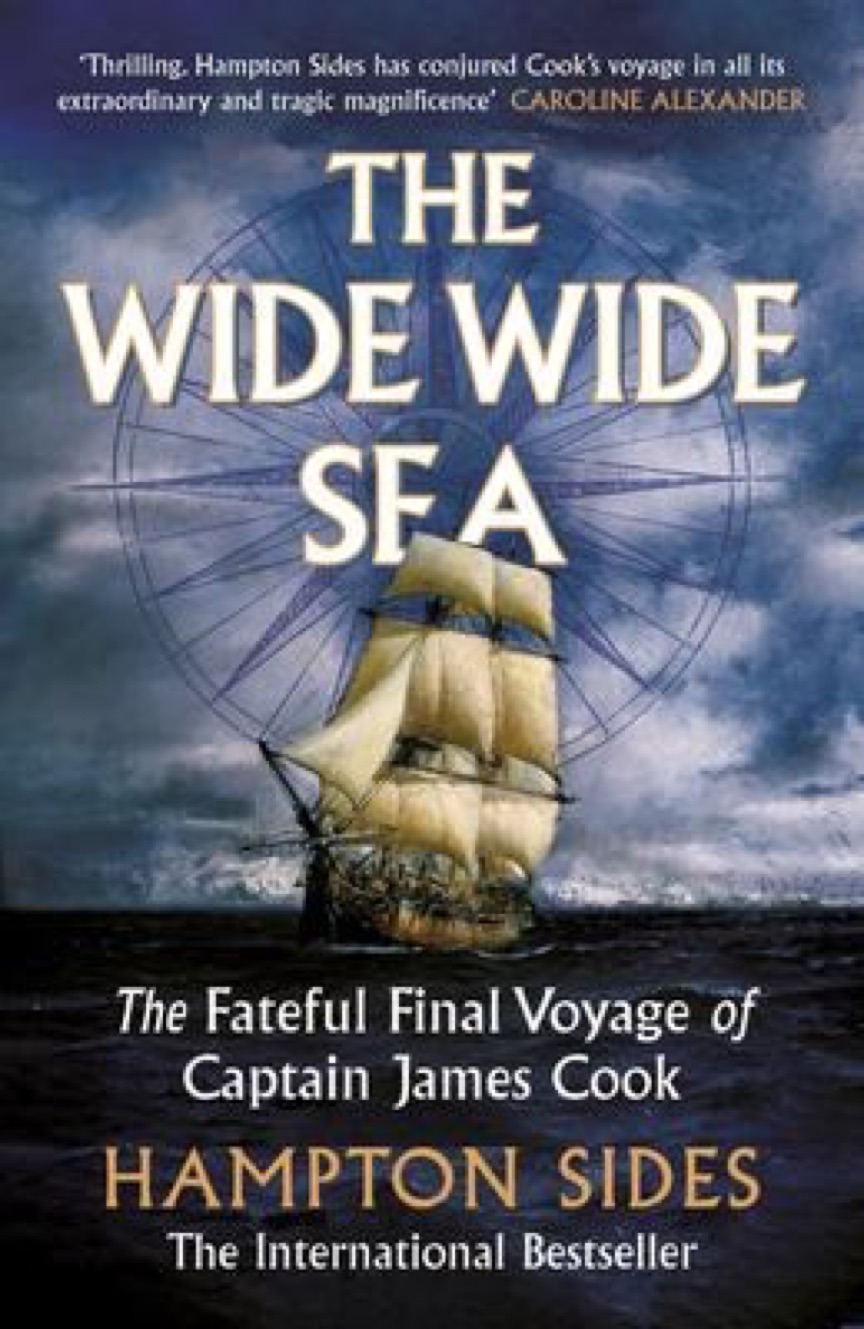
The Wide Wide Sea: Imperial Ambition, First Contact and the Fateful Final Voyage of Captain James Cook
Applying the lessons from "The Wide Wide Sea" by Hampton Sides to your life can be a powerful catalyst for evaluating how you manage success, handle high-stakes environments, and interact with diverse cultures. Here are some ways you might integrate these lessons:
- Recognize the Perils of Burnout and Cognitive Fatigue: - You must be vigilant in monitoring your own mental and physical state, especially when operating in high-pressure fields like medicine or emergency response. Just as Cook’s judgment was clouded by the exhaustion of a third consecutive voyage, your ability to lead and make sound decisions can be compromised by chronic stress; acknowledging the need for rest is not a sign of weakness but a requirement for sustained excellence.
- Practice Cultural Humility and Contextual Awareness: - Whether leading a global healthcare company or working with diverse populations in Tribal Health, you should prioritize understanding the internal logic and values of others. Misunderstandings often arise from imposing your own cultural or professional frameworks onto others; successful leadership requires the ability to see the world through the eyes of those you seek to serve or partner with.
- Maintain Humility Amidst Accolades: - As you achieve success in various fields, from law to entrepreneurship, it is vital to remember the "Stay Humble" half of your mantra. Cook’s willingness to be treated as a deity in Hawaii contributed to a dangerous disconnect from reality; ensuring you have advisors who can speak truth to power helps prevent the "God complex" that often precedes a fall.
- Manage Mission Creep with Precision: - In your ventures, clearly define the primary objective and be wary of secondary goals that drain resources and focus. The dual nature of Cook’s mission—scientific discovery versus imperial expansion—created conflicting priorities that complicated his decision-making; focus on your core mission to ensure that your team remains aligned and efficient.
- Respect the Limits of Your Environment: - In aviation and business, you must respect the physical and economic "weather" around you. Cook’s persistence in the face of Arctic ice was courageous but ultimately futile; knowing when to pivot or retreat in the face of insurmountable obstacles is as important as the drive to push forward.
- Foster Ethical Innovation: - As a venture capitalist and entrepreneur, consider the long-term impact of the "first contact" your innovations make with existing systems. Understand that every disruption has a human cost, and strive to build businesses that provide value without eroding the sovereignty or well-being of the communities they touch.
By integrating these lessons, you can better navigate the complex waters of modern leadership while avoiding the hubris that often accompanies great talent and ambition. James Cook’s final voyage serves as a timeless map for any high-achiever, highlighting that the most dangerous territory one ever explores is the boundary of their own character and temperament.
What the book covers
"The Wide Wide Sea: Imperial Ambition, First Contact and the Fateful Final Voyage of Captain James Cook" by Hampton Sides is a masterful narrative history that chronicles the final, ill-fated expedition of one of history's most renowned navigators. Set against the backdrop of the Enlightenment and the height of British imperial expansion, the book follows James Cook’s 1776 journey to find the Northwest Passage. Sides provides a nuanced exploration of the clashes between European scientific curiosity and the sovereignty of indigenous peoples, ultimately detailing the complex factors that led to Cook’s violent death in Hawaii.
Summary:
- The Mandate of the Third Voyage: - In 1776, Captain James Cook was dispatched on his third great expedition aboard the HMS Resolution, officially tasked with returning Omai, a Tahitian man, to his homeland, but secretly ordered to locate the elusive Northwest Passage. This voyage represented the pinnacle of British maritime ambition, combining the goals of scientific discovery, cartography, and the expansion of the Empire's global reach.
- A Change in Command: - Sides highlights a significant shift in Cook’s personality during this final voyage, noting that the once-composed and humane captain had become increasingly erratic, irritable, and prone to flashes of temper. This mental and physical decline, perhaps due to the exhaustion of years at sea or underlying health issues, began to strain the discipline of his crew and the nature of his interactions with native populations.
- The Discovery of the Hawaiian Islands: - The expedition unexpectedly encountered the Hawaiian archipelago, which Cook named the Sandwich Islands, marking the first recorded European contact with the islands. Initially, the interaction was characterized by mutual curiosity and trade, though it also introduced European diseases and set the stage for future cultural and political upheaval in the region.
- The Search for the Northwest Passage: - Cook navigated the grueling coasts of North America and Alaska, pushing farther north into the Arctic Circle than previous explorers. Sides details the harrowing conditions the crew faced as they battled pack ice and freezing temperatures, eventually realizing that the ice-free passage they sought did not exist in the form they had imagined.
- Cultural Friction and First Contact: - Throughout the Pacific and the Pacific Northwest, the narrative explores the profound misunderstandings between the British sailors and indigenous groups. These encounters were fraught with tension over differing concepts of property, religion, and social hierarchy, often leading to small-scale conflicts that Cook struggled to manage with his traditional restraint.
- The Return to Kealakekua Bay: - After the failure in the Arctic, the ships returned to Hawaii during the Makahiki festival, a time of peace and celebration dedicated to the god Lono. Cook was received with god-like honors, but the prolonged stay put an immense strain on the local resources and created underlying resentment among the Hawaiian leadership.
- The Breaking Point and the Death of Cook: - Following the theft of a ship’s cutter, Cook attempted to kidnap the Hawaiian King, Kalaniʻōpuʻu, to force its return. This escalation resulted in a chaotic and violent confrontation on the beach at Kealakekua Bay, where Cook was overwhelmed and killed by Hawaiian warriors, an event that shocked the European world and ended the era of the great navigator.
- The Legacy of the Expedition: - The voyage concluded under the command of Captain Clerke and later John Gore, returning to England with vast amounts of geographic and scientific data. While the mission failed to find the Northwest Passage, it completed the map of the Pacific and sparked a lasting debate over the ethics of exploration and the devastating impact of colonialism on indigenous cultures.
Hampton Sides succeeds in humanizing a legendary figure while simultaneously centering the indigenous perspective, offering a balanced and gripping account of the limits of human endurance and the unintended consequences of imperial reach. The book serves as a poignant reminder of how even the most brilliant leaders can be undone by the very traits that fueled their success.