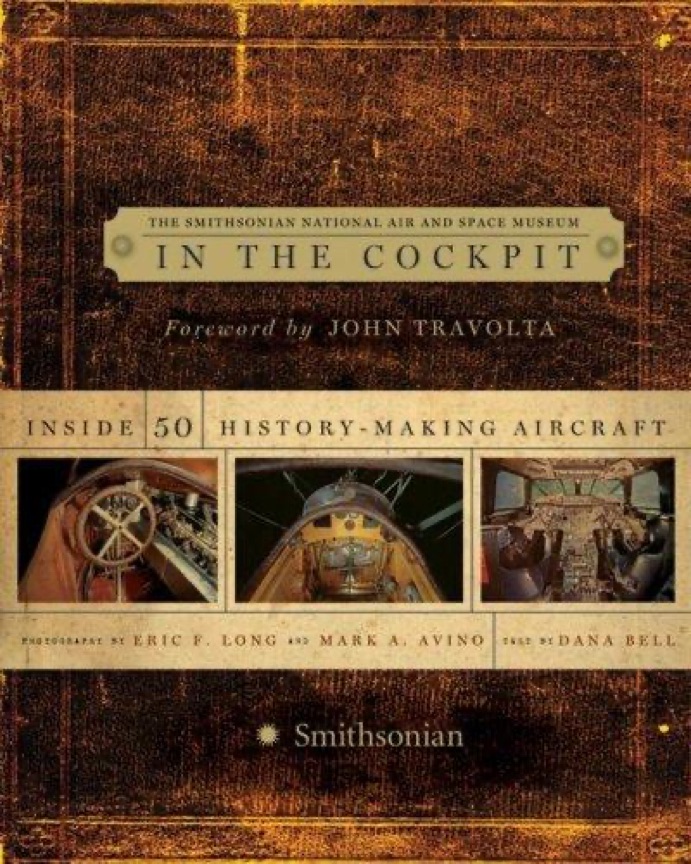
In the Cockpit: Inside 50 History-Making Aircraft
Applying the lessons from "In the Cockpit: Inside 50 History-Making Aircraft" by Dana Bell to your life can be a powerful exercise in understanding the relationship between human capability and the tools we create. Here are some ways you might integrate these lessons:
-
Master Your Control Panel: - Just as early pilots had to learn every dial and lever to survive, you must identify the key metrics and "instruments" that drive your business or medical practice. Whether it is a P&L statement or a patient’s vital signs, ensure you are looking at the right data points at the right time to make high-stakes decisions.
-
Embrace Iterative Innovation: - The transition from the Wright Flyer to the SR-71 did not happen overnight; it was the result of thousands of incremental improvements. In your entrepreneurial ventures, recognize that your "cockpit"—your operational systems—will start simple and must evolve through constant testing and feedback.
-
Design for Cognitive Load: - Aviation history shows that as systems become more complex, the risk of human error increases unless the interface is intuitive. Whether you are leading a VC firm or an ER team, strive to simplify processes and communication channels to reduce the mental burden on your team during crises.
-
Commitment to Checklist Discipline: - The complexity of the Apollo cockpits demonstrates why professional discipline is non-negotiable. Adopt the pilot’s mindset of rigorous adherence to protocols; in law, medicine, and flight, the most experienced operators are those who never skip the checklist, regardless of how many hours they have logged.
-
Maintain Situational Awareness: - The book illustrates how pilots use instruments to build a mental map of their environment. You should apply this to your leadership by constantly scanning the horizon for industry shifts, regulatory changes, or emerging technologies that could impact your "flight path."
-
Appreciate the Legacy of Excellence: - Every modern luxury in aviation was bought with the bravery of those who flew the early, primitive cockpits. Stay humble by acknowledging the mentors and predecessors in your fields of medicine and law who paved the way for the sophisticated systems you navigate today.
By integrating these lessons, you can develop a more disciplined, data-driven approach to leadership that honors the historical progression of excellence while remaining agile enough to pilot new and uncharted ventures into the future.
What the book covers
"In the Cockpit: Inside 50 History-Making Aircraft" by Dana Bell is a meticulously detailed visual and historical journey through the control centers of the world’s most significant flying machines. Utilizing the unparalleled collection of the Smithsonian National Air and Space Museum, Bell provides a rare, intimate look at the evolution of aviation through high-resolution, panoramic photography. The book serves as both a technical reference and a tribute to the pilots and engineers who pushed the boundaries of the possible from the dawn of flight to the space age.
Summary:
-
The Foundations of Flight: - This section examines the earliest cockpits, beginning with the Wright Flyer and moving through the first decades of powered flight. These initial environments were characterized by an almost complete lack of instrumentation, where pilots relied on physical sensation, wind noise, and external visual cues rather than gauges to maintain control.
-
The Interwar Refinement: - Bell highlights the rapid advancement between the World Wars, featuring aircraft like Charles Lindbergh’s Spirit of St. Louis. This era marked the introduction of essential flight instruments, such as the altimeter and turn-and-bank indicator, which allowed for the first successful long-distance and night-time navigation.
-
World War II Tactical Centers: - The book explores the complex, often cramped cockpits of legendary fighters and bombers like the P-51 Mustang and the Enola Gay. These cockpits represent the shift toward high-stress ergonomics, where designers had to arrange an increasing number of controls for weapons systems, engine management, and communication within arm’s reach of the pilot.
-
The Jet Age and Supersonic Speed: - With the advent of jet engines, cockpits underwent a radical transformation to handle higher altitudes and speeds. Bell provides detailed views of the Me 262 and the F-86 Sabre, showing the transition to more standardized layouts and the introduction of ejection seats and advanced pressurization controls.
-
Experimental and High-Altitude Craft: - This section covers the extreme environments of the X-15 and the SR-71 Blackbird, where the cockpit became a survival suit as much as a control room. The instrumentation here reflects the cutting edge of Cold War technology, featuring early computer interfaces and specialized monitors for Mach-plus speeds.
-
The Lunar Frontier: - The Apollo 11 Command Module, Columbia, represents a pinnacle of the analog-to-digital transition. The summary of this cockpit details the overwhelming array of switches and circuit breakers required for translunar injection and reentry, emphasizing the incredible precision required by the astronauts.
-
Human Factors and Design Evolution: - Throughout the text, Bell discusses how "human factors" engineering emerged as a discipline. He illustrates how cockpit layouts moved from haphazard placements of dials to intentional, logic-based groupings that minimized pilot error and fatigue during critical phases of flight.
This book is a significant historical document because it preserves the physical reality of cockpits that are now largely inaccessible to the public. By focusing on the workspace of the pilot, Bell reveals the direct link between technological innovation and the human courage required to operate these increasingly complex machines.