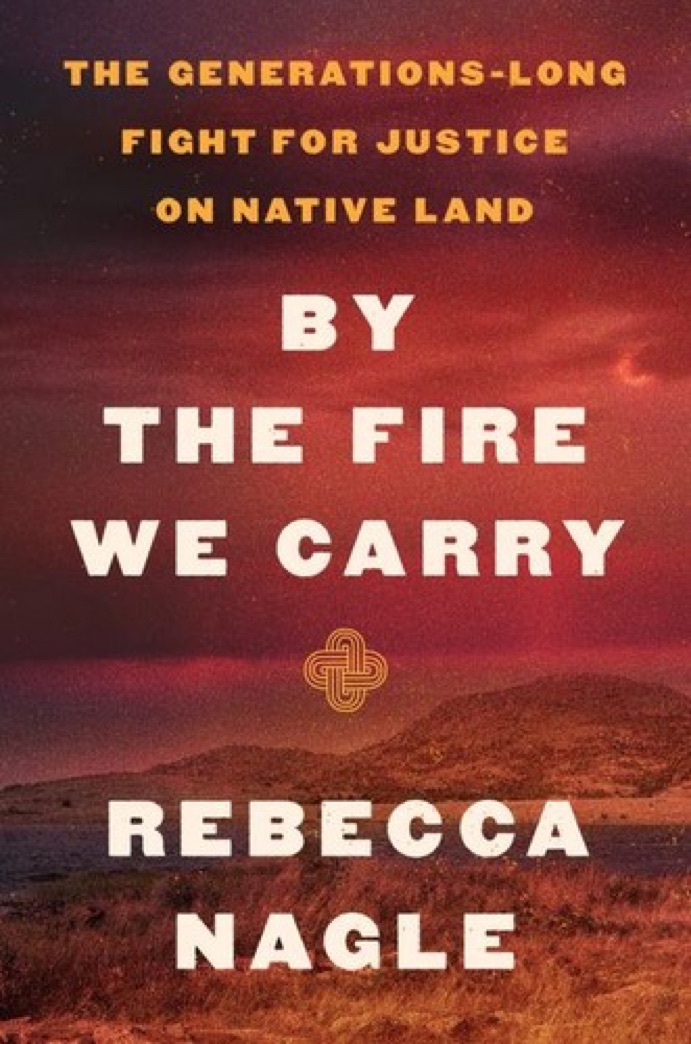
By the Fire We Carry: The Generations-Long Fight for Justice on Native Land
Applying the lessons from "By the Fire We Carry" by Rebecca Nagle to your life can be a transformative exercise in understanding the power of systemic persistence, the weight of a leader's word, and the necessity of historical literacy in professional decision-making. Here are some ways you might integrate these lessons:
-
The Power of the Long Game: - In your ventures as a healthcare entrepreneur or VC, recognize that the most significant victories often require generations of groundwork rather than immediate results. You should approach your long-term goals with the same tenacity the Muscogee (Creek) Nation applied to their sovereignty, understanding that a clear vision and a refusal to concede foundational rights can eventually lead to monumental breakthroughs.
-
Upholding Contractual and Moral Integrity: - As a leader and attorney, Nagle’s exploration of broken treaties serves as a stark reminder that your word is your most valuable currency. You should ensure that the "treaties" you make—whether in business partnerships, legal agreements, or patient care—are honored with the same rigor you would expect from others, fostering a culture of trust and reliability that survives leadership changes.
-
Challenging Systemic Assumptions: - The legal victory in McGirt was possible only because someone dared to question a "settled" reality that everyone else took for granted. In your medical practice or aviation pursuits, you should cultivate a habit of examining the underlying assumptions of your systems, looking for the "unfinished business" or overlooked data that could lead to a safer or more efficient outcome.
-
Navigating Political and Regulatory Backlash: - Nagle’s account of the post-McGirt fallout provides a template for how to handle opposition when you disrupt the status quo. When your innovations in healthcare or finance meet resistance from established powers, you can apply the strategy of staying grounded in the facts and the law, rather than being swayed by the reactionary fear-mongering of those who benefit from the old regime.
-
The Importance of Strategic Resilience: - The ability of tribal nations to adapt their survival strategies—from the battlefield to the courtroom—is a lesson in institutional resilience. You should build organizations that are not just robust but anti-fragile, capable of evolving their methods while keeping their core mission and "fire" alive through shifting political and economic climates.
By integrating these lessons, you can develop a more sophisticated approach to leadership that honors historical context while aggressively pursuing justice and innovation. This mindset will help you navigate complex regulatory environments with the wisdom of a historian and the tactical precision of a seasoned litigator.
What the book covers
"By the Fire We Carry: The Generations-Long Fight for Justice on Native Land" by Rebecca Nagle is a profound investigation into the legal and historical struggle for tribal sovereignty in the United States, centered on the landmark Supreme Court case McGirt v. Oklahoma. Nagle, an award-winning Cherokee journalist, masterfully intertwines the 19th-century history of the Muscogee (Creek) Nation with a modern-day legal battle that threatened to reshape the map of Oklahoma. The book serves as both a meticulous legal thriller and a heartbreaking historical account of how the U.S. government repeatedly broke its promises to Indigenous nations. By examining the persistent survival of tribal identity against centuries of erasure, Nagle reveals the high stakes of treaty rights in the 21st century.
Summary:
-
The Foundation of Muscogee Sovereignty: - The narrative begins by detailing the Muscogee (Creek) Nation’s forced removal from their ancestral homelands in the Southeast to "Indian Territory" in the 1830s. Nagle highlights the specific language of the treaties signed during this era, which promised the tribe that their new lands would be theirs forever and would never be part of a U.S. state without their consent.
-
The Systematic Erosion of Land Rights: - Nagle explores the period leading up to Oklahoma statehood in 1907, describing the legislative maneuvers used by the federal government to dismantle tribal governments and allot communal lands to individuals. She argues that while the state of Oklahoma proceeded as if tribal reservations had been abolished, the legal act of disestablishment—required by law to end a reservation—never actually occurred for the Muscogee (Creek) Nation.
-
The Catalyst: The Case of Patrick Murphy: - The book pivots to a 1999 murder case involving Patrick Murphy, a member of the Muscogee (Creek) Nation. His public defender, Lisa McCalmont, realized that if the crime occurred on an active reservation, the state of Oklahoma lacked jurisdiction to prosecute him. This realization launched a decades-long legal odyssey to prove that the Muscogee reservation still existed in the eyes of the law.
-
The McGirt v. Oklahoma Ruling: - Nagle provides a detailed look at the strategic legal battles that reached the Supreme Court, ultimately through the case of Jimcy McGirt. She examines the surprising 5-4 ruling in 2020, where Justice Neil Gorsuch authored the majority opinion, famously stating, "At the end of the Trail of Tears was a promise," and concluding that the U.S. must hold to its word regardless of the passage of time.
-
The Political Backlash and Fear-Mongering: - Following the McGirt victory, the book documents the intense political opposition from Oklahoma state officials, including Governor Kevin Stitt. Nagle analyzes the rhetoric used to suggest that the ruling would lead to chaos, lawlessness, and the collapse of the state’s economy, contrasting these claims with the reality of tribal-state cooperation and enhanced public safety.
-
The Ongoing Struggle for Jurisdiction: - The final sections cover the subsequent Supreme Court case, Oklahoma v. Castro-Huerta, which partially walked back the protections granted by McGirt. Nagle illustrates the precarious nature of Indigenous rights and the fragility of legal precedents when faced with political pressure and a changing judicial landscape.
This book is a vital contribution to the understanding of American history and law, demonstrating that the "Indian Wars" never truly ended but simply moved into the courtroom. Nagle’s work emphasizes that justice for Native nations is not a matter of historical grievances, but a contemporary legal obligation that defines the integrity of the American judicial system.