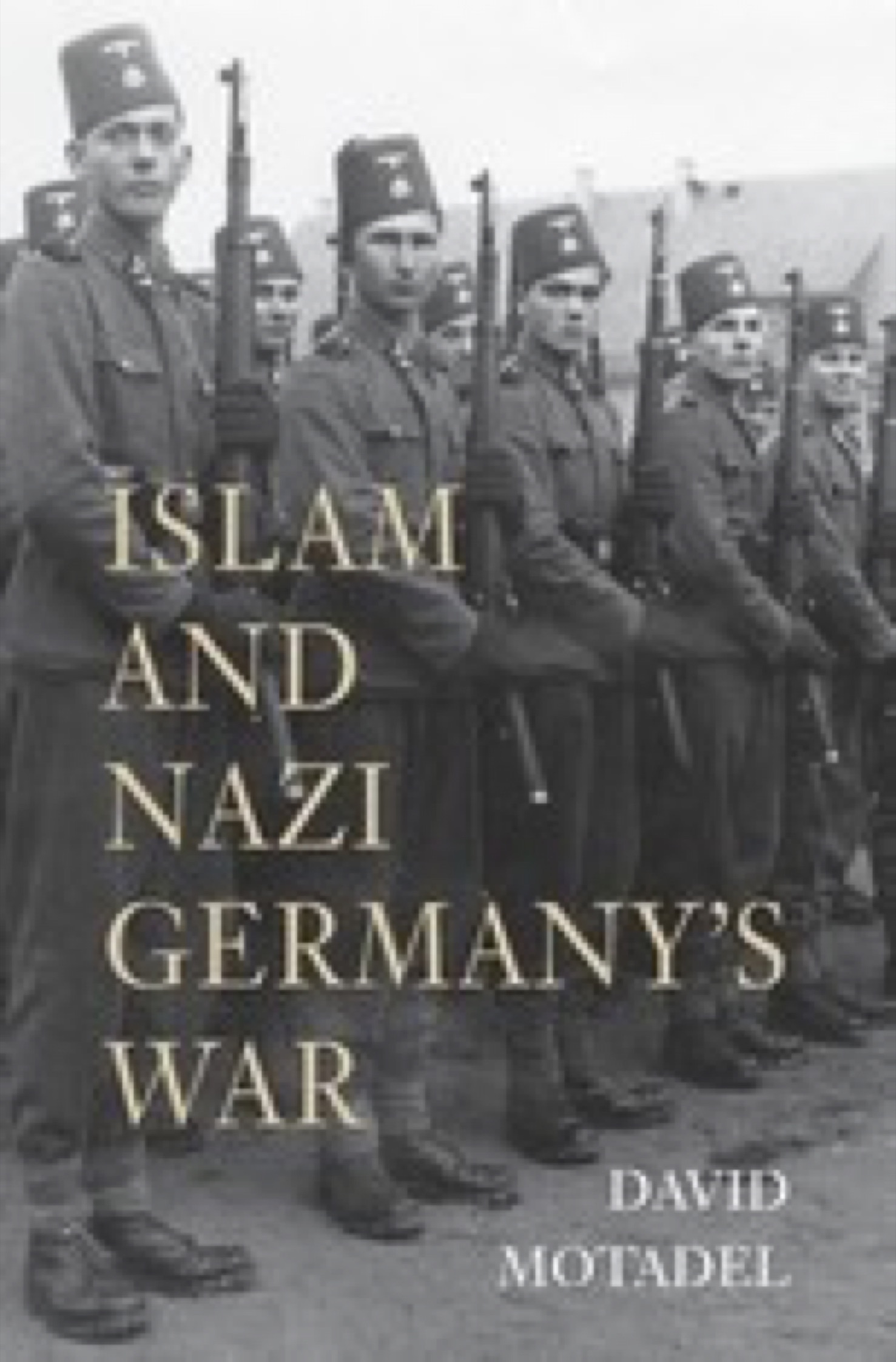
Islam and Nazi Germany's War
Applying the lessons from "Islam and Nazi Germany's War" by David Motadel to your life can be a profound exercise in understanding the complexities of strategic alliances, cultural diplomacy, and the dangers of opportunistic leadership. Here are some ways you might integrate these lessons:
-
Exercise Strategic Pragmatism: - In your ventures, whether in the ER or a startup, you must recognize when rigid adherence to a previous worldview must give way to the realities of a new environment. Just as the subjects of this book shifted their approach to meet wartime demands, you should be willing to reassess your operational strategies when faced with unexpected market shifts or clinical challenges, ensuring your tactics align with your ultimate objectives.
-
Develop Deep Cultural Intelligence: - As a leader in healthcare and aviation, you understand that communication is only effective if it resonates with the recipient's values. The book shows that the Nazis attempted—and often failed—to use cultural symbols they did not truly respect. You should strive for genuine cultural competency, understanding that superficial engagement with a partner's or patient's background is never as effective as authentic empathy and shared goals.
-
Identify the Risks of Transactional Alliances: - Be wary of partnerships built solely on a "the enemy of my enemy is my friend" logic. In business and law, these alliances are often fragile and dissolve the moment the common threat vanishes. Look for collaborators whose values and long-term visions align with your own, rather than those who are simply convenient for a short-term tactical advantage.
-
Maintain Ideological Integrity Under Pressure: - The Nazi regime’s willingness to abandon its core racial tenets for military gain illustrates how quickly a mission can become hollowed out by hypocrisy. In your own leadership, ensure that your core mantra of "Stay Hungry, Stay Humble" remains consistent across all your professional domains, preventing the erosion of your personal brand and organizational culture.
-
Recognize the Limits of Influence: - Even with a massive propaganda machine, the Reich could not force a narrative that didn't reflect reality on the ground. Whether you are leading a VC firm or managing a medical team, remember that your influence depends on your ability to deliver on your promises. Credibility is your most valuable currency; once the results stop matching the rhetoric, you will lose the trust of those you lead.
By integrating these lessons, you can become a more discerning leader who understands the difference between a temporary alliance and a sustainable partnership, while maintaining the flexibility required to navigate the complex, multi-faceted landscape of global business and medicine.
What the book covers
"Islam and Nazi Germany's War" by David Motadel is a definitive historical account that explores the complex relationship between the Third Reich and the Islamic world during the height of World War II. It examines how Nazi leadership, driven by strategic necessity rather than genuine ideological affinity, sought to mobilize Muslim populations across North Africa, the Middle East, and the Soviet Union against their common enemies: the British Empire, the Soviet Union, and Jews. Motadel provides a meticulously researched look at the diplomatic, military, and propaganda efforts utilized by Berlin to present Adolf Hitler as a liberator of Islam.
Summary:
-
The Strategic Shift toward Islam: - As the German war effort expanded into the Soviet Union and North Africa in 1941 and 1942, the Nazi leadership realized they lacked the manpower and local knowledge to govern and fight effectively in these regions. This prompted a pragmatic pivot toward the Muslim world, where officials began to view Islam as a powerful political force that could be harnessed to destabilize the colonial holdings of their adversaries.
-
The Role of the Grand Mufti: - A central figure in the book is Amin al-Husseini, the Grand Mufti of Jerusalem, who sought refuge in Berlin and became a primary collaborator for the Nazis. He assisted in broadcasting pro-Axis propaganda to the Middle East and was instrumental in framing the German struggle as being aligned with Islamic interests, specifically regarding the opposition to Zionism and British imperialism.
-
Recruitment of Muslim Combat Units: - Motadel details the formation of several Muslim divisions within the Wehrmacht and the Waffen-SS, most notably the "Handzar" division in the Balkans and various units comprised of Crimean Tatars and Caucasians. These recruits were often motivated by a desire for independence from Soviet or colonial rule rather than a commitment to National Socialism, yet they were granted unique religious concessions, such as halal food and military imams.
-
Ideological Flexibility and "Aryanization": - The book highlights the tension between Nazi racial ideology and their geopolitical goals. To accommodate Muslim allies, Nazi racial experts had to perform intellectual gymnastics to declare Muslims "racially valuable" or compatible with the Aryan cause, exempting them from the racial hierarchies that targeted other non-Germanic groups, showcasing the regime's ultimate pragmatism in the face of total war.
-
Religious Policy in Occupied Territories: - In the Caucasus and Crimea, German officials attempted to win the hearts and minds of the local population by reopening mosques and restoring religious schools that had been suppressed under Bolshevik rule. This "policy of the crescent" was designed to create a stable rear area and turn the local populace into a bulwark against the Red Army, though it was often undermined by the brutal behavior of German troops on the ground.
-
The Failure of the Nazi-Islamic Alliance: - Despite significant efforts, the alliance largely failed to produce a general Islamic uprising against the Allies. Motadel argues that the opportunistic nature of the German outreach was transparent to many Muslim leaders, and as the German military began to suffer major defeats at Stalingrad and El Alamein, the promise of German protection lost its credibility, leading to the eventual collapse of these strategic partnerships.
This work is significant because it challenges the simplistic narrative of the war by revealing the global and multi-religious dimensions of the Nazi war machine. It provides a nuanced understanding of how even the most rigid ideologies can become flexible when confronted with the existential demands of a global conflict.