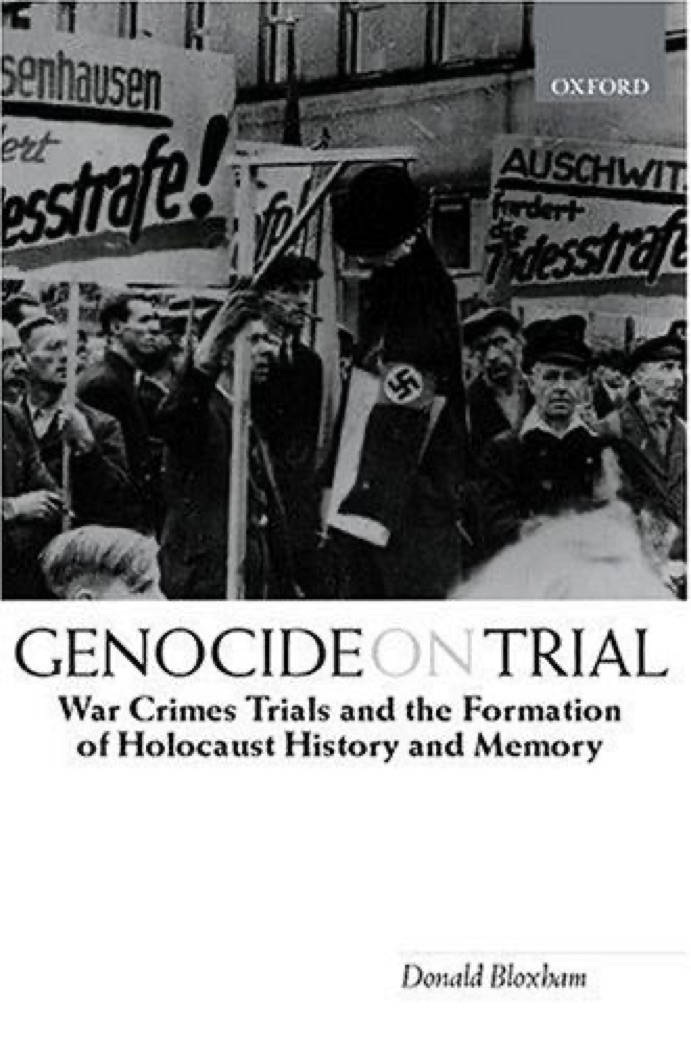
Genocide on Trial: War Crimes Trials and the Formation of History and Memory
Applying the lessons from "Genocide on Trial" by Donald Bloxham to your life can be a powerful exercise in understanding the limitations of formal systems and the necessity of looking beyond established narratives to find the truth. Here are some ways you might integrate these lessons:
-
Recognize Systemic Limitations: - In medicine, law, or business, understand that the processes designed to solve problems—like a clinical protocol or a legal contract—are often narrow by design. You must realize that a system can deliver a functional result (like a diagnosis or a verdict) without necessarily capturing the entire complexity of the situation.
-
Avoid Narrative Over-Simplification: - As a leader, resist the urge to create "hero and villain" narratives during organizational crises. Bloxham shows that trials simplify history to make it manageable; in your practice or firm, you must embrace the "messy middle" to truly understand why a system failed or why a project succeeded.
-
Prioritize Multiple Perspectives: - Just as the Nuremberg trials initially marginalized survivor voices, institutional processes can overlook the "end-user" or the frontline worker. Ensure that your decision-making includes testimony from those most affected by the outcome, not just the data provided by the "perpetrators" or managers of a process.
-
Balance Didactic and Functional Goals: - When you are teaching—whether as a mentor or an author—be clear about whether you are trying to produce a specific result or convey a deep truth. Do not let the desire to "send a message" compromise the integrity of the facts or the fairness of your judgment.
-
Document with Integrity: - In aviation and medicine, documentation is for safety and history, not just for liability. Bloxham illustrates how records can be used to shape future memory; ensure your records are honest reflections of reality, intended to help future learners rather than just to protect yourself from scrutiny.
-
Exercise Intellectual Humility Regarding "Truth": - Stay humble by acknowledging that today’s "official version" of events—whether in a board meeting or a legal brief—is subject to revision. Always remain a lifelong learner who is willing to look back at past "verdicts" in your career and adjust your understanding based on new evidence.
By integrating these lessons, you develop a more sophisticated approach to leadership that values truth over convenience. You will learn to navigate the inherent tensions between the rules we live by and the complex realities they attempt to govern, ensuring that your pursuit of justice and excellence is always tempered by an awareness of the broader historical context.
What the book covers
"Genocide on Trial: War Crimes Trials and the Formation of History and Memory" by Donald Bloxham is a rigorous scholarly examination of the intersection between international law and historical consciousness following the Second World War. The book focuses on the Nuremberg Trials and subsequent legal proceedings to argue that the courtroom is often an imperfect venue for establishing a comprehensive historical record. Bloxham explores how the constraints of legal procedure, the necessity of proving specific criminal charges, and the political agendas of the prosecuting powers shaped—and sometimes distorted—our collective understanding of the Holocaust. By analyzing the tension between judicial goals and pedagogical aspirations, the work provides a critical perspective on how the "lessons of history" are institutionalized through the lens of justice.
Summary:
-
The Didactic Function of International Law: - Bloxham explores the concept of the "didactic trial," where the legal process is intended to serve as a history lesson for the public and future generations. He argues that the Allied powers, particularly the United States, viewed Nuremberg not just as a means to punish criminals, but as a tool to document Nazi atrocities and prevent the resurgence of German nationalism. - However, this educational goal often clashed with the strict requirements of due process, leading to a narrative that prioritized a clear-cut "conspiracy" of top-tier leaders rather than exploring the broader societal complicity and the decentralized nature of the genocide.
-
The Primacy of 'Crimes Against Peace': - The book details how the International Military Tribunal (IMT) initially prioritized "crimes against peace" (aggressive war) over "crimes against humanity." This legal framework was designed to delegitimize the Nazi state's geopolitical actions rather than specifically addressing the systematic extermination of the Jewish people. - Consequently, the unique nature of the Holocaust was frequently subsumed under the broader umbrella of war crimes, which Bloxham suggests led to an early historical narrative that marginalized the specific experiences of Jewish victims in favor of a state-centric legal story.
-
The Distortion of Evidence and Context: - Bloxham argues that the rules of evidence and the focus on individual culpability forced a complex historical reality into a narrow legal mold. To secure convictions, prosecutors focused on documentary evidence produced by the perpetrators, which inadvertently gave the Nazis control over the "voice" of history within the trial. - This reliance on documentation often sidelined the testimony of survivors and obscured the messier, more chaotic elements of the Holocaust that did not fit neatly into a pre-defined organizational chart of criminal intent.
-
Post-Nuremberg Trials and National Memory: - The narrative extends beyond the main IMT to the Subsequent Nuremberg Proceedings and domestic trials in West Germany and other nations. Bloxham shows how different countries adapted the trial model to fit their own emerging Cold War identities and political needs. - These trials often served to "exonerate" the general population by placing the entirety of the blame on a small group of SS leaders, thereby facilitating a national amnesia regarding the widespread participation of ordinary citizens in the machinery of genocide.
-
The Evolution of 'Genocide' as a Legal Term: - The book tracks the intellectual and legal struggle to define "genocide" as a distinct crime from war. Bloxham highlights the work of Raphael Lemkin and the challenges of integrating this new concept into a legal system that was still focused on the sovereignty of the nation-state. - This evolution demonstrates the struggle to find a language that could adequately describe the scale of the atrocity while remaining enforceable within a global political landscape characterized by shifting alliances.
-
The Conflict Between Law and History: - A central thesis of the book is that history seeks complexity and nuance, while law seeks certainty and closure. Bloxham posits that because trials require a definitive verdict, they often simplify history into a binary of guilt and innocence. - This simplification can lead to a "frozen" memory of events that resists new historical scholarship, as the trial's version of the truth becomes the official, state-sanctioned account of the past.
"Genocide on Trial" serves as a vital critique of the belief that justice systems can double as objective historical archives. Bloxham’s work reminds us that while trials are essential for accountability, the true history of a tragedy requires a broader, more multidisciplinary approach to uncover the layers of complicity and suffering that law alone cannot capture.