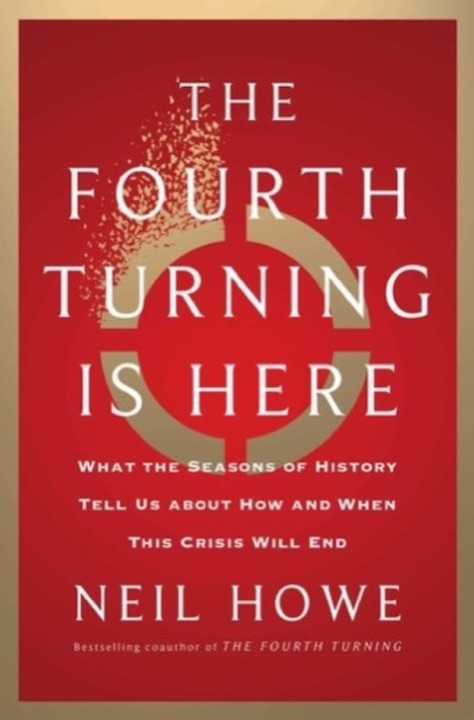
The Fourth Turning Is Here: What the Seasons of History Tell Us About How and When This Crisis Will End
Applying the lessons from "The Fourth Turning Is Here" by Neil Howe to your life involves recognizing the cyclical nature of history and understanding your role within these cycles. Here are some ways you might integrate these insights:
-
Embrace Resilience and Adaptability: - Given your experiences and values, focus on building resilience and adaptability in your personal and professional life. This aligns with your belief in persistence and the ability to outlast challenges, which is crucial during a Fourth Turning.
-
Leverage Generational Insights: - Reflect on your role as part of a generational archetype. Consider how your experiences and values can contribute to societal transformation. Your emphasis on kindness and empathy can help bridge generational divides and foster cooperation.
-
Cultivate Leadership Qualities: - As a leader in your field, focus on unifying and mobilizing those around you. Your direct and humorous communication style can be an asset in inspiring others and navigating crises effectively.
-
Prepare for Change: - Stay informed about social, political, and economic trends. Your forward-thinking approach to technology and societal issues can help you anticipate changes and adapt accordingly.
-
Foster Intergenerational Understanding: - Encourage dialogue and understanding between different generations. Your belief in equality and acceptance can help create a more cohesive society during times of upheaval.
-
Focus on Renewal and Opportunity: - View challenges as opportunities for renewal and growth. Your optimistic outlook and belief in lifelong learning can help you and those around you find new paths forward.
-
Engage in Activism and Advocacy: - Continue your involvement in social issues like equality and anti-human trafficking. Your passion for these causes can contribute to the societal transformation envisioned in a Fourth Turning.
-
Reflect on Personal Growth: - Use the cyclical nature of history as a metaphor for personal growth. Embrace the lessons from past experiences, both successes and failures, to guide your future actions.
-
Strengthen Community Bonds: - Build and maintain strong relationships with family and friends. Your values of loyalty and presence in friendships can create a supportive network during uncertain times.
-
Live in the Moment:
- Strive to achieve your aspiration of living in the moment. This aligns with the idea of being present and adaptable during transformative periods.
By applying these lessons, you can navigate the current era of crisis with resilience, contribute positively to societal change, and continue to grow personally and professionally.
What the book covers
"The Fourth Turning Is Here: What the Seasons of History Tell Us About How and When This Crisis Will End" by Neil Howe is a continuation and expansion of the generational theory that Howe, along with the late William Strauss, introduced in their earlier works. This theory posits that history is cyclical and consists of recurring generational cycles, each lasting approximately 80 to 100 years and divided into four "turnings" or seasons: the High, the Awakening, the Unraveling, and the Crisis (or Fourth Turning).
Summary:
-
Generational Cycles and Turnings: - High: A period of strong institutions and collective confidence, following a Crisis. Society is cohesive, and individualism is downplayed. - Awakening: A time when institutions are attacked in the name of personal and spiritual autonomy. This is a period of upheaval and questioning. - Unraveling: Institutions are weak and distrusted, while individualism is strong and flourishing. Society becomes more fragmented. - Crisis (Fourth Turning): A decisive era of upheaval, where society undergoes a fundamental transformation. This period often involves wars or revolutions.
-
Current Context: - Howe argues that we are currently in the midst of a Fourth Turning, which began around the 2008 financial crisis. This period is characterized by significant social, political, and economic upheaval, and it is expected to culminate in a major crisis that will reshape society.
-
Historical Patterns: - The book examines past Fourth Turnings, such as the American Revolution, the Civil War, and World War II, to draw parallels and insights into the current era. Each of these periods involved significant conflict and transformation, leading to a new societal order.
-
Generational Archetypes: - Howe identifies four generational archetypes that recur in each cycle: Prophets, Nomads, Heroes, and Artists. Each generation plays a distinct role in shaping the course of history during the turnings.
-
The Role of Leadership: - Effective leadership is crucial during a Fourth Turning. Leaders must be able to unify and mobilize society to navigate the crisis successfully. The book discusses the qualities and challenges of leadership in such transformative times.
-
Predictions and Outcomes: - While specific predictions are difficult, Howe suggests that the current Fourth Turning will likely involve significant challenges, including potential conflicts, economic restructuring, and shifts in global power dynamics. The outcome will depend on how society responds to these challenges.
Key Takeaways and Lessons:
-
Understanding Cycles: Recognizing the cyclical nature of history can provide valuable insights into current events and future possibilities. It encourages a long-term perspective on societal change.
-
Preparedness and Resilience: Societies and individuals should focus on building resilience and adaptability to navigate the uncertainties of a Fourth Turning.
-
Role of Generations: Each generation has a unique role to play in shaping history. Understanding these roles can foster intergenerational cooperation and understanding.
-
Leadership and Unity: Strong, visionary leadership is essential during times of crisis. Leaders must work to unify society and guide it through transformative changes.
-
Potential for Renewal: While Fourth Turnings are challenging, they also offer opportunities for renewal and the creation of a more cohesive and resilient society.
In conclusion, "The Fourth Turning Is Here" provides a framework for understanding the current era of crisis and transformation, drawing on historical patterns and generational dynamics. It emphasizes the importance of preparedness, leadership, and the potential for societal renewal.