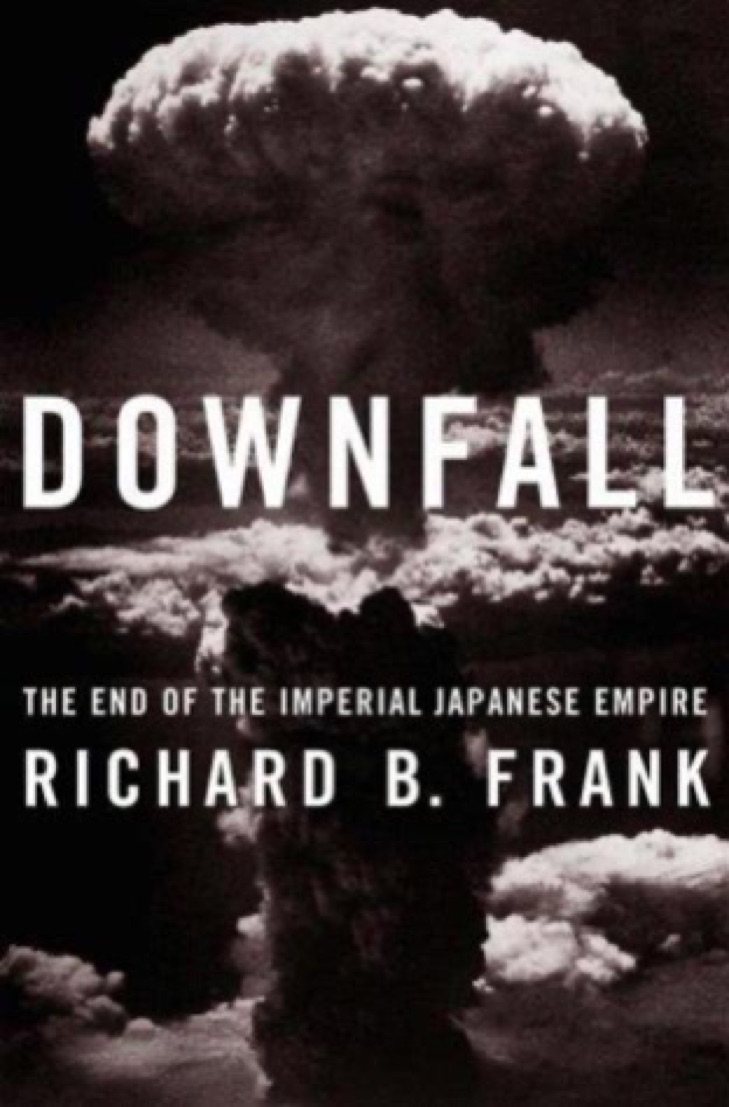
Downfall: The End of the Imperial Japanese Empire
Applying the lessons from "Downfall: The End of the Imperial Japanese Empire" by Richard B. Frank to your life can be a masterclass in navigating high-stakes decision-making and understanding the weight of strategic choices. Here are some ways you might integrate these lessons:
-
Objective Analysis in High-Pressure Scenarios: - In medicine or entrepreneurship, you often face critical moments where the "right" path is obscured by conflicting data. Frank demonstrates the importance of re-evaluating your strategy when new intelligence emerges, just as American planners had to adjust their invasion plans when they discovered the Japanese troop buildup on Kyushu. You must remain flexible and willing to pivot your business or clinical approach when the underlying assumptions change.
-
The Burden of Ultimate Responsibility: - As a leader and an attorney, you are frequently the final arbiter of difficult choices. By studying Truman’s position, you can learn to accept the weight of responsibility that comes with executive power. Making the "least bad" choice in a complex situation is often the hallmark of true leadership; it requires a focus on the long-term goal—in your case, the health of a patient, the survival of a venture, or the integrity of a legal strategy—even when every option carries a heavy cost.
-
Understanding the Psychology of the Opponent: - Whether in the courtroom or a board meeting, you must look beyond your own objectives to understand the cultural and psychological drivers of your counterpart. The Japanese "Ketsu-Go" strategy was based on an entirely different value system than American military logic. You can improve your negotiation and leadership skills by actively seeking to understand the internal pressures and ideological motivations that drive the people you are dealing with.
-
Managing Information Asymmetry and Internal Conflict: - The deadlock within the Japanese government highlights how internal silos and ego can lead to organizational paralysis. In your ventures, you should foster an environment where information flows freely and dissenting voices are heard before a crisis reaches a breaking point. Proactive communication can prevent the kind of "coup" scenarios or systemic failures that occur when leadership is out of touch with the reality of the front lines.
-
The Importance of Clear Communication (The Emperor’s Broadcast): - In aviation and in business, clear and unambiguous communication is non-negotiable. The Emperor's final intervention shows that in moments of extreme chaos, a single, authoritative, and clear message can halt a downward spiral. You should strive to be the voice of clarity for your teams during turbulent times, providing a definitive direction that cuts through the noise of uncertainty.
By integrating these lessons, you will develop a more robust framework for strategic thinking and empathetic leadership. Understanding the gravity of historical decision-making allows you to approach your own professional challenges with a deeper sense of perspective, ensuring that you stay hungry for success while remaining humble in the face of the immense responsibilities you carry.
What the book covers
"Downfall: The End of the Imperial Japanese Empire" by Richard B. Frank is a comprehensive and authoritative history of the final months of World War II in the Pacific. It provides a meticulous examination of the military, political, and diplomatic factors that led to the Japanese surrender in August 1945. By synthesizing American and Japanese records, Frank offers a definitive account of the decision to use atomic weapons and the complex internal struggles within the Japanese government.
Summary:
-
Planning for Operation Downfall: - The book details the American military's shifting strategy as they prepared for the invasion of the Japanese home islands, specifically Operations Olympic and Coronet. Frank highlights how intelligence reports late in the war revealed a massive buildup of Japanese forces on Kyushu, which significantly increased the projected casualty rates for American troops. - This intelligence forced American planners to reconsider the viability of a conventional invasion, as it became clear that the Japanese intended to wage a war of attrition on their own soil to force a negotiated peace rather than an unconditional surrender.
-
Japan's Ketsu-Go Strategy: - Frank explains the Japanese defensive plan known as Ketsu-Go, which mobilized the entire civilian population and military resources for a final, decisive battle. The Japanese leadership hoped that by inflicting massive casualties on American forces, they could preserve the imperial system and avoid a complete military occupation. - This strategy relied on suicide tactics, including kamikaze aircraft and boats, and the ideological indoctrination of the populace to choose death over dishonor, creating a terrifying prospect for the invading Allied forces.
-
The Strategic Bombing Campaign: - The narrative covers the transition of the U.S. Army Air Forces under General Curtis LeMay to low-altitude firebombing of Japanese cities. This shift was intended to destroy Japan's industrial capacity and break the morale of the civilian population, leading to the devastating firebombing of Tokyo in March 1945. - While these raids caused immense destruction and loss of life, Frank argues that the Japanese leadership remained largely unmoved by the suffering of their people, focusing instead on military survival and political preservation.
-
The Manhattan Project and the Atomic Decision: - Frank provides a nuanced look at the development of the atomic bomb and the decision-making process within President Harry Truman’s administration. He addresses the revisionist arguments by presenting evidence that American leaders viewed the bomb as a necessary tool to end the war quickly and avoid the massive casualties of an invasion. - The book emphasizes that there was no single "decision" to drop the bomb but rather a momentum of policy that saw the weapon as a logical progression of the total war strategy already in place.
-
The Soviet Entry and the Double Shock: - A critical turning point discussed is the Soviet invasion of Manchuria, which occurred between the bombings of Hiroshima and Nagasaki. Frank illustrates how this "double shock" finally convinced the Japanese peace faction that their last hope for a mediated peace through the Soviet Union had vanished. - The entry of the Soviet Union posed an existential threat to the Japanese social and political order, arguably as much as the atomic bombs did, by threatening a Communist occupation of the northern islands.
-
The Imperial Intervention and the Coup Attempt: - The final chapters describe the internal deadlock within the Japanese Supreme Council for the Direction of the War and the unprecedented intervention of Emperor Hirohito to accept the Potsdam Declaration. This move triggered the Kyūjō Incident, a failed military coup by radical officers who sought to prevent the surrender. - Frank vividly portrays the tension of those final days, illustrating how close Japan came to total self-destruction through internal strife before the Emperor's broadcast finally silenced the hardliners.
"Downfall" is a vital historical work because it confronts the difficult moral and strategic questions of WWII with cold, hard data. By examining the end of the war from both the American and Japanese perspectives, Frank dispels many long-held myths and provides a sobering look at the true cost of total war and the complexity of achieving peace.