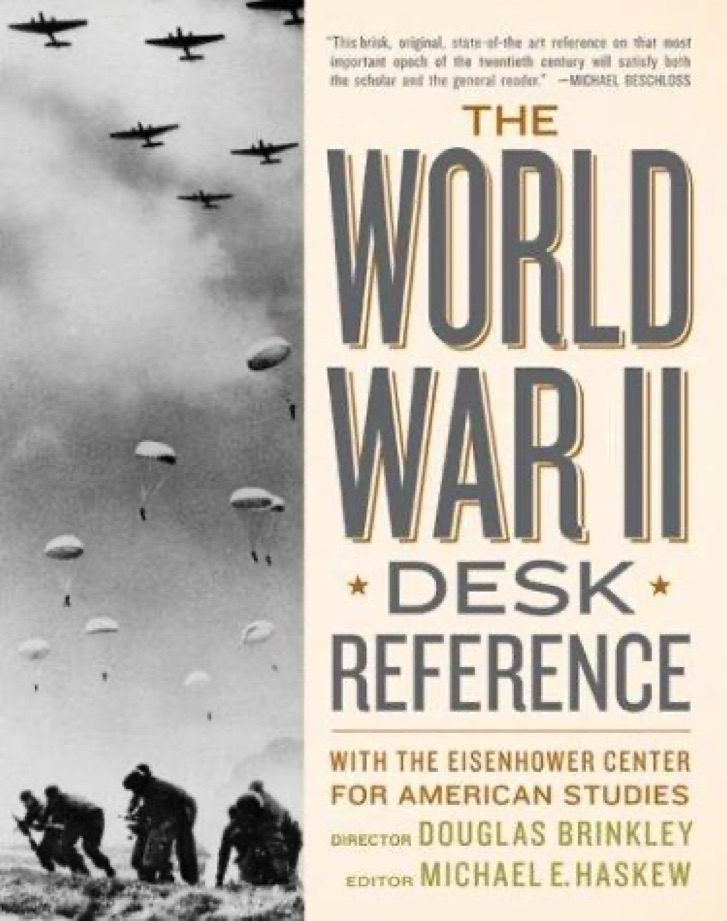
The World War II Desk Reference
Applying the lessons from "The World War II Desk Reference" by Douglas Brinkley and Michael E. Haskew to your life can be a powerful way to understand the necessity of strategic foresight and the importance of decisive leadership in times of crisis. Here are some ways you might integrate these lessons:
-
Maintain Strategic Agility Under Pressure: - You should recognize that the best-laid plans must be adaptable to rapidly changing circumstances. Just as military commanders had to pivot when intelligence changed, you must be prepared to adjust your business or medical strategies when new data emerges, ensuring that your core objectives remain achievable despite setbacks.
-
Leverage Innovation as a Force Multiplier: - In your entrepreneurial ventures, look for the "Manhattan Project" moments—the areas where concentrated innovation and multidisciplinary collaboration can solve seemingly impossible problems. Embracing cutting-edge technology and unconventional thinking can provide a competitive edge in healthcare, aviation, or venture capital.
-
Cultivate Decisive and Ethical Leadership: - The weight of command during the war highlights the need for leaders to make hard choices with incomplete information. As a leader in medicine or law, you must balance the need for swift action with the moral responsibility of your decisions, understanding that your choices have long-term consequences for your team and organization.
-
Optimize Logistics and Resource Allocation: - The war was won as much in the factories and supply chains as on the battlefields. In your businesses, focus on the robustness of your operational infrastructure; ensuring that resources—whether they are medical supplies or capital—are positioned exactly where they are needed most to maximize efficiency and impact.
-
Foster Collaborative Alliances: - Success often depends on your ability to work with diverse stakeholders who may have different agendas. Emulate the diplomatic efforts of the Allied powers by finding common ground and building strong partnerships in your professional life, recognizing that collective efforts often produce results far beyond individual capabilities.
-
Develop Situational Awareness and Intelligence: - As a pilot and physician, you know that information is life. Apply the lesson of intelligence gathering by staying deeply informed about your industry trends and competitive landscape, allowing you to anticipate shifts before they become crises.
By integrating these lessons, you can develop a more robust framework for navigating the complexities of modern leadership and entrepreneurship. The history of World War II serves as a masterclass in human endurance and the triumph of organized will over chaotic adversity.
What the book covers
"The World War II Desk Reference" by Douglas Brinkley and Michael E. Haskew is a comprehensive and authoritative encyclopedic guide that provides a granular look at the most significant global conflict of the twentieth century. This volume serves as an essential resource for understanding the intricate web of political alliances, military strategies, and socio-economic shifts that defined the era. By distilling vast amounts of historical data into accessible timelines, biographical sketches, and thematic analyses, the book offers a panoramic view of the war's progression and its lasting impact on the modern world.
Summary:
-
The Seeds of Global Conflict: - The reference explores the geopolitical instability following World War I, detailing how the failures of the Treaty of Versailles and the Great Depression paved the way for the rise of totalitarian regimes in Germany, Italy, and Japan. It outlines the specific diplomatic failures and the policy of appeasement that ultimately led to the invasion of Poland in 1939.
-
The European and Mediterranean Theaters: - This section provides a chronological account of major campaigns, including the Fall of France, the Battle of Britain, and the grueling Eastern Front where the Soviet Union eventually turned the tide against the Wehrmacht. It highlights the strategic importance of the North African campaign and the eventual Allied push through Italy, culminating in the D-Day landings and the liberation of Western Europe.
-
War in the Pacific and East Asia: - The book documents the expansionist goals of Imperial Japan, the surprise attack on Pearl Harbor, and the subsequent "island-hopping" strategy employed by the United States. It details pivotal naval engagements such as the Battle of Midway and the brutal land battles of Iwo Jima and Okinawa, leading to the deployment of the atomic bombs and the formal Japanese surrender.
-
Leadership, Command, and Diplomacy: - Extensive biographies and analysis are provided for the "Big Three"—Roosevelt, Churchill, and Stalin—as well as the Axis dictators and the key military commanders on both sides. This section examines how personal relationships between leaders and the coordination of the Allied Command were vital to the eventual victory.
-
Science, Technology, and Intelligence: - The work examines the unprecedented technological race that defined the war, from the development of radar and jet engines to the top-secret Manhattan Project and the code-breaking efforts at Bletchley Park. It emphasizes how scientific superiority and intelligence gathering often dictated the outcome of major battles and strategic initiatives.
-
The Home Front and Total War: - Coverage includes the mobilization of domestic economies, the role of women in the workforce, and the psychological impact of the war on civilian populations. It describes the massive shift toward war production in the United States and the resilience of populations under the Blitz or the siege of Leningrad.
-
The Holocaust and Humanitarian Catastrophe: - The reference provides a somber account of the systemic genocide committed by the Nazi regime and the discovery of the concentration camps by Allied forces. It addresses the scale of human suffering, the displacement of millions, and the eventual pursuit of justice through the Nuremberg and Tokyo war crimes trials.
-
Post-War Reconstruction and Legacy: - The final sections analyze the immediate aftermath of the war, including the division of Europe, the Marshall Plan, and the founding of the United Nations. It explores how the conclusion of World War II set the stage for the Cold War and reshaped the global map, influencing international relations for decades to share.
This desk reference is more than a simple collection of facts; it is a vital tool for contextualizing the sacrifices and innovations that occurred during a period of existential global crisis. It stands as a testament to the resilience of the human spirit and the profound consequences of collective international action.