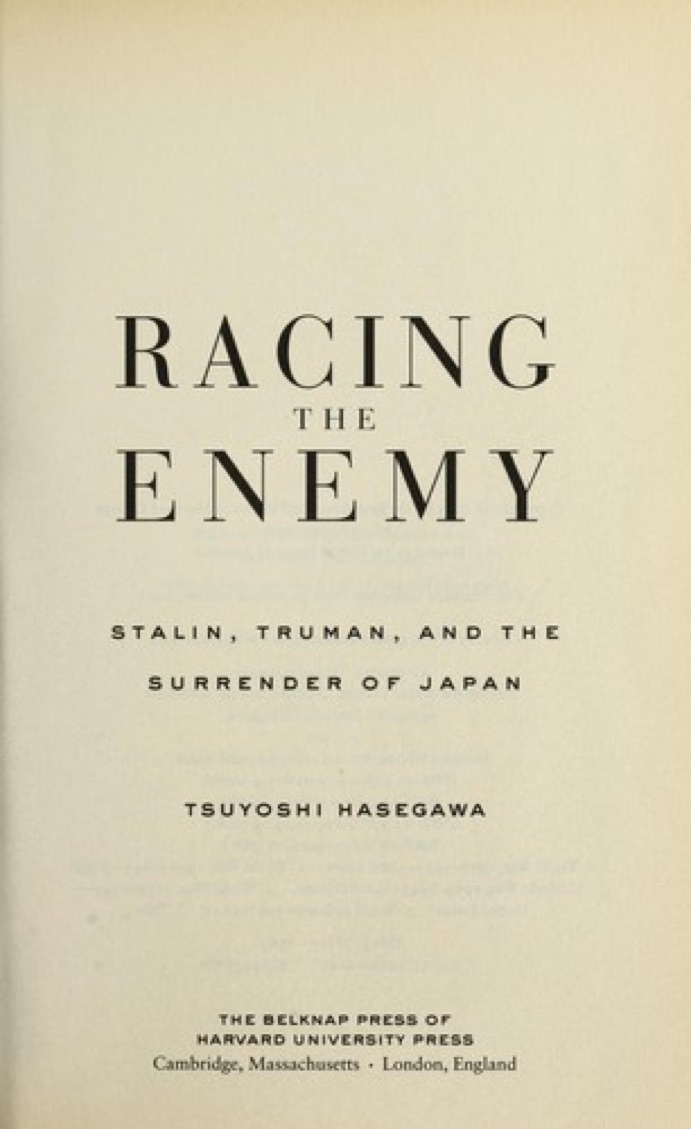
Racing the Enemy: Stalin, Truman, and the Surrender of Japan
Applying the lessons from "Racing the Enemy: Stalin, Truman, and the Surrender of Japan" by Tsuyoshi Hasegawa to your life can be a transformative exercise in understanding complex systems and high-stakes decision-making. Here are some ways you might integrate these lessons:
-
Look Beyond the Visible Crisis: - In leadership, medicine, or business, you often face a crisis that seems like the primary driver of failure, but there is usually a hidden "Soviet entry"—a secondary, more systemic threat—that is the actual tipping point. You must learn to distinguish between the most visible problems and the underlying environmental shifts that truly dictate your long-term survival.
-
Practice Triangular Strategic Thinking: - Avoid the trap of binary thinking where you only consider your own goals and those of a single competitor. Whether you are navigating a legal dispute or a venture capital deal, you should map out the motivations of all peripheral stakeholders; often, the "third party" in the room holds the key to the final resolution of the conflict.
-
Audit Your Strategy for Confirmation Bias: - The Japanese leadership suffered from the fatal flaw of believing the Soviets would help them simply because they needed it to be true. As an entrepreneur or a pilot, you must ruthlessly audit your assumptions and ensure you aren't ignoring red flags because they contradict your preferred outcome or "hopeful" strategy.
-
Communicate with Absolute Clarity: - Just as the ambiguity of the Potsdam Proclamation regarding the Emperor’s status prolonged the war, vague directives in your organization can lead to unnecessary resistance. You should strive for total transparency in your expectations and terms to ensure that your team or your opponents have a clear, dignified path to agreement.
-
Master the Art of Timing and Urgency: - Success is frequently about "racing" to a conclusion before the window of opportunity closes or before an external force changes the rules of the game. You must develop the instinct to act decisively when you have the advantage, rather than waiting for perfect conditions that may never arrive.
-
Recognize the Role of Cultural Intelligence: - Understanding the "inner logic" of your counterpart is essential for successful negotiation. Hasegawa’s work shows how misinterpreting the cultural priorities of the Japanese (the preservation of the Emperor) led to prolonged conflict; in your own life, taking the time to understand the core values of your partner or client can prevent a deadlock.
By integrating these lessons, you can become a more nuanced leader who understands that victory is rarely the result of a single decisive blow, but rather the culmination of strategic positioning, multi-stakeholder awareness, and the courage to make hard choices when every available option carries a heavy price.
What the book covers
"Racing the Enemy: Stalin, Truman, and the Surrender of Japan" by Tsuyoshi Hasegawa is a seminal work of revisionist history that challenges the conventional American narrative regarding the end of World War II in the Pacific. By meticulously examining archives from the United States, Japan, and the former Soviet Union, Hasegawa provides a multi-polar perspective on the closing days of the war. The book argues that the Soviet entry into the conflict was the primary catalyst for Japan's decision to surrender, rather than the atomic bombings of Hiroshima and Nagasaki alone. It serves as a complex study of international diplomacy, strategic miscalculation, and the desperate internal politics of a collapsing empire.
Summary:
-
The Triple Conflict and Divergent Goals: - Hasegawa establishes that the end of the war was not a simple two-way negotiation but a triangular struggle between Truman, Stalin, and the Japanese leadership. Each actor was "racing" to achieve specific geopolitical outcomes: Truman wanted a quick surrender to limit Soviet influence, Stalin wanted to enter the war late enough to claim territory but early enough to influence the peace, and Japan's "peace party" sought Soviet mediation to avoid unconditional surrender.
-
The Japanese Quest for Soviet Mediation: - The book details the tragic irony of the Japanese government's reliance on the Soviet Union to act as a neutral mediator. Despite clear signals that Stalin was preparing for war, Japanese leaders—driven by the desperate need to preserve the "kokutai" (the imperial system)—ignored intelligence reports and placed their last hopes on a Moscow-brokered deal that was never going to happen.
-
The Limitations of the Atomic Bombing Narrative: - Hasegawa argues that the atomic bomb on Hiroshima, while devastating, did not fundamentally shift the Japanese military's resolve because they were already accustomed to the firebombing of their cities. He presents evidence that the Supreme Council for the Direction of the War remained deadlocked even after the first nuclear strike, as the military hardliners believed they could still inflict enough damage on an American invasion force to negotiate better terms.
-
The Decisive Shock of the Soviet Invasion: - The central thesis is that the Soviet invasion of Manchuria on August 9 was the true "black swan" event that forced Japan's hand. This move shattered the Japanese strategic premise of using the Soviets for mediation and threatened a communist occupation of the northern islands, which would have meant the certain end of the monarchy and the imperial way of life.
-
Stalin’s Opportunistic Diplomacy: - The narrative highlights Joseph Stalin's calculated approach to the Pacific War, showing how he intentionally delayed responding to Japanese peace feelers to keep the war going until the Red Army was positioned to strike. Stalin’s primary goal was the expansion of the Soviet sphere of influence in Asia, and he viewed both the Japanese and the Americans as rivals in this territorial pursuit.
-
Truman’s Race Against Time: - Hasegawa analyzes Harry Truman’s decision-making process, suggesting that the timing of the atomic bombs was heavily influenced by the desire to force a surrender before the Soviets could claim a seat at the table in the post-war occupation. The author suggests that the United States was less concerned with the moral implications of the bomb and more concerned with the geopolitical threat of a Soviet-shared occupation of Japan.
-
The Emperor’s Final Decision: - The book concludes with a deep dive into the internal coup attempts and the final "sacred decision" by Emperor Hirohito. Hasegawa shows that the Emperor used the "double shock" of the bombs and the Soviet entry to finally override the military's resistance, ultimately choosing the American terms of surrender as the lesser of two evils compared to Soviet conquest.
The significance of "Racing the Enemy" lies in its refusal to offer simple moral or military explanations for the end of the war. It forces a re-evaluation of the nuclear age's dawn, suggesting that the beginning of the Cold War was the primary driver of the Pacific War’s conclusion, and highlighting the cold pragmatism that defines global leadership during existential crises.