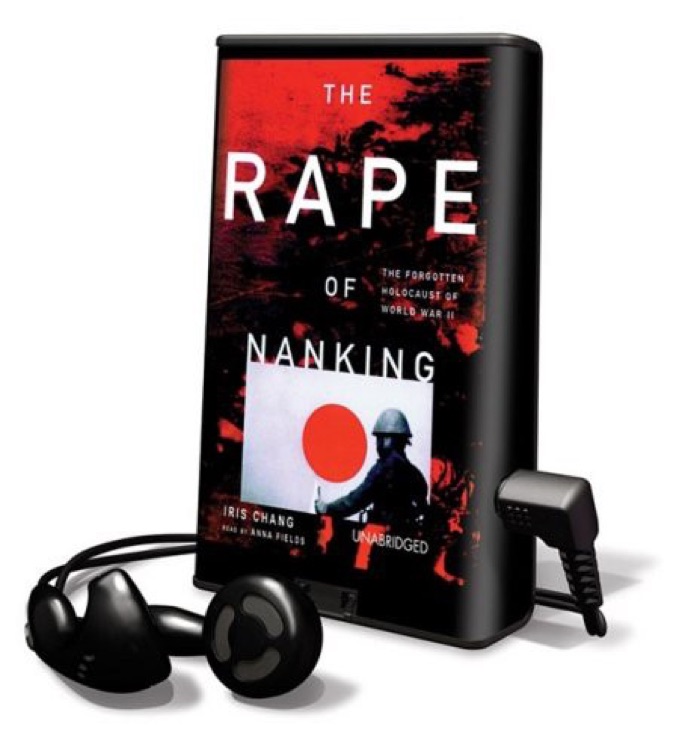
The Rape of Nanking: The Forgotten Holocaust of World War II
Applying the lessons from "The Rape of Nanking: The Forgotten Holocaust of World War II" by Iris Chang to your life can be a sobering yet transformative exercise in understanding the depths of human depravity and the heights of individual moral courage. Here are some ways you might integrate these lessons:
-
The Responsibility of Moral Leadership: - In your roles as a physician and entrepreneur, you often face high-stakes crises where the "easiest" path is rarely the right one. Like John Rabe and Minnie Vautrin, you must be prepared to stand as a moral bulwark for those under your care or employ, even when systemic forces or organizational hierarchies pressure you to look the other way.
-
The Danger of Dehumanization in Systems: - The atrocities in Nanking began with the psychological stripping of humanity from the "other." Whether in medicine, law, or business, you should remain hyper-vigilant against the tendency to view patients, clients, or competitors as mere data points or obstacles, ensuring that empathy remains at the core of your professional interactions.
-
The Power of the Individual Record: - Iris Chang’s work demonstrates how one person’s dedication to the truth can reshape global understanding. In your own life—whether through your writing or your legal practice—never underestimate the power of documentation and the importance of giving a voice to those who have been marginalized or silenced by larger institutions.
-
Courage Under Extreme Pressure: - As a pilot and emergency physician, you understand the necessity of remaining calm in chaos. The expatriates in Nanking provide the ultimate example of "staying hungry" for justice and "staying humble" in service, showing that true leadership is defined by the actions taken when the threat to oneself is at its peak.
-
Combating Historical and Institutional Inertia: - The suppression of the Nanking narrative for geopolitical gain serves as a warning about how easily truth can be sacrificed for expediency. In your venture capital and entrepreneurial endeavors, you must foster a culture that prioritizes long-term integrity over short-term political or financial gains, resisting the urge to revise your own history when mistakes occur.
-
The Duty of the Lifelong Learner: - Chang’s commitment to uncovering a forgotten history reminds you that education is not just about personal growth, but about the duty to preserve human dignity. Use your platform to educate others on the ethical dimensions of history and the recurring patterns of human behavior that lead to conflict.
By integrating these lessons, you can strengthen your resolve to lead with an unwavering ethical compass, ensuring that your various professional pursuits are not only successful but also rooted in a profound respect for human life and the pursuit of objective truth.
What the book covers
"The Rape of Nanking: The Forgotten Holocaust of World War II" by Iris Chang is a seminal and harrowing historical account that chronicles the 1937 massacre of Chinese civilians and disarmed soldiers by the Imperial Japanese Army. The book serves as a definitive record of one of the most brutal episodes of the 20th century, which for decades remained largely overlooked in Western historiography and suppressed in international political discourse. Through meticulous research involving survivor testimonies, diary entries from foreign observers, and Japanese military records, Chang reconstructs the six weeks of terror that followed the fall of China’s then-capital, providing a voice to the victims while demanding global recognition of these atrocities.
Summary:
-
The Path to the Massacre: - Chang begins by contextualizing the Second Sino-Japanese War and the strategic importance of Nanking. She describes the Japanese military's rapid advancement and the subsequent collapse of Chinese defensive lines, which left the city’s civilian population and retreating soldiers vulnerable to the incoming occupational forces. - The narrative explores the psychological environment of the Japanese military at the time, detailing how a culture of extreme nationalism and the dehumanization of the enemy set the stage for the systematic violence that was to follow the city's capture.
-
The Six Weeks of Terror: - The core of the book documents the staggering scale of the atrocities, including the mass execution of prisoners of war and the widespread, systemic sexual violence against tens of thousands of women and children. Chang utilizes graphic and heartbreaking accounts to illustrate the breakdown of all humanitarian norms during the occupation. - She details the various methods of execution and torture employed by the Japanese soldiers, highlighting that the violence was not merely a byproduct of chaotic warfare but often a deliberate tool of intimidation and cruelty encouraged or ignored by the military hierarchy.
-
The Nanking Safety Zone: - A significant portion of the book focuses on the "Safety Zone," a small neutral territory established by a group of expatriates—including businessmen, doctors, and missionaries—who remained in the city to protect Chinese refugees. This group, led by German businessman John Rabe, managed to save hundreds of thousands of lives despite constant threats from Japanese forces. - Chang highlights the irony of Rabe’s leadership; as a member of the Nazi Party, he used his affiliation and the swastika flag to negotiate with Japanese officials, providing a bizarre and complex layer to the humanitarian efforts within the city.
-
Individual Acts of Heroism: - The book highlights the courage of individuals like Minnie Vautrin, an American missionary who turned Ginling College into a sanctuary for women, and various doctors who worked under impossible conditions to treat the wounded. Their diaries provide some of the most reliable and chilling eyewitness accounts of the period. - These figures are portrayed as moral beacons who risked their lives to uphold the sanctity of human life when the world at large had largely abandoned the citizens of Nanking to their fate.
-
The Cold War and the Silence: - Chang investigates why this "forgotten holocaust" remained obscured for so long, pointing to the geopolitical shifts of the Cold War. Both the United States and the People's Republic of China had strategic reasons to maintain stable relations with Japan, leading to a mutual, quiet agreement to downplay the wartime atrocities in official histories. - She argues that this silence exacerbated the trauma of the survivors, who were denied the formal apologies and reparations granted to victims of the European Holocaust, resulting in a "second rape" of Nanking through historical erasure.
-
The Struggle for Acknowledgment: - The final sections address the ongoing denial by Japanese revisionists and the psychological toll on the survivors who continued to fight for the truth. Chang emphasizes the importance of historical memory as a deterrent against future genocides. - She concludes by examining the impact of the massacre on the collective identity of the Chinese people and the strained diplomatic relations between China and Japan that persist due to the unresolved legacy of the 1937 events.
By documenting this dark chapter with such unflinching intensity, Chang ensured that the victims of Nanking would no longer be forgotten. Her work remains a powerful testament to the necessity of historical integrity and the enduring power of the human spirit to seek justice in the face of unspeakable evil.