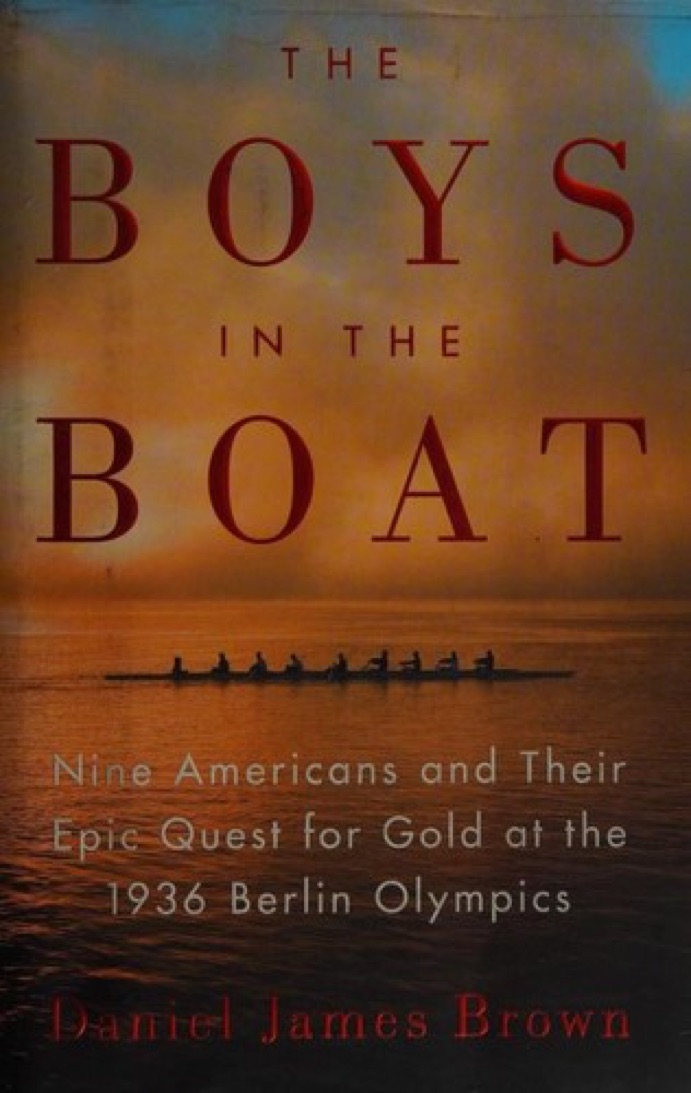
The Boys in the Boat: Nine Americans and Their Epic Quest for Gold at the 1936 Berlin Olympics
Applying the lessons from "The Boys in the Boat: Nine Americans and Their Epic Quest for Gold at the 1936 Berlin Olympics" by Daniel James Brown to your life can be a powerful catalyst for personal and professional transformation. Here are some ways you might integrate these lessons:
- Cultivate "Swing" in Your Organizations: - You should recognize that peak performance in any "boat"—whether a surgical team, a startup, or a legal firm—requires more than just individual talent; it requires a state of total synchronicity. Seek to build environments where your team members are so attuned to one another’s strengths and rhythms that the collective output becomes greater than the sum of its parts.
- Embrace Your Underdog Identity: - As an entrepreneur or professional, you can use your humble beginnings or "outsider" status as a source of competitive advantage rather than a limitation. The boys from Washington succeeded because their hardships had forged a level of resilience and "hunger" that their more privileged competitors could not replicate; you should lean into your own past challenges as the fuel for your current persistence.
- Trust the "Stroke" and the "Coxswain": - Leadership requires you to trust your team implicitly, especially when you cannot see the finish line yourself. In the same way the rowers had to trust the coxswain’s navigation and the stroke’s tempo, you must empower your leaders to make critical decisions while maintaining your own commitment to the collective goal, even when the "water" gets rough.
- Master the Craft with Humility: - Following the example of George Pocock, you should approach your work—be it medicine, law, or business—with the mindset of a craftsman who respects the tools and the process. Stay humble enough to realize that you are always a student of your discipline, and that the quality of your "shell" (your infrastructure and systems) is just as vital as the strength of your "rowers."
- Respond to Adversity with a Final Sprint: - When faced with setbacks like illness, poor positioning, or unfair circumstances, you must maintain the mental discipline to stay the course until the final stretch. The boys won because they didn't panic when they were behind; they waited for the right moment to exert their maximum effort, a lesson in strategic patience and explosive execution that applies to any high-stakes endeavor.
By integrating these lessons, you will develop the character and the collaborative spirit necessary to win your own "gold medals." Whether you are navigating the complexities of a venture capital deal or the high-pressure environment of an emergency room, remembering that you are part of a larger crew will keep you both hungry for success and humble in your victories.
What the book covers
"The Boys in the Boat: Nine Americans and Their Epic Quest for Gold at the 1936 Berlin Olympics" by Daniel James Brown is a gripping narrative non-fiction account of the University of Washington’s eight-oared rowing team and their journey to the 1936 Berlin Olympics. It chronicles the lives of nine working-class boys from the American West who overcame the hardships of the Great Depression to defeat the elite programs of the East Coast and eventually the world's best crews. The book masterfully intertwines the personal struggle of Joe Rantz with the geopolitical tension of Nazi Germany, illustrating the power of human resilience and collective effort. It serves as both a sports epic and a profound exploration of how shared struggle can forge an unbreakable bond among individuals from humble backgrounds.
Summary:
- The Foundation of Joe Rantz: - Joe Rantz’s early life was defined by abandonment and a desperate need for survival during the Great Depression. After being left to fend for himself by his father and stepmother, Joe learned to rely on his own labor and ingenuity to pay for his education, eventually leading him to try out for the University of Washington’s rowing team as a way to secure his future.
- The Philosophy of George Pocock: - George Pocock, a master boat builder and philosophical mentor to the team, plays a central role in the narrative. His insights into the spiritual nature of rowing and the importance of harmony between the crew and their cedar shell provided the psychological foundation for the team's success, teaching the boys that rowing was as much an exercise in humility than just raw strength.
- The Rigorous Selection Process: - Coach Al Ulbrickson was a stoic and demanding leader who spent years searching for the perfect combination of nine men who could achieve "swing"—the elusive state where all rowers move in perfect, effortless synchronicity. The narrative detail highlights the intense competition between the varsity, junior varsity, and freshman boats as Ulbrickson experimented with different lineups to find the right chemistry.
- Overcoming the Elitist East Coast Establishment: - The University of Washington crew faced significant social and economic hurdles, often being viewed as "backwoods" outsiders by the prestigious, well-funded rowing programs of the Ivy League. Their victory at the Poughkeepsie Regatta served as a turning point, proving that the grit and determination of the working-class Westerners could overcome the refined traditions of the East Coast elite.
- The Deception of the Berlin Olympics: - As the boys prepared for the world stage, the book shifts its gaze to Nazi Germany, where Adolf Hitler and Joseph Goebbels were meticulously crafting a facade of peace and prosperity. The 1936 Olympics were designed as a propaganda tool to showcase Aryan superiority, and the American rowers unknowingly entered an environment where every detail was engineered to hide the regime's true, malevolent intentions.
- The Race for Gold and the Final Sprint: - The climax of the book occurs in the final race at Grünau, where the American team faced unfavorable lane assignments and a sick stroke oar, Don Hume. Despite a disastrous start and being nearly last for much of the race, the crew's deep-seated trust and collective will allowed them to execute a legendary final sprint, narrowly defeating the German and Italian boats to claim the gold medal in front of Hitler himself.
The significance of the book lies in its celebration of the American spirit during one of its darkest eras. It demonstrates that the most profound achievements are rarely the result of individual brilliance alone, but rather the result of individuals surrendering their egos to a larger, common purpose.