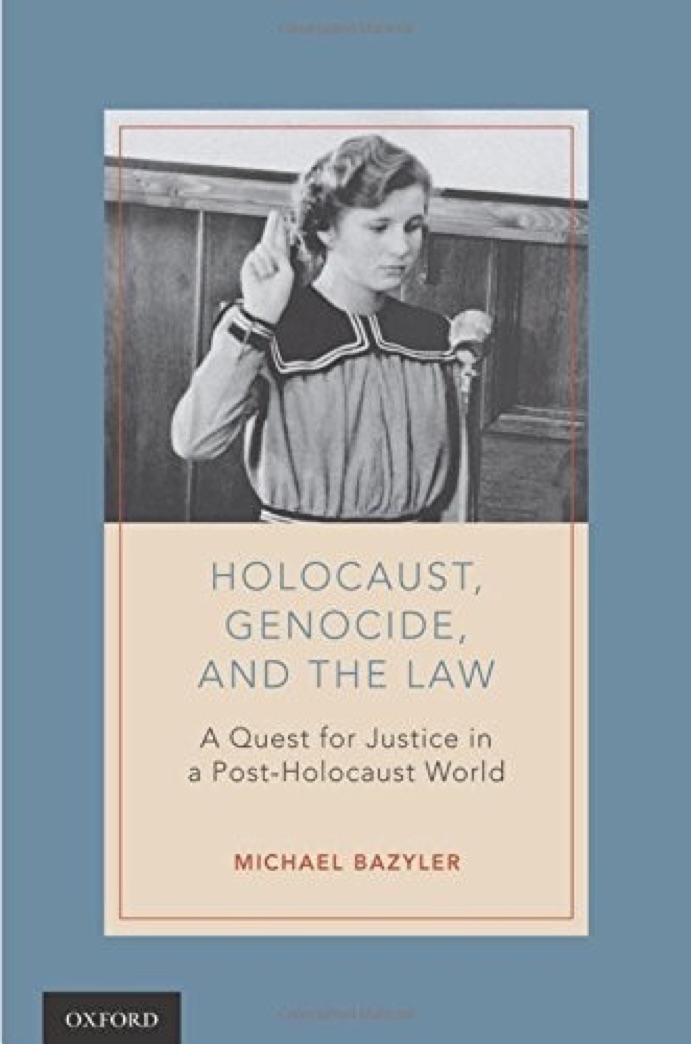
Holocaust, Genocide, and the Law: A Quest for Justice in a Post-Holocaust World
Applying the lessons from "Holocaust, Genocide, and the Law: A Quest for Justice in a Post-Holocaust World" by Michael Bazyler to your life can be a profound exercise in understanding the ethical weight of systemic power and the necessity of moral courage in professional structures. Here are some ways you might integrate these lessons:
- The Responsibility of Professional Ethics: - You must recognize that professional systems—whether in law, medicine, or business—can be manipulated to serve unethical ends if practitioners lack a strong moral compass. The book serves as a warning that technical proficiency or legal compliance is never a substitute for ethical integrity; you have a duty to question the "why" behind the rules you follow.
- Persistence in Long-Term Objectives: - The restitution movement described by Bazyler highlights the importance of persistence, showing that justice often requires decades of dedicated effort. In your entrepreneurial ventures or legal pursuits, you should adopt a long-term perspective, understanding that some of the most significant impacts require a marathon mindset rather than a sprint.
- The Importance of Setting Precedents: - Just as the Nuremberg Trials set the standard for international law, you should focus on the precedents you set within your organizations. Whether you are leading a VC firm or an emergency department, the standards of accountability and transparency you establish today will define the culture and legal safety of those institutions for years to come.
- Advocating for the Disenfranchised: - The work of Raphael Lemkin teaches you the power of a single individual to change global policy through sheer willpower and intellectual rigor. You should identify areas in your own field—healthcare access, legal reform, or economic equity—where your expertise can be leveraged to advocate for those who are currently unprotected by existing systems.
- Vigilance Against Bureaucratic Dehumanization: - In medicine and business, efficiency and bureaucracy can sometimes obscure the humanity of the people being served. You must remain vigilant to ensure that your systems and technologies (like telehealth or venture capital) prioritize the dignity of the individual over the convenience of the process.
- Learning from Failure to Improve Systems: - The evolution from the initial failure of the Genocide Convention to the establishment of the ICC demonstrates that systems of justice are built through iterative learning. You should view professional failures as data points that allow you to build more robust, resilient, and ethical frameworks in your next endeavor.
By integrating these lessons, you cultivate a leadership style that is deeply informed by history and unswervingly committed to justice. This approach ensures that your diverse roles in medicine, law, and business are grounded in a profound respect for human rights, allowing you to build enterprises that are not only successful but also fundamentally decent and protective of the human spirit.
What the book covers
"Holocaust, Genocide, and the Law: A Quest for Justice in a Post-Holocaust World" by Michael Bazyler is a comprehensive legal history that explores how the international community has responded to the atrocities of the Holocaust and subsequent genocides through the evolution of law. The book meticulously details the shift from an era of state sovereignty and impunity to one of international accountability and universal jurisdiction. Bazyler examines the landmark trials, the development of the term "genocide," and the ongoing pursuit of restitution, providing a definitive account of how the legal system attempts to address the "crime of crimes."
Summary:
- The Legal Framework of the Holocaust: - Bazyler begins by analyzing how the Nazi regime utilized the German legal system to facilitate the Holocaust, transforming law into a tool of persecution. He details the implementation of the Nuremberg Laws and how judicial complicity allowed for the systematic disenfranchisement and eventual mass murder of European Jewry under the guise of legality.
- The Nuremberg Trials and the Birth of International Law: - This section focuses on the International Military Tribunal (IMT) at Nuremberg, which established the groundbreaking principle that individuals can be held criminally responsible for state-sanctioned crimes. The book explains the creation of three new categories of crime—crimes against peace, war crimes, and crimes against humanity—which laid the foundation for modern international criminal justice.
- Domestic Trials and National Memory: - The author examines the significance of domestic trials, most notably the 1961 trial of Adolf Eichmann in Jerusalem and the Frankfurt Auschwitz trials in Germany. These proceedings are presented as pivotal moments that shifted the focus toward victim testimony and forced nations to confront their own histories and roles during the Holocaust.
- The Genocide Convention and Raphael Lemkin: - Bazyler chronicles the tireless efforts of Raphael Lemkin, the Polish-Jewish lawyer who coined the term "genocide" and successfully lobbied for the 1948 UN Genocide Convention. The book analyzes the legal definition of genocide, its limitations, and the challenges of early enforcement during the Cold War era when the convention was largely ignored.
- The Era of Restitution and Civil Litigation: - A unique strength of the book is its coverage of the "Holocaust Restitution Movement" of the 1990s, where Bazyler himself was a key figure. He describes how survivors used American civil courts to sue Swiss banks, German corporations, and insurance companies for stolen assets and slave labor, demonstrating how civil law can provide a measure of justice when criminal law falls short.
- Modern Tribunals and the International Criminal Court (ICC): - The narrative moves into the late 20th and early 21st centuries, discussing the ad hoc tribunals for the former Yugoslavia (ICTY) and Rwanda (ICTR). These case studies lead to the establishment of the permanent International Criminal Court, illustrating the institutionalization of global accountability for genocide and war crimes.
- Comparing Genocides and Universal Jurisdiction: - The final chapters explore how the legal precedents set by the Holocaust have been applied to other genocides in Cambodia, Darfur, and Armenia. Bazyler discusses the concept of universal jurisdiction, which allows national courts to prosecute individuals for international crimes regardless of where they were committed, representing the current frontier of legal justice.
This work serves as a vital testament to the power of law to evolve in response to unimaginable evil. By documenting the slow and often imperfect quest for justice, Bazyler underscores that while the law cannot undo the past, it remains the most essential tool for preventing future atrocities and ensuring that perpetrators are held to account.