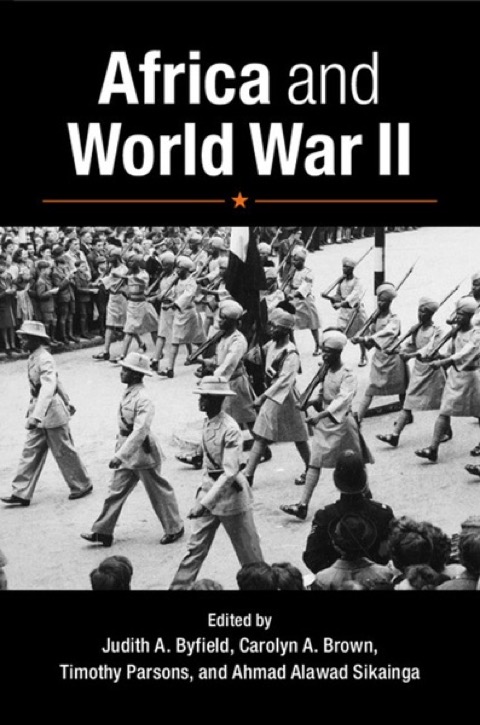
Africa and World War II
Applying the lessons from "Africa and World War II" by Judith A. Byfield, Carolyn A. Brown, Timothy Parsons, and Ahmad Alawad Sikainga to your life can be a profound exercise in understanding how global crises catalyze local transformation. Here are some ways you might integrate these lessons:
-
Recognize the Power of Global Interconnectivity: - Just as the war in Europe and the Pacific reshaped every corner of the African continent, your ventures in healthcare or venture capital are susceptible to global shifts. You should maintain a high-altitude view of how international trends in technology, law, and economics will inevitably ripple down to influence your specific local operations.
-
Leverage Crisis as a Catalyst for Growth: - The "second colonial occupation" showed that extreme pressure can force rapid infrastructure development and innovation. When facing a crisis in a business or medical setting, look for the "forced innovations" that can be institutionalized to create long-term efficiency and structural strength once the immediate threat subsides.
-
Address Cognitive Dissonance in Leadership: - The book highlights the danger of a gap between stated values (the Atlantic Charter) and actual practice (colonialism). As a leader, you must ensure your organizational mission matches the lived experience of your team; hypocrisy in leadership is often the primary fuel for internal dissent and eventual upheaval.
-
Value the "Front Line" Perspective: - African soldiers gained a new perspective by operating in different cultures and environments, which they used to challenge the status quo upon their return. Encourage your staff—whether they are medical residents or startup founders—to seek diverse experiences, and then actually listen when they return with ideas that challenge your existing systems.
-
Understand the Momentum of Social Change: - Large-scale events like World War II don't just change the present; they shift the trajectory of the future by altering social dynamics, such as gender roles and urbanization. In your strategic planning, account for the second- and third-order effects of major disruptions, as these are often where the most significant opportunities for long-term impact lie.
-
Cultivate Resilience Through Adaptability: - The African civilians and soldiers featured in the text survived through remarkable adaptability in the face of scarcity and oppression. You can apply this by fostering a culture of resilience that prizes creative problem-solving and the ability to pivot when traditional resources are unavailable.
By integrating these lessons, you can become a more perceptive leader who anticipates the broader consequences of global events while honoring the agency and insights of those working at every level of your organization.
What the book covers
"Africa and World War II" by Judith A. Byfield, Carolyn A. Brown, Timothy Parsons, and Ahmad Alawad Sikainga is a comprehensive scholarly examination of the African continent's pivotal role and transformative experiences during the Second World War. Moving beyond traditional Eurocentric narratives, the book highlights how African resources, labor, and soldiers were instrumental to the Allied victory. Through a collection of multidisciplinary essays, it explores the social, economic, and political shifts that occurred within African societies as a direct result of the global struggle, laying the groundwork for the mid-century independence movements.
Summary:
-
The Mobilization of Human Capital: - The contributors detail the massive recruitment of over a million African soldiers who served in various theaters, including Burma, North Africa, and Europe. These men, often serving in units like the King's African Rifles or the Tirailleurs Sénégalais, gained technical skills and international exposure that fundamentally altered their worldviews.
-
The Second Colonial Occupation: - The text argues that the war triggered an intensification of colonial rule, characterized by aggressive resource extraction and forced labor. This period saw colonial administrations exercising unprecedented control over African production to meet the demands of the British and French war machines, often at the expense of local food security.
-
Urbanization and the Rise of the Working Class: - The demands of wartime production led to rapid urbanization as people flocked to cities for work in ports, mines, and factories. This migration fostered the growth of a self-aware working class and trade unions, which became vital engines for political activism and social reorganization in the post-war era.
-
Gender Dynamics and the Home Front: - The book examines how the absence of men and the pressures of the war economy redefined gender roles. Women in many African colonies took on increased responsibilities in agriculture and trade, navigating inflation and shortages while simultaneously challenging both colonial and patriarchal constraints on their mobility.
-
The Rhetoric of Freedom versus Colonial Reality: - A central theme is the cognitive dissonance created by the Atlantic Charter and the Allies' stated goal of fighting for democracy. African intellectuals and returning soldiers used this rhetoric to highlight the hypocrisy of colonial subjugation, fueling the demand for self-determination and civil rights.
-
Economic Disruption and Innovation: - While the war caused significant hardship through shortages and inflation, it also forced a degree of economic diversification. Colonial governments were compelled to invest in local infrastructure and industries out of necessity, creating structural changes that would persist long after the cessation of hostilities.
-
The Agency of Veterans and Political Awakening: - Returning veterans are portrayed as catalysts for change who refused to accept the pre-war status quo. Their demands for pensions, recognition, and political representation served as a spark for nationalist movements, bridging the gap between local grievances and the broader struggle for independence.
This volume is significant for repositioning Africa as a central actor in the global conflict rather than a passive periphery. By documenting the complex interplay between global warfare and local social change, it provides an essential historical framework for understanding the rapid decolonization of the continent in the decades that followed.