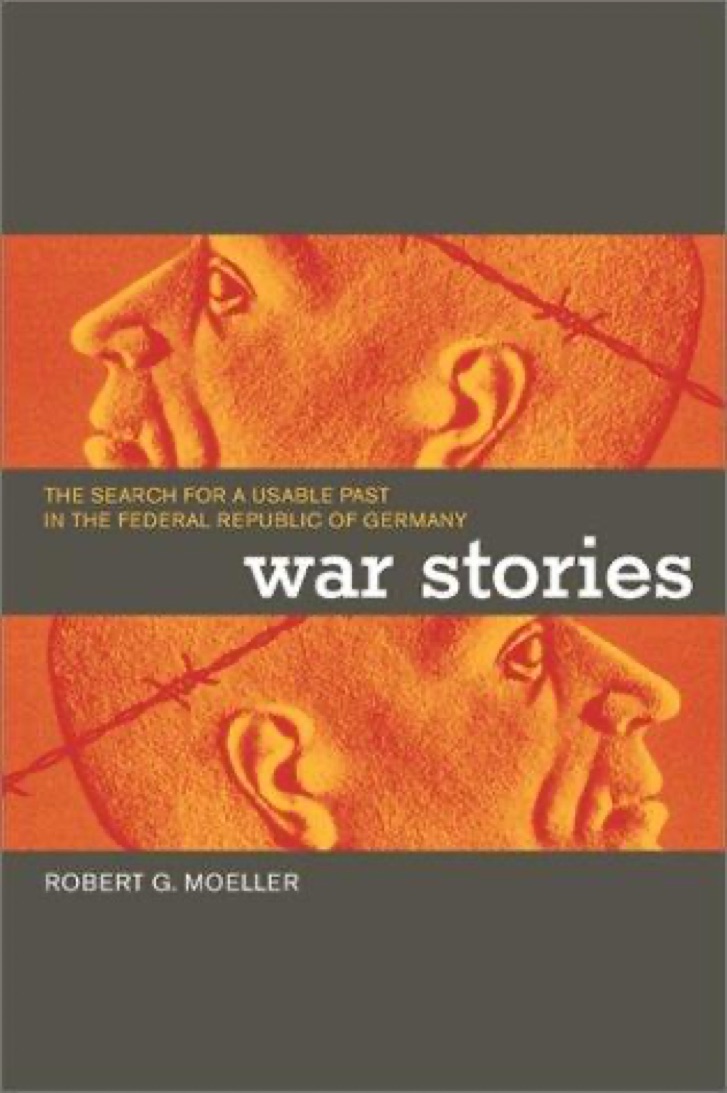
War Stories: The Search for a Usable Past in the Federal Republic of Germany
Applying the lessons from "War Stories: The Search for a Usable Past in the Federal Republic of Germany" by Robert G. Moeller to your life can be a transformative exercise in understanding how we construct the narratives that define our identities and organizations. Here are some ways you might integrate these lessons:
-
Auditing Your Internal Narrative: - You must be willing to examine the "war stories" you tell yourself about your own failures or setbacks. Just as West Germans focused on their suffering to avoid their guilt, it is easy to focus on external factors that hindered your success while ignoring your own missteps. True growth requires a balanced accounting of your past.
-
Resisting the Victim Archetype in Leadership: - In business and medicine, things will go wrong. You should resist the temptation to frame yourself or your organization as a victim of market forces or regulatory changes when internal culture or poor decision-making played a role. A leader who adopts a victim narrative loses the agency required to fix the underlying problem.
-
The Integrity of Institutional History: - Whether leading a VC firm or a hospital system, you must ensure that the "usable past" of your organization is an honest one. Do not sanitize the history of your company to make it more marketable; acknowledging past errors builds more trust with stakeholders than a polished but incomplete story.
-
Strategic Empathy and Perspective: - In law and healthcare, you encounter people in crisis. This book teaches you to recognize when others are using their suffering to deflect accountability. Developing the skill to empathize with someone's pain while still holding them responsible for their actions is a hallmark of sophisticated leadership.
-
The Ethics of Collective Memory: - As a mentor and author, you shape how others see the world. You should be conscious of the "silences" in the stories you share. Ensuring that you highlight not just the triumphs and the hard-won battles, but also the moments of complicity or moral compromise, provides a more complete and useful roadmap for those you lead.
-
Recognizing the Utility of Selective Memory: - Understand that while selective memory can provide temporary stability during a crisis, it creates long-term moral debt. In your ventures, address the difficult truths early rather than allowing a false narrative to take root, as the eventual reckoning is always more painful the longer it is delayed.
By integrating these lessons, you will develop a more rigorous sense of personal and professional integrity, ensuring that the stories you tell—to yourself and to the world—are not just usable, but true.
What the book covers
"War Stories: The Search for a Usable Past in the Federal Republic of Germany" by Robert G. Moeller is a critical historical examination of how West Germans constructed their collective memory of World War II during the 1950s. Moeller argues that the early Federal Republic did not immediately confront the horrors of the Holocaust, but instead focused on narratives of German victimhood to build a cohesive national identity. By analyzing films, memoirs, and political rhetoric, Moeller demonstrates how a "usable past" was forged to help a traumatized population move forward without fully reckoning with its complicity in Nazi crimes.
Summary:
-
The Search for a Usable Past: - Moeller introduces the concept of a "usable past," explaining how the West German state strategically selected which parts of the war to remember. This selection process was designed to foster social stability and democratic legitimacy in the wake of total defeat and moral collapse. - The narrative prioritized the experiences of "ordinary Germans" as victims of the war, effectively sidelining the specific genocide of European Jews in favor of a more palatable, inward-looking grief.
-
The Cult of the Returning POW: - A central pillar of West German memory was the plight of prisoners of war held in Soviet camps. The return of these men, particularly the "Homecoming of the Ten Thousand" in 1955, was framed as a national resurrection. - By focusing on the suffering of these soldiers, the public could view the German military not as an instrument of aggression, but as a body of men who had endured horrific mistreatment at the hands of the Red Army.
-
The Narrative of Displacement and Expulsion: - Moeller details the focus on the 12 million ethnic Germans who fled or were expelled from Eastern Europe. This narrative allowed Germans to claim a moral parity with the victims of the Third Reich by highlighting their own experiences of ethnic cleansing and loss of homeland. - These stories of displacement served to unify the West German population by providing a shared grievance against the East, reinforcing the Cold War divisions of the era.
-
Gendered Memories of the War: - The book explores how the suffering of German women—specifically through the trauma of Allied bombing raids and mass rapes by Soviet soldiers—was utilized to represent the nation’s overall innocence. - This focus on the "suffering home front" shifted the historical gaze away from the actions of German men in occupied territories and toward the domestic sphere where Germans were clearly the ones being harmed.
-
The Displacement of the Holocaust: - Moeller argues that the emphasis on German victims created a "great silence" regarding the Holocaust. While the genocide was not denied, it was marginalized in the public consciousness, treated as a separate tragedy that did not define the German experience. - By universalizing suffering, the specific and industrial nature of the Final Solution was obscured, allowing Germans to avoid a deeper psychological and legal confrontation with their recent history.
-
Political Utility and Adenauer’s Strategy: - Chancellor Konrad Adenauer’s government encouraged these narratives to integrate former Nazis into the new democratic order. By providing a version of history where everyone was a victim, the state avoided the social instability that a more rigorous purge might have caused. - This tactical memory-making was essential for the "economic miracle" and the integration of West Germany into the Western alliance, as it provided a narrative of a "decent Germany" that had simply been led astray.
Moeller’s work is a vital contribution to the study of memory, illustrating that history is often less about what actually happened and more about what a society needs to believe in order to survive. It serves as a cautionary tale about the power of selective storytelling in shaping the moral landscape of a nation.