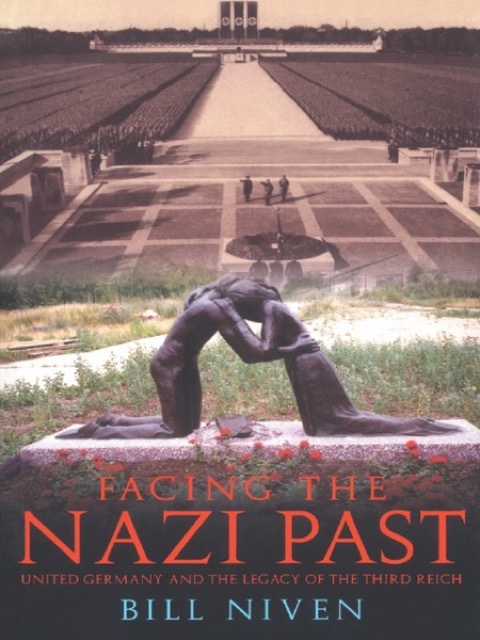
Facing the Nazi Past: United Germany and the Legacy of the Third Reich
Applying the lessons from "Facing the Nazi Past: United Germany and the Legacy of the Third Reich" by Bill Niven to your life can be a profound exercise in radical accountability and the intentional construction of a moral legacy. Here are some ways you might integrate these lessons:
- Embrace Radical Transparency in Leadership: - Just as Germany had to dismantle the myth of the "clean" Wehrmacht to move forward, you must be willing to dismantle the convenient myths within your own organizations. Whether in a medical practice or a startup, ignoring systemic failures or "minor" ethical lapses only allows rot to spread; true leadership requires the courage to expose and correct flaws publicly.
- Navigate Competing Narratives with Empathy: - In law and business, you often deal with parties who have vastly different versions of the truth, much like East and West Germans after 1990. Learn to synthesize these perspectives by looking for the underlying values and traumas that drive them, facilitating a "reunification" of goals that acknowledges the past without being paralyzed by it.
- Audit Your Institutional Legacy: - As a venture capitalist or entrepreneur, consider the long-term "memory" of your ventures. Ask yourself what legacy your current decisions are creating for those who will inherit the company in twenty years; ensure your professional path is built on foundations that can withstand the scrutiny of future generations.
- Practice "Vergangenheitsbewältigung" in Personal Growth: - Adopt the German concept of "working through the past" by conducting regular self-inventories. In the high-stakes environment of emergency medicine or aviation, mistakes can be haunting; rather than suppressing them, create a personal ritual of analysis and admission to ensure that failure is converted into life-saving wisdom.
- Foster Culture Over Compliance: - Niven illustrates that monuments (compliance) are less effective than active cultural debate (culture). In your teams, don’t just rely on handbooks and rules; foster an environment where ethical questions are debated openly, ensuring that the "moral muscle" of your team is strengthened through active use rather than passive adherence.
- Recognize the Power of Symbolic Gestures: - Understand that in leadership, as in national history, symbols matter. Whether it is a formal apology for a medical error or a public credit to a team member, these "monuments" of behavior signal your values to the world and set the standard for the organizational identity you are building.
By integrating these lessons, you develop a framework for integrity that is not based on the absence of failure, but on the relentless commitment to truth and the courageous integration of your entire history—the triumphs and the setbacks alike—into a coherent, humble, and hungry path forward.
What the book covers
"Facing the Nazi Past: United Germany and the Legacy of the Third Reich" by Bill Niven is a comprehensive scholarly examination of how the Federal Republic of Germany has grappled with the memory of the National Socialist era since reunification in 1990. Niven explores the complex, often contentious processes of coming to terms with the past—known in German as Vergangenheitsbewältigung—through the lens of political debate, monuments, and cultural representations. The book serves as an essential record of how a modern democratic state attempts to integrate a horrific historical legacy into its national identity while navigating the differing perspectives of former East and West Germans.
Summary:
- The Divergent Narratives of East and West: - Niven begins by analyzing how the two Germanys utilized the Nazi past to legitimize their own regimes prior to 1990. West Germany generally adopted a narrative of collective responsibility and gradual liberal democratization, whereas East Germany utilized an anti-fascist founding myth that largely externalized Nazi guilt onto the capitalist West. - Upon reunification, these two conflicting modes of memory clashed, forcing a difficult synthesis. Niven argues that the process of "uniting" the past was as much a political struggle as it was a moral one, as the new Germany sought a unified national story that could honor victims while acknowledging the systemic nature of the Third Reich’s crimes.
- The Wehrmacht Exhibition and the Myth of the Clean Army: - A central focus of the book is the massive public controversy surrounding the "Crimes of the Wehrmacht" exhibition in the mid-1990s. This exhibition shattered the long-held myth that the regular German army was "clean" and untainted by the atrocities committed by the SS and the Gestapo. - Niven details the fierce resistance from conservative politicians and veterans, illustrating how the exhibition forced ordinary German families to confront the reality that their fathers and grandfathers were often directly involved in the Holocaust and war crimes on the Eastern Front.
- The Goldhagen Debate and Collective Guilt: - The author examines the explosive reception of Daniel Goldhagen’s book, Hitler’s Willing Executioners, which argued that ordinary Germans were motivated by a uniquely virulent form of "eliminationist anti-Semitism." - While many historians criticized Goldhagen’s methodology, Niven notes that the German public—particularly the younger generation—embraced the book. This phenomenon signaled a shift away from seeing the Nazis as a small cabal of criminals and toward an admission of broad societal participation in the regime.
- Memorialization and the Berlin Holocaust Memorial: - Niven provides a deep dive into the decade-long debate surrounding the construction of the Memorial to the Murdered Jews of Europe in the heart of Berlin. He explores the tensions regarding who should be memorialized, the aesthetic choices of the monument, and the fear that a central memorial might allow Germans to "check a box" and move on from the past. - The discussion highlights the struggle to create a space that is both a somber warning and a public admission of state-sponsored crime, reflecting the difficulty of freezing memory into physical stone and concrete.
- Cultural Representation in Film and Literature: - The book explores how media, particularly films like Schindler’s List and various German television docudramas, have shaped public consciousness. Niven argues that these portrayals often walk a fine line between educating the public and sentimentalizing history. - He notes that while these cultural artifacts help keep the memory alive, they also risk creating a "consumerist" relationship with the past where the horror of the Holocaust is mediated through the safety of the screen.
- The Role of the Grandchildren Generation: - Niven concludes with the rise of the "third generation," the grandchildren of the Nazi era, who have sought to break the silence of their families. This generation’s pursuit of truth has led to a more nuanced, though often painful, interrogation of family histories and local complicity. - This shift marks the transition from "communicative memory" (personal stories) to "cultural memory" (institutionalized history), ensuring that the lessons of the Third Reich remain central to German political morality even as the last eye-witnesses pass away.
The significance of Niven’s work lies in its meticulous documentation of the friction between historical truth and political necessity. By showing that memory is a dynamic, evolving process rather than a static state, Niven provides a blueprint for how societies can confront their darkest chapters with honesty and intellectual rigor.