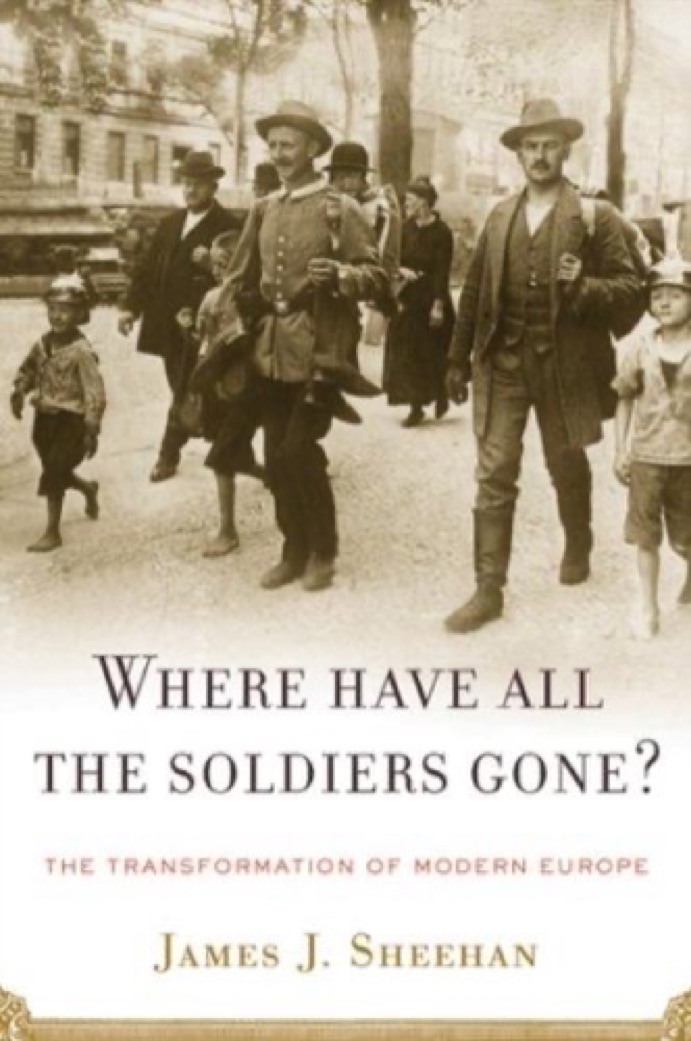
Where Have All the Soldiers Gone?: The Transformation of Modern Europe
Applying the lessons from "Where Have All the Soldiers Gone?: The Transformation of Modern Europe" by James J. Sheehan to your life can be a transformative exercise in understanding how systems evolve from conflict-driven to purpose-driven models. Here are some ways you might integrate these lessons:
-
Evolving the Organizational Purpose: Just as European states shifted from warfare to welfare, you must be willing to redefine the core mission of your organizations as your environment changes. In your healthcare ventures or startup roles, recognize when the "warrior" phase of aggressive competition must give way to a "stewardship" phase that prioritizes sustainable systems and stakeholder well-being. - True leadership involves the courage to abandon an obsolete identity—even if it was once successful—in favor of a model that provides more value to the community you serve.
-
Leveraging Strategic Umbrellas: Sheehan shows how Europe thrived by utilizing the security provided by external powers. In business, medicine, or law, you should identify where you can leverage existing infrastructures—such as established technology platforms or strategic partnerships—to focus your limited resources on your unique value proposition. - You do not need to fight every battle yourself; by "outsourcing" certain systemic protections, you can direct your energy toward innovation and high-level strategy.
-
Auditing Institutional Memory: The trauma of the World Wars reshaped a continent’s psyche for decades. You should realize that your past professional "battles," whether in a difficult medical residency or a failed business venture, continue to influence your current decision-making. - Periodically audit your strategic biases to ensure you aren't making overly cautious choices based on past traumas that no longer apply to your current capabilities or the current market reality.
-
Redefining Success Metrics: In the civilian state, success moved from territorial conquest to quality of life. You can apply this by shifting your personal and professional KPIs from purely quantitative metrics—like the number of clinics opened—to the qualitative impact on patient outcomes and personal fulfillment. - As a lifelong learner who values being "Hungry and Humble," remember that the most significant achievements often lie in the stability and health you create for your family and team rather than just the "wins" recorded on a resume.
-
The Power of Systemic Reinvention: The ultimate lesson is the possibility of total transformation. If a continent defined by centuries of bloodshed can reinvent itself as a bastion of peace, you have the power to reinvent any aspect of your career or personal life regardless of its history. - Embrace the mindset that no structure is permanent; you can transition from an adrenaline-fueled "emergency" mindset to a focused, long-term building mindset when the situation demands a new approach to growth.
By integrating these lessons, you can better navigate the transition between different phases of your career, moving from the aggressive pursuit of goals to the thoughtful management of complex, life-sustaining systems. Understanding the shift from a warfare to a civilian mindset allows you to lead with greater empathy and strategic clarity, ensuring that your ventures provide lasting value in a changing world.
What the book covers
"Where Have All the Soldiers Gone?: The Transformation of Modern Europe" by James J. Sheehan is a profound historical exploration of how Europe transitioned from a continent defined by perpetual warfare to one characterized by civilian-oriented states. Sheehan, a distinguished historian, examines the 20th century’s shift in national identity, where the traditional "warfare state" was replaced by a "welfare state." The book argues that the obsolescence of war in Europe represents one of the most significant sociological and political transformations in human history.
Summary:
-
The Pre-1914 Military Culture: Sheehan begins by describing an era where European identity was inextricably linked to military service and martial prowess. The state existed primarily as a vehicle for waging war, and the role of the soldier was considered the highest form of citizenship and masculinity across the continent. - This period established a structural "warfare state," where social institutions, education, and political legitimacy were all oriented toward the mobilization of massive armies. The cultural belief that war was a necessary, and even purifying, instrument of national policy was nearly universal among the ruling and middle classes.
-
The Trauma of the Great War: The industrialization of death during World War I shattered the romanticized 19th-century view of combat. Sheehan examines how the horrific reality of the trenches began to decouple the concept of national glory from the act of warfare, leading to a deep-seated pacifism in the European psyche. - This section highlights the "Great Divide" in European history, where the unprecedented loss of life forced a fundamental questioning of the state’s primary role. While some turned to radical militarism in response, the broader European consciousness began a slow retreat from the cult of the soldier.
-
The Rise and Fall of the Totalitarian Military State: While the interwar period saw the rise of regimes in Germany and Italy that attempted to hyper-militarize society, Sheehan argues these were the violent "last gasps" of the old order. The total destruction of World War II served as the final paroxysm that burned out the military capacity and desire of the major European powers. - Following 1945, the destruction was so absolute that European nations had neither the economic resources nor the public will to maintain global empires or massive standing armies. Survival and reconstruction became the only viable political priorities.
-
The Invention of the Civilian State: The core of Sheehan’s thesis is the transition to the "civilian state," which prioritizes economic growth and social welfare over military power. The legitimacy of the government moved from its ability to win wars to its ability to provide healthcare, education, and pensions. - This transformation was a total redefinition of modern nationhood, where success was now measured by GDP and social harmony. The author illustrates how the very architecture of the state was rebuilt to serve the needs of the consumer and the citizen rather than the general and the soldier.
-
The Cold War Security Umbrella: Sheehan explains that this transition was facilitated by the unique conditions of the Cold War. Because the United States and the Soviet Union provided the primary security architecture, individual European nations were effectively "freed" from the need to compete militarily with one another. - This "peace by proxy" allowed European leaders to invest their national budgets into the development of the social safety net. The presence of the U.S. military through NATO provided the essential security foundation that allowed the European Union to focus entirely on economic integration.
-
The Modern Identity Crisis: In the final chapters, Sheehan discusses the challenges this creates in the 21st century. Europe has become a "post-military" entity in a world where other powers still adhere to the traditional rules of force and military intervention. - The book concludes that while Europe has successfully created a civilian paradise, it now faces a tension between its pacifist identity and the demands of global security. The disappearance of the soldier has brought peace, but it has also left the continent with limited options for addressing external threats.
Sheehan’s work is a vital contribution to understanding the modern geopolitical landscape. It provides a necessary historical context for why European nations often view international conflict and military spending so differently than the United States, marking the end of a multi-century era of European militarism.