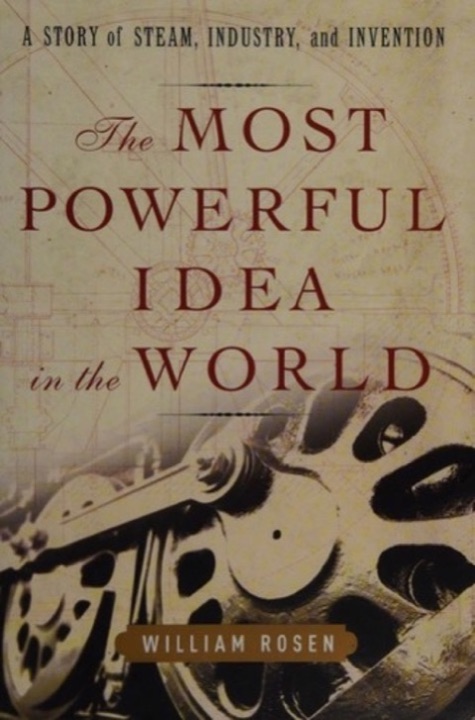
The Most Powerful Idea in the World: A Story of Steam, Industry and Invention
Applying the lessons from "The Most Powerful Idea in the World" by William Rosen to your life involves embracing the principles of innovation, persistence, and the importance of supportive structures. Here’s how you might integrate these lessons:
-
Foster Innovation and Creativity: - Just as the steam engine revolutionized industries, look for opportunities in your personal and professional life where innovation can lead to significant improvements. This might involve exploring new hobbies, like skydiving, or finding creative solutions to challenges in your work or advocacy efforts.
-
Value Intellectual Property and Ideas: - Recognize the importance of protecting and valuing your ideas and contributions. Whether in your medical career or personal projects, ensure that your innovations and insights are acknowledged and preserved, much like the inventors Rosen discusses.
-
Embrace Interdisciplinary Collaboration: - Leverage your diverse interests and experiences, such as flying, reading, and cooking, to create synergies that can lead to new insights or opportunities. Collaborate with others who have different expertise to enhance your projects or advocacy work.
-
Persistence in the Face of Challenges: - Your life story already reflects a strong sense of persistence. Continue to apply this resilience to overcome obstacles, whether they are personal, professional, or societal. Remember that persistence was key for inventors like James Watt in achieving breakthroughs.
-
Supportive Structures for Growth: - Create environments that support growth and innovation, both for yourself and others. This could involve mentoring others, advocating for policies that encourage innovation, or building supportive networks in your personal and professional life.
-
Impactful Societal Change: - Use your passion for social issues like equality and your involvement in activism to drive meaningful change. Just as the steam engine had a profound societal impact, your efforts can contribute to significant advancements in social justice and equality.
-
Cultural and Philosophical Growth: - Continue to explore and challenge your beliefs and values, much like the cultural shifts during the Industrial Revolution. Engage with diverse perspectives and philosophies to enrich your understanding and approach to life.
By integrating these lessons, you can continue to lead a life characterized by innovation, resilience, and meaningful impact, much like the transformative period described in Rosen's book.
What the book covers
"The Most Powerful Idea in the World: A Story of Steam, Industry, and Invention" by William Rosen is a comprehensive exploration of the development of the steam engine and its pivotal role in the Industrial Revolution. Rosen delves into the historical, scientific, and cultural contexts that allowed for this transformative period in human history, focusing on the interplay between innovation, intellectual property, and economic growth.
Summary:
-
Historical Context: - Rosen sets the stage by describing the pre-industrial world, emphasizing the limitations of human and animal labor and the reliance on wind and water power. - He highlights the gradual accumulation of scientific knowledge and technological skills that laid the groundwork for the Industrial Revolution.
-
The Role of Intellectual Property: - A key theme in the book is the importance of intellectual property, particularly patents, in fostering innovation. - Rosen argues that the legal protection of inventions incentivized inventors by allowing them to profit from their creations, thus accelerating technological progress.
-
Key Figures and Inventions: - The book profiles several pivotal figures, including Thomas Newcomen, James Watt, and Matthew Boulton, who played crucial roles in the development and commercialization of the steam engine. - Rosen details the technical challenges and breakthroughs involved in improving the efficiency and practicality of steam engines.
-
Economic and Social Impact: - The steam engine revolutionized industries such as textiles, mining, and transportation, leading to unprecedented economic growth and societal changes. - Rosen discusses the broader implications of the Industrial Revolution, including urbanization, changes in labor practices, and the rise of a consumer economy.
-
Scientific and Technological Synergy: - The book emphasizes the synergy between scientific discoveries and technological advancements, illustrating how theoretical knowledge and practical application fueled each other.
-
Cultural and Philosophical Influences: - Rosen explores the cultural and philosophical shifts that accompanied the Industrial Revolution, including changing attitudes towards progress, innovation, and the role of science in society.
Key Takeaways and Lessons:
-
Innovation Requires Supportive Structures: The development of the steam engine was not just a result of individual genius but also of supportive legal, economic, and social structures that encouraged experimentation and rewarded success.
-
Interdisciplinary Collaboration: The synergy between different fields of knowledge—science, engineering, and business—was crucial in transforming inventions into practical technologies that could be widely adopted.
-
The Importance of Persistence: The journey from concept to practical application was fraught with challenges, and the persistence of inventors like James Watt was essential in overcoming technical and financial obstacles.
-
Impact of Intellectual Property: The establishment of a robust patent system was instrumental in promoting innovation by ensuring that inventors could reap the benefits of their work, thus encouraging further investment in research and development.
-
Long-term Societal Change: The Industrial Revolution, driven by innovations like the steam engine, had profound and lasting impacts on society, reshaping economies, altering social structures, and setting the stage for modern industrialized life.
Overall, "The Most Powerful Idea in the World" provides a detailed and engaging narrative of how a single technological advancement—the steam engine—catalyzed a period of rapid industrial and social change, highlighting the complex interplay of ideas, individuals, and institutions in the process of innovation.