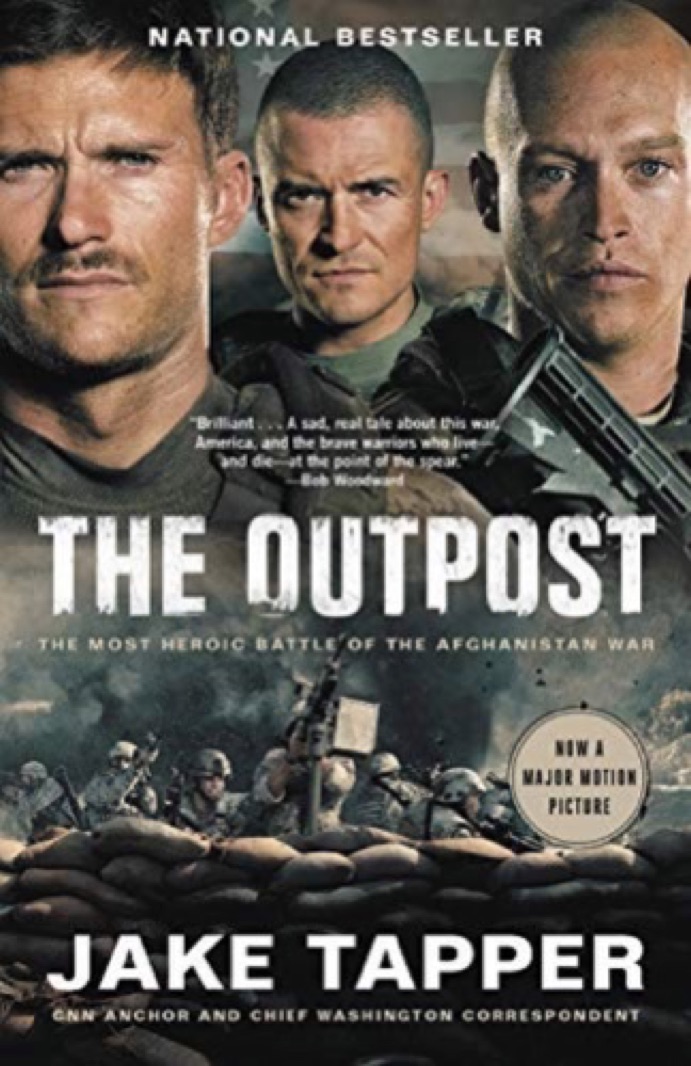
The Outpost: An Untold Story of American Valor
Applying the lessons from "The Outpost: An Untold Story of American Valor" by Jake Tapper to your life can be a profound exercise in understanding risk, leadership, and the gravity of tactical decision-making. Here are some ways you might integrate these lessons:
- Perform a "Terrain Analysis" of Your Ventures: - Just as the soldiers at Keating were doomed by their physical geography, you must evaluate if your business or medical practice is situated in a "tactical valley." Ensure you are not operating from a position of inherent weakness where competitors or external market forces hold the permanent "high ground" over your resources or reputation.
- Acknowledge and Mitigate Sunk Costs: - Military leaders kept COP Keating open long after its utility vanished because of the effort already invested. In entrepreneurship or law, you must be willing to abandon a failing strategy or a losing case before the human or financial cost becomes catastrophic; "staying hungry" includes the hunger for the truth over the ego of a past decision.
- Prioritize Clear Communication and Intelligence: - The tragedy at Keating was exacerbated by a breakdown in communication between the "boots on the ground" and the decision-makers in the rear. Whether in the ER or the boardroom, you must foster an environment where frontline reports are taken seriously and critical data flows upward without being filtered by the optimism bias of middle management.
- Lead with "Stay Humble" Authenticity: - The most respected leaders in Tapper’s account were those who shared the hardships of their subordinates and demonstrated technical competence under fire. Your credibility as a leader is built not by your titles (MD, JD, MBA), but by your willingness to stand in the breach with your team and share the risks you ask them to take.
- Equip Your Team for the "Worst-Case" Scenario: - Valor is a secondary defense; the primary defense is preparation. In aviation or medicine, you must ensure your team has the "air support"—the resources, training, and backup—they need before the crisis hits, rather than relying solely on individual heroism to save a poorly planned operation.
- Define the Mission and the Exit Strategy: - Never enter a situation, whether it is a venture capital investment or a complex legal battle, without a clear understanding of the objective and the conditions for withdrawal. Ambiguity in the mission leads to "mission creep," which eventually dilutes your focus and puts your core objectives at risk.
By integrating these lessons, you can become a more discerning leader who respects the reality of the environment while honoring the commitment of those you lead. True success requires the humility to recognize a flawed position and the courage to change course before the wire is breached.
What the book covers
"The Outpost: An Untold Story of American Valor" by Jake Tapper is a meticulously researched and harrowing narrative of one of the most tactically vulnerable military positions in the Afghan War. It chronicles the life and death of Combat Outpost (COP) Keating, a remote base situated at the bottom of a deep valley in the Hindu Kush mountains, which violated nearly every basic rule of defensive positioning. Tapper explores the systemic failures of high-level military strategy and the extraordinary bravery of the soldiers who were forced to defend a location that many believed should never have existed.
Summary:
- The Tactical Nightmare of COP Keating: - Originally established as a Provincial Reconstruction Team (PRT) base, Keating was intended to facilitate local governance and infrastructure projects. However, its location at the base of three towering mountains near the Pakistan border made it a "sitting duck," allowing insurgents to fire down upon the troops from high-ground positions with total impunity.
- The Strategic Disconnect and Resource Depletion: - Tapper details how the focus on the Iraq War and shifting priorities in Afghanistan led to a dangerous neglect of remote outposts. As resources like Medevac helicopters and Close Air Support were diverted elsewhere, the soldiers at Keating were left to maintain a presence in a hostile region without the necessary logistical or tactical backing to succeed.
- The Leadership Vacuum and Mission Creep: - The book highlights the life of Lieutenant Benjamin Keating, for whom the base was named, and the various commanders who cycled through the outpost. The mission frequently shifted between counter-insurgency, infrastructure building, and simple survival, creating a sense of confusion and frustration among the troops who felt their presence served no clear strategic purpose.
- Life Under Constant Fire: - Tapper illustrates the psychological toll of the daily grind at Keating, where small-arms fire and mortar attacks from the surrounding ridges were a routine occurrence. This section captures the bond formed between soldiers as they navigated a environment where the intelligence reports of imminent threats were often minimized by higher commands located safely in larger hubs.
- The Battle of Kamdesh: - On October 3, 2009, over 300 Taliban fighters launched a coordinated assault that breached the outpost’s perimeter. Tapper provides a minute-by-minute account of the chaos, describing how 53 American soldiers fought a desperate, close-quarters battle to prevent the base from being completely overrun in one of the bloodiest encounters of the war.
- Extraordinary Heroism and the Medal of Honor: - The narrative focuses on the actions of Staff Sergeant Clinton Romesha and Specialist Ty Carter, both of whom would later receive the Medal of Honor for their actions during the battle. Their efforts to reorganize the defense, provide suppressive fire, and recover fallen comrades under intense fire epitomize the resilience of the American soldier in the face of impossible odds.
- The Aftermath and Command Failures: - Following the battle, which resulted in eight American deaths, the base was finally destroyed and abandoned. A subsequent military investigation identified "failed command leadership" at higher levels, questioning the logic of maintaining a base that offered no tactical advantage and required disproportionate resources to defend.
The significance of Tapper’s work lies in its unflinching look at the human cost of bureaucratic and strategic inertia. It stands as a vital critique of military policy and a profound tribute to the soldiers who displayed incredible valor while trapped by the poor decisions of their superiors.