Falcon Field
Applying the lessons from "Falcon Field" by Daryl F. Mallett to your life can be a powerful way to understand the intersection of logistical excellence, international cooperation, and the enduring value of a well-executed mission. Here are some ways you might integrate these lessons:
- Embrace Rapid Scalability: - You should study the construction of Falcon Field as a masterclass in rapid deployment. Recognize that when you have a clear sense of urgency and the right strategic partnerships, you can move from a concept to a fully functional enterprise—whether an urgent care center or a venture capital firm—in a fraction of the time typically expected by the market.
- Foster Cross-Disciplinary Collaboration: - Just as the RAF and USAAF cadets trained together to achieve a common goal, you can seek out "unlikely" partnerships in your professional life. By integrating different training styles and perspectives, you create more robust systems that are better prepared for complex, high-stakes environments in medicine, law, or business.
- Cultivate a Support Ecosystem: - The success of the foreign cadets was bolstered by the hospitality of the local community; similarly, your professional success depends on the network you build around your ventures. You should prioritize "social capital," ensuring your projects are integrated into the community to create a sustainable and supportive environment for long-term growth.
- Master the Fundamentals First: - The training progression from basic biplanes to advanced aircraft underscores the importance of mastering primary skills before moving to high-performance tasks. Whether you are learning a new surgical technique or a new investment strategy, you must ensure your basic "flight training" is flawless before attempting advanced maneuvers.
- Anticipate the Strategic Pivot: - Falcon Field’s transition from a military site to a civilian industrial hub highlights the necessity of planning for the next phase of any organization. You should always look at your current mission with an eye toward how its assets—human or physical—can be repurposed for future growth when the environmental landscape changes.
- Commit to Mentorship and Historical Stewardship: - Just as the museum preserves the history of the "Falcons," you should take the time to mentor others and document your own professional journey. Sharing your "flight logs" helps the next generation of entrepreneurs avoid your mistakes and build upon your successes.
By integrating these lessons, you develop a strategic mindset that values both speed of execution and the longevity of your impact. Just as Falcon Field remains a vital aviation hub decades after its original mission ended, your work can achieve lasting significance by focusing on excellence, community, and the continuous pursuit of higher goals.
What the book covers
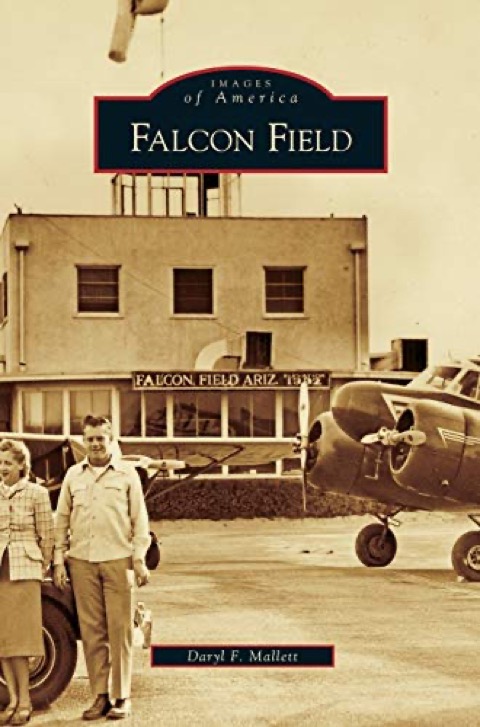
"Falcon Field" by Daryl F. Mallett is a detailed photographic history documenting the establishment and operation of the No. 4 British Flying Training School in Mesa, Arizona, during the Second World War. As part of the Images of America series, the work uses rare archival imagery and deep historical research to illustrate how a patch of desert was transformed into a vital hub for Allied aviation training. The book serves as a tribute to the international cooperation required for victory and a chronicle of the airport's evolution from a military outpost into a modern general aviation powerhouse.
Summary:
- The Urgent Genesis of No. 4 BFTS: - The book begins by detailing the strategic necessity that led to Falcon Field's creation in 1941. Because the United Kingdom was under constant threat of bombardment, the British government partnered with American civilian contractors to build training schools in the United States, selecting Mesa for its nearly perfect year-round flying weather and vast open spaces.
- Engineering a Desert Airfield: - Mallett chronicles the rapid construction of the field, which was funded by the British but built on American soil. The narrative highlights the logistical feat of erecting hangars, barracks, and runways in mere months, showcasing a masterclass in wartime infrastructure and the mobilization of private enterprise for a public cause.
- The Cadets and the Curriculum: - A central focus of the book is the life of the Royal Air Force (RAF) cadets who traveled across the Atlantic to train alongside United States Army Air Forces (USAAF) personnel. The author describes the rigorous training syllabus, which moved students from the basic Boeing-Stearman PT-17 Kaydet to the more advanced North American AT-6 Texan, preparing them for combat in the European and Pacific theaters.
- The "Falcon" Community and Local Bonds: - The book highlights the unique cultural exchange between the British servicemen and the local residents of Mesa. The "Falcons," as the cadets were known, were famously embraced by the community, often spending their limited leave time in American homes, which created lasting international friendships and integrated the foreign military presence into the local social fabric.
- Post-War Transition and Civilian Survival: - Following the end of hostilities in 1945, Falcon Field faced decommissioning and potential abandonment. Mallett explains how the site was successfully transitioned into a municipal airport, eventually attracting major industrial tenants and ensuring that the wartime investment continued to provide economic value to the region for decades to come.
- The Living Legacy and Aviation Preservation: - The concluding chapters focus on the airport's modern identity as a hub for general aviation and the home of the Arizona Commemorative Air Force Museum. Through the preservation of vintage aircraft and the maintenance of historical archives, the field continues to educate the public on the importance of flight training and the sacrifices made by the pilots who earned their wings in the Arizona desert.
This book is a vital record of a specific chapter in aviation history where international borders were secondary to a shared mission of excellence and defense. By preserving these images and stories, Daryl F. Mallett ensures that the contributions of Falcon Field—both as a wartime necessity and a peacetime asset—are recognized for their role in shaping the modern aviation landscape.