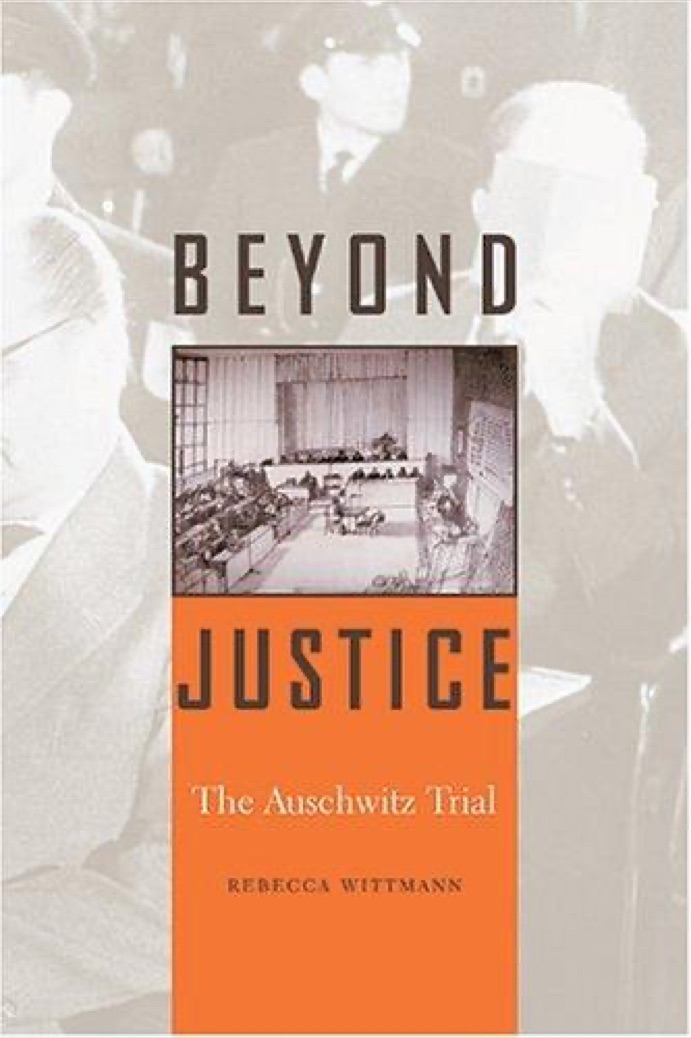
Beyond Justice: The Auschwitz Trial
Applying the lessons from "Beyond Justice: The Auschwitz Trial" by Rebecca Wittmann to your life can be a sobering yet vital exercise in understanding the complexities of institutional integrity and the moral weight of systemic action. Here are some ways you might integrate these lessons:
-
Recognize Systems vs. Individual Agency: - In complex organizations like healthcare systems or venture capital firms, the "system" can often mask or facilitate unethical outcomes. You must look beyond individual "bad actors" and evaluate whether your organizational processes themselves are designed to uphold the highest ethical standards or if they provide legalistic cover for systemic negligence.
-
Avoid the Trap of Narrow Compliance: - In both law and business, "legal" does not always equate to "moral" or "just." Wittmann shows how sticking strictly to the letter of an outdated code failed to capture the essence of justice; as a leader and entrepreneur, you should avoid "box-ticking" compliance and instead strive for a culture of integrity that addresses the spirit of your mission and the safety of those you serve.
-
The Necessity of Courageous Advocacy: - Reflect on the role of Fritz Bauer, who pushed for truth against immense social and political pressure. In your career as an emergency physician and leader, identify when you must be the "uncomfortable" voice in the room, advocating for systemic reform or patient safety even when the prevailing institutional culture prefers the convenience of the status quo.
-
Manage Complexity without Losing the Human Element: - The trial's struggle to process the scale of Auschwitz mirrors the challenges of high-stakes environments like the ER or a cockpit. You must develop the mental models to process overwhelming technical data without losing sight of the human impact, ensuring that the technicalities of a process never overshadow the ultimate objective of care and human dignity.
-
Maintain Radical Transparency in Legacy: - As an author and mentor, consider how you frame the history of your own ventures and failures. Wittmann warns against "sanitizing" the past by blaming a few outliers; instead, practice radical transparency by acknowledging systemic flaws and personal errors to ensure that those following you have an accurate and honest map of the professional terrain.
-
Scrutinize Regulatory Frameworks: - Use your background as an attorney to critically examine the frameworks you operate within. Always ask if the current rules and regulations are still fit for purpose in a rapidly changing healthcare landscape, or if they are being used to process modern, complex problems through an obsolete and ineffective lens.
By integrating these lessons, you can sharpen your discernment as a leader and professional, ensuring that your pursuits in medicine, law, and business are not just legally sound but ethically profound. Staying hungry for truth and humble before the weight of history allows you to build organizations that are truly resilient, accountable, and just.
What the book covers
"Beyond Justice: The Auschwitz Trial" by Rebecca Wittmann is a rigorous historical analysis of the Frankfurt Auschwitz trial of 1963–1965, which marked the first major attempt by West Germany to prosecute Holocaust perpetrators under its own domestic legal system. The book examines how the constraints of the West German penal code, which predated the war, fundamentally shaped the outcome of the proceedings and the public's understanding of the Holocaust. Wittmann argues that by focusing on individual acts of extreme cruelty rather than the systemic nature of genocide, the trial inadvertently distanced the "ordinary" functioning of the death camp from the legal definition of criminality.
Summary:
-
The Legal Framework and Its Limitations: - Wittmann explains that West German prosecutors were forced to use the 1871 Penal Code because the country refused to apply laws retroactively or utilize international law. This meant defendants could only be convicted of murder if they acted with "base motives" or specific "cruelty," effectively placing an immense burden on the prosecution to prove that the SS officers went beyond their standing orders.
-
The Definition of a Perpetrator: - The book details how the court distinguished between "excessive" killers and those who simply followed orders. Those who carried out the routine operations of the gas chambers were often legally classified as mere accomplices, while only those who exhibited personal sadism or initiative were labeled murderers, a distinction that Wittmann argues skewed the historical record of the camp's reality.
-
Pre-trial Investigations and Fritz Bauer: - The narrative follows the massive investigative effort led by Fritz Bauer, the Hessian Attorney General, who viewed the trial as a necessary tool for national pedagogy. Wittmann describes the struggle to gather evidence nearly two decades after the events, relying on the discovery of crucial documents that finally linked specific SS men to the selection process at the "ramp."
-
The Role and Burden of Survivor Testimony: - A significant portion of the book focuses on the survivors who returned to Germany to testify against their former tormentors. Wittmann highlights the tension between their traumatic memories and the clinical, often hostile environment of a German courtroom, where defense attorneys sought to discredit them based on minor chronological inconsistencies or lapses in memory.
-
The "Befehlsnotstand" Defense: - The book analyzes the "defense of superior orders," which many defendants used to claim they had no choice but to participate in the massacres. Wittmann shows how the court largely debunked this by proving that SS members who refused to kill were generally transferred rather than executed, yet the legal requirement for individual "will to kill" still allowed many to receive relatively lenient sentences.
-
The Trial as National Pedagogy: - Wittmann explores how the trial served as a form of education, forcing a reluctant German public to confront the gruesome details of the Final Solution. However, she notes a paradoxical effect: because the trial focused on proving individual "monstrosity," it allowed the average citizen to feel exonerated, viewing the Holocaust as the work of a few sadistic outliers rather than a failure of the entire state apparatus.
Ultimately, "Beyond Justice" serves as a profound critique of the intersection between law and history. It demonstrates that while the Frankfurt trial was a landmark moment in transitional justice, the rigidity of the legal system often obscured the larger truth of state-sponsored mass murder, leaving a legacy that is as much about the limitations of legal statutes as it is about the pursuit of accountability.