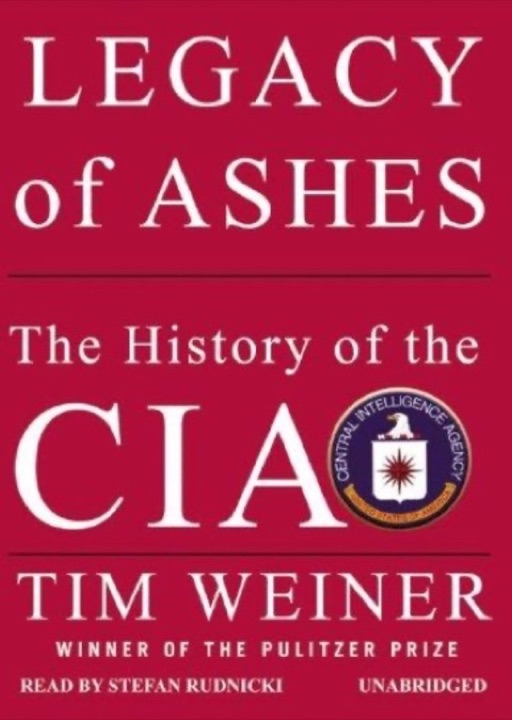
The Legacy of Ashes
Applying the lessons from "Legacy of Ashes" by Tim Weiner to your life involves reflecting on the themes of accountability, adaptability, and ethical decision-making. Here’s how you might integrate these lessons:
-
Accountability and Oversight: - Just as the CIA faced scrutiny and the need for oversight, consider how you can implement self-reflection and accountability in your personal and professional life. Regularly evaluate your actions and decisions, ensuring they align with your core values of kindness and empathy.
-
Adaptability to Change: - The CIA had to adapt to new global threats post-Cold War. Similarly, embrace change and be open to adapting your strategies and approaches in life. Whether it's in your career, personal growth, or relationships, remain flexible and willing to evolve with new circumstances.
-
Ethical Decision-Making: - The book highlights the moral and ethical dilemmas faced by the CIA. Apply this lesson by continually assessing the ethical implications of your actions. Strive to make decisions that uphold your values, even in challenging situations, and maintain your commitment to kindness and empathy.
-
Learning from Failures: - The CIA's history is marked by both successes and failures. Embrace failures as opportunities for growth and learning, as you already do. Reflect on past experiences to gain insights and improve future outcomes.
-
Importance of Clear Communication: - The CIA often struggled with inter-agency communication. Ensure that your communication style remains direct and clear, as you described, to foster understanding and collaboration in your interactions.
-
Balancing Security and Morality: - The CIA's covert operations often raised ethical questions. In your life, balance your ambitions and goals with your ethical beliefs, ensuring that your actions contribute positively to those around you.
-
Continuous Improvement: - The need for reform and adaptation in the CIA underscores the importance of continuous improvement. Approach your personal development with the mindset of being in a constant state of beta, as you mentioned, and strive to be a lifelong learner.
By integrating these lessons, you can enhance your personal growth, maintain ethical integrity, and continue to make a positive impact in your life and the lives of others.
What the book covers
"Legacy of Ashes: The History of the CIA" by Tim Weiner is a comprehensive and critical examination of the Central Intelligence Agency's history from its inception after World War II through the early 21st century. Weiner, a Pulitzer Prize-winning journalist, draws on extensive research, including declassified documents and interviews with former CIA officials, to provide a detailed account of the agency's successes, failures, and the impact of its operations on global politics.
Summary:
-
Origins and Early Years: - The CIA was established in 1947, succeeding the wartime Office of Strategic Services (OSS). Its primary mission was to gather intelligence and conduct covert operations to counter Soviet influence during the Cold War. - Early operations were marked by a lack of experience and frequent missteps, as the agency struggled to define its role and capabilities.
-
Cold War Operations: - The CIA played a significant role in the Cold War, engaging in espionage, propaganda, and covert actions to undermine communist regimes and support friendly governments. - Notable operations included the overthrow of Iran's Prime Minister Mohammad Mossadegh in 1953 and Guatemala's President Jacobo Árbenz in 1954, both of which had long-term consequences for U.S. foreign relations.
-
Bay of Pigs and Vietnam: - The failed Bay of Pigs invasion in 1961 was a major embarrassment for the CIA and highlighted its operational shortcomings. - During the Vietnam War, the agency was involved in controversial programs like the Phoenix Program, which aimed to dismantle the Viet Cong infrastructure but was criticized for human rights abuses.
-
Post-Vietnam and the Church Committee: - The 1970s brought increased scrutiny of the CIA's activities, culminating in the Church Committee investigations, which exposed numerous illegal and unethical practices. - These revelations led to reforms intended to increase oversight and accountability, though the effectiveness of these measures is debated.
-
Reagan Era and Beyond: - Under President Reagan, the CIA was revitalized, playing a key role in supporting anti-communist movements in Afghanistan, Central America, and elsewhere. - The agency's involvement in the Iran-Contra affair, however, was another scandal that damaged its reputation.
-
Post-Cold War Challenges: - With the collapse of the Soviet Union, the CIA faced new challenges, including terrorism, nuclear proliferation, and cyber threats. - The agency's failure to prevent the 9/11 attacks and the subsequent intelligence controversies surrounding the Iraq War highlighted ongoing issues with intelligence gathering and analysis.
Key Takeaways and Lessons:
-
Institutional Challenges: The CIA has often struggled with bureaucratic inefficiencies, inter-agency rivalries, and a lack of clear strategic direction, which have hampered its effectiveness.
-
Moral and Ethical Dilemmas: The agency's history is marked by controversial actions that raise questions about the ethical implications of covert operations and the balance between security and morality.
-
Impact of Intelligence Failures: High-profile failures, such as the Bay of Pigs and the prelude to the Iraq War, demonstrate the significant consequences of flawed intelligence and decision-making.
-
Need for Oversight and Reform: The book underscores the importance of oversight and accountability to prevent abuses of power and ensure that intelligence activities align with democratic values.
-
Adaptation to New Threats: As global threats evolve, the CIA must adapt its strategies and capabilities to address emerging challenges, such as cyber warfare and transnational terrorism.
Overall, "Legacy of Ashes" presents a critical view of the CIA, highlighting its achievements and failures while emphasizing the need for ongoing reform and adaptation in the face of changing global dynamics.