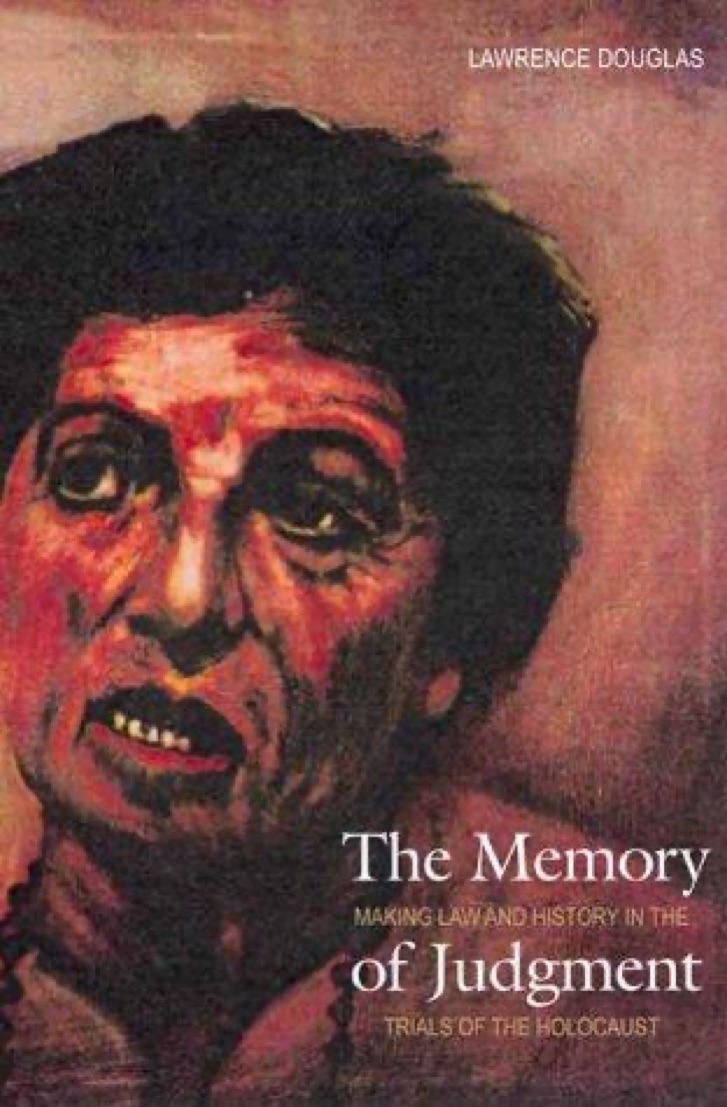
The Memory of Judgment: Making Law and History in the Trials of the Holocaust
Applying the lessons from "The Memory of Judgment: Making Law and History in the Trials of the Holocaust" by Lawrence Douglas to your life can be a transformative exercise in understanding how we construct truth and accountability within complex systems. Here are some ways you might integrate these lessons:
-
Architectural Integrity in Leadership: - Just as the legal system had to be adapted to address unprecedented crimes, you must ensure your organizational structures are built to handle modern ethical complexities. In healthcare or venture capital, this means creating systems of accountability that don't just react to failures but proactively document and preserve the integrity of the mission.
-
The Power of Narrative in Persuasion: - Recognizing the shift from documents at Nuremberg to testimony in Jerusalem highlights the importance of the human element. Whether you are pitching a new startup or explaining a medical procedure, remember that while data (documents) provides the foundation, it is the human narrative (testimony) that creates a lasting impact and drives emotional buy-in.
-
Balancing Objective Evidence with Subjective Experience: - In your roles as a physician and attorney, you often navigate the space between hard data and a patient’s or client’s lived experience. You can integrate this lesson by maintaining a rigorous respect for facts while acknowledging that subjective narratives provide a context that data alone cannot capture, leading to more empathetic and effective leadership.
-
Navigating Systemic Failure with Resilience: - The book teaches that large-scale failures require a unique form of "judgment" that looks at systemic causes rather than just individual errors. Apply this to entrepreneurship by analyzing business failures not as isolated incidents but as symptoms of a broader environment, allowing for more robust "historiographic" learning within your firms.
-
The Responsibility of Documentation: - As a pilot and a professional in highly regulated fields, you know that documentation is a safeguard. Douglas shows that documentation is also a legacy; ensure that your businesses and medical practices maintain records that can withstand the "judgment" of future scrutiny, serving both as a legal shield and a historical record of your standards.
-
Ethical Stewardship and the Long View: - The trials were as much about the future as the past. In your venture capital and educational pursuits, view your decisions through the lens of "didactic leadership"—asking yourself what lessons the next generation of entrepreneurs and physicians will learn from the precedents you set today.
By integrating these lessons, you can enhance your ability to lead with both the precision of an attorney and the empathy of a physician. Recognizing the tension between the "law" of your business operations and the "history" of your professional legacy will allow you to build institutions that are not only successful but also morally and historically significant.
What the book covers
"The Memory of Judgment: Making Law and History in the Trials of the Holocaust" by Lawrence Douglas is a profound examination of how the legal system attempted to process and memorialize the atrocities of the Third Reich. Douglas explores the inherent tension between the narrow, procedural requirements of the law and the broader, pedagogical goals of creating a historical record for future generations. By analyzing landmark cases from Nuremberg to the trial of John Demjanjuk, the book reveals how the courtroom became a primary site for the construction of Holocaust memory.
Summary:
-
The Conflict of Law and Historiography: - Douglas argues that trials are fundamentally designed to determine individual guilt through specific evidence, yet Holocaust trials were often tasked with the much larger burden of teaching history. This creates a friction where the rules of evidence and the rights of the accused can conflict with the desire to present a comprehensive narrative of state-sponsored genocide.
-
Nuremberg and the Primacy of the Document: - The International Military Tribunal at Nuremberg focused heavily on documentary evidence—the Nazis' own meticulous records—to prove "Crimes Against Peace." Douglas highlights how the prosecution used film as a legal tool for the first time, attempting to turn the camera’s gaze into an irrefutable witness of the "administrative massacre."
-
The Eichmann Trial and the Didactic Turn: - The 1961 trial of Adolf Eichmann in Jerusalem marked a shift from documents to the living voice of the survivor. Douglas analyzes how the prosecution intentionally designed the trial as a "didactic spectacle" to forge a national identity in Israel and ensure that the personal suffering of victims was finally integrated into the official legal and historical record.
-
The Challenges of Traumatic Testimony: - The book explores how the legal system struggles with the fallibility of human memory, especially memory shaped by extreme trauma. In the Eichmann trial, the courtroom became a theater where the emotional weight of testimony often transcended its evidentiary value, challenging traditional legal notions of objective witness reliability.
-
The Demjanjuk Case and the Failure of Identification: - Douglas provides a critical look at the trial of John Demjanjuk, accused of being "Ivan the Terrible" of Treblinka. This case demonstrated the limits of legal memory, as decades of elapsed time and the frailties of aging witnesses led to a case of mistaken identity, illustrating the dangers when the law attempts to adjudicate history too long after the fact.
-
The Evolution of International Jurisprudence: - The narrative traces the development of "Crimes Against Humanity" as a distinct legal category that bridges the gap between individual criminal acts and the systemic destruction of a group. Douglas shows how these trials laid the groundwork for modern international criminal law and the permanent International Criminal Court.
-
The Courtroom as a Memory Site: - Ultimately, the book posits that while a trial can never fully represent the magnitude of the Holocaust, the act of judgment itself serves as a vital social ritual. These trials transformed raw horror into a structured narrative, ensuring that the memory of the victims was preserved within the authoritative framework of the law.
This work is a significant contribution to legal scholarship and historical study, offering a nuanced critique of how we use legal institutions to satisfy a moral and historical debt. Douglas demonstrates that while law and history are uneasy partners, their intersection in the Holocaust trials was essential for the creation of a global consciousness regarding genocide and human rights.