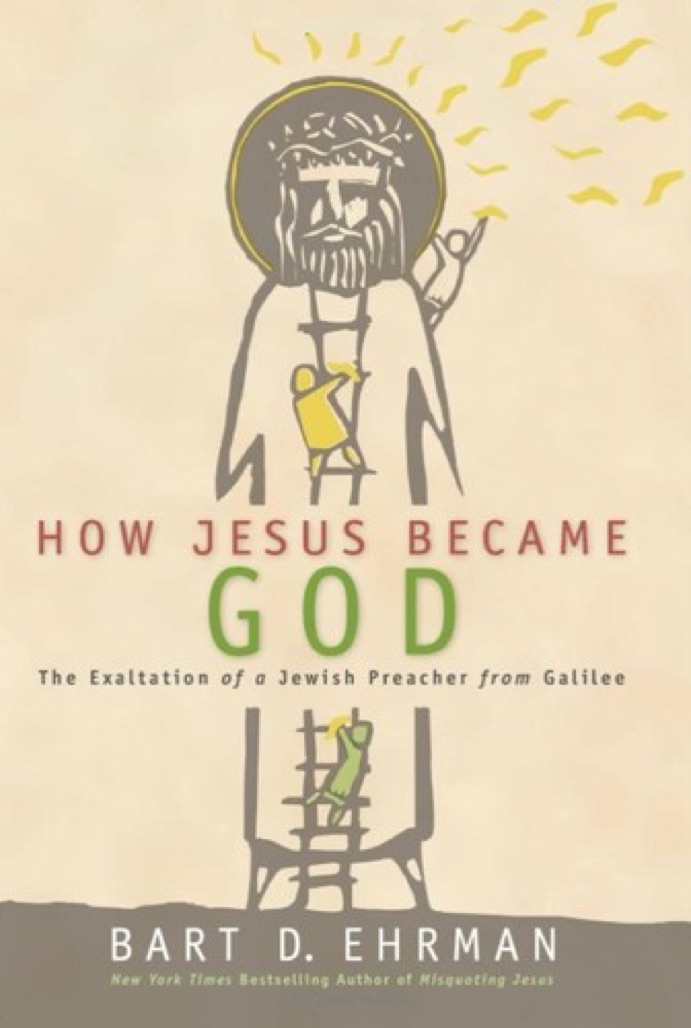
How Jesus Became God: The Exaltation of a Jewish Preacher from Galilee
Applying the lessons from "How Jesus Became God: The Exaltation of a Jewish Preacher from Galilee" by Bart D. Ehrman to your life can be a profound exercise in critical thinking and the study of institutional evolution. Here are some ways you might integrate these lessons:
-
Interrogating First Principles: Just as Ehrman examines the roots of a 2,000-year-old belief system, you should apply rigorous historical and logical scrutiny to the foundational assumptions of your businesses or medical practices. Understanding how a core mission can drift or transform over time allows you to maintain strategic alignment with your original goals while remaining open to necessary pivots when the market or patient needs change.
-
Understanding Narratization and Influence: The book illustrates how a story can be reshaped by followers to meet new emotional and social needs. In leadership, you must be aware of how your vision is being interpreted and sometimes "mythologized" by your team; ensuring that the organizational narrative remains grounded in reality and original intent is crucial for long-term health and preventing toxic culture shifts.
-
The Fluidity of Definitions: Ehrman demonstrates that concepts like "divine" or "human" were not fixed in the ancient world but were subject to intense debate. In the complex legal and medical environments where you operate, recognizing that definitions—whether of "quality care," "fiduciary duty," or "innovation"—are often subject to cultural and professional evolution can give you a competitive edge in negotiation and policy-making.
-
Navigating High-Stakes Intellectual Conflict: The debates leading to the Council of Nicaea reflect the high stakes of professional disagreement. You can learn from these historical conflicts by applying your mantra to "Stay Humble" during discourse, seeking common ground while acknowledging that different stakeholders may have vastly different interpretations of the same set of facts.
-
Analyzing the Scaling of Ideas: A local movement in Galilee became a global powerhouse through specific narrative shifts and historical windows. As an entrepreneur and VC, you can use Ehrman’s analysis to identify the mechanisms that allow a "seed" idea to scale; recognizing the moments where a message gains "exaltation" can help you identify high-potential investments and cultural trends before they reach the mainstream.
By integrating these lessons, you will develop a more nuanced understanding of how historical context and human interpretation shape the structures we live within today. This perspective will sharpen your ability to lead, innovate, and think critically about the legacies you are building across the diverse fields of healthcare, law, and venture capital.
What the book covers
"How Jesus Became God: The Exaltation of a Jewish Preacher from Galilee" by Bart D. Ehrman is a historical investigation into the transformation of a first-century apocalyptic preacher into the divine figure at the center of the Christian faith. Ehrman, a renowned New Testament scholar, moves through the archaeological and textual evidence to trace how the earliest followers of Jesus moved from viewing him as a human messiah to an eternal member of the Trinity. The book provides a meticulous analysis of the cultural, philosophical, and theological shifts that occurred over the first four centuries of the Common Era.
Summary:
-
The Historical Jesus as an Apocalyptic Prophet: - Ehrman begins by situating Jesus within his original context as a Jewish preacher who believed that the end of the current age was imminent. He argues that the historical Jesus likely did not view himself as God, but rather as the future king of Israel who would rule when God intervened to establish a new kingdom on Earth.
-
The Catalyst of Resurrection Experiences: - The author posits that the belief in Jesus's divinity was not a slow development but was triggered by the post-crucifixion visionary experiences of his disciples. These followers came to believe that God had vindicated Jesus by raising him from the dead and exalting him to a position of heavenly power, a belief that laid the foundation for his later deification.
-
Exaltation Christology in Early Christianity: - The book explores "low" or "exaltation" christology, which was the earliest view held by Christians, including the Apostle Paul. In this framework, Jesus was seen as a human being who was made divine by God at a specific point—typically his resurrection—representing a movement from the human realm to the divine.
-
The Shift Toward Incarnation Christology: - As the movement grew, a "high" christology emerged, most notably in the Gospel of John, where Jesus is depicted as a pre-existent divine being who became human. This marked a significant theological pivot from a man who became God to a God who became man, which eventually became the dominant orthodox view.
-
Divinity in the Ancient World: - Ehrman provides essential context regarding how people in the Greco-Roman and Jewish worlds understood the relationship between the human and the divine. He explains that the boundary between these two realms was far more porous than it is today, allowing for various "intermediate" divine beings and making the concept of a divine man more accessible to ancient audiences.
-
The Council of Nicaea and Final Dogma: - The narrative concludes with the fourth-century theological battles that led to the Council of Nicaea in 325 CE. Ehrman details the conflict between Arius and Athanasius over the nature of Christ's divinity, which resulted in the Nicene Creed and the formalization of the doctrine that Jesus was of the same substance as God the Father.
This work is significant because it provides a secular, historical framework for understanding the central tenet of the world's largest religion. By deconstructing the historical layers of Christian doctrine, Ehrman illustrates how human interpretation and historical happenstance can fundamentally reshape the trajectory of Western civilization.