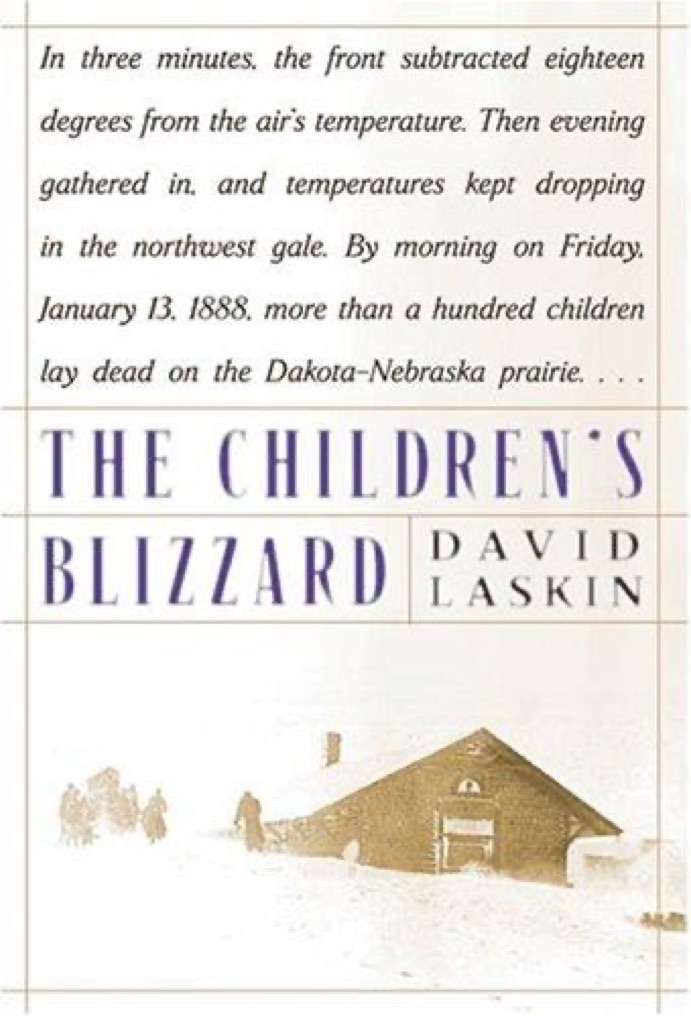
The Children's Blizzard: The True Story of the January 1888 Blizzard That Changed the American Prairie Forever
Applying the lessons from "The Children's Blizzard: The True Story of the January 1888 Blizzard That Changed the American Prairie Forever" by David Laskin to your life can be a profound exercise in risk assessment and crisis leadership. Here are some ways you might integrate these lessons:
-
Maintain High Situational Awareness: - Just as a pilot must constantly monitor shifting weather patterns, you must remain vigilant of the "calm before the storm" in your business or medical practice. Rapidly changing conditions require immediate pivots; being lulled into a false sense of security by a stable market or a routine procedure can lead to catastrophe when the environment suddenly shifts.
-
Decisiveness in Ambiguous Situations: - The schoolteachers in Laskin’s account had seconds to decide whether to stay or go. In leadership, you will often face high-stakes scenarios with incomplete data; training yourself to make the best possible decision with the information available—and then committing to it fully—is the hallmark of an effective commander or CEO.
-
Build Redundancy into Communication Systems: - The failure of the Signal Service highlights the danger of centralized, slow-moving information flow. Whether in a hospital setting or a startup, you should ensure that your critical warning systems have redundancies and that frontline operators have the autonomy to act on local information without waiting for central confirmation.
-
Respect the Limits of Human Endurance: - Understanding the physiology of freezing serves as a metaphor for burnout and systemic failure. You must recognize when your team—or your own body—is reaching a breaking point and proactively seek "shelter" before the environment causes permanent damage, acknowledging that even the strongest will cannot overcome certain physical realities.
-
The Value of Simple Tools and Training: - Many who survived did so because of basic preparedness: a rope, a well-stocked woodpile, or a clear plan. In your entrepreneurial ventures, do not overlook the fundamental "survival gear" of your industry; having the basics mastered allows you to survive when the more advanced systems fail during a crisis.
-
Practice Radical Humility: - Nature, like the market, is indifferent to your plans or your pedigree. Cultivating a "Stay Humble" mindset involves recognizing that external forces can overwhelm even the most disciplined individual, which should drive you to invest in better forecasting, risk mitigation, and contingency planning.
By integrating these lessons, you develop a more resilient framework for navigating the "blizzards" of professional and personal life. You learn that while you cannot control the storm, you can control your preparation, your response, and your commitment to protecting those under your care.
What the book covers
"The Children's Blizzard: The True Story of the January 1888 Blizzard That Changed the American Prairie Forever" by David Laskin is a haunting and meticulously researched historical account of one of the deadliest weather events in American history. The book reconstructs the catastrophic events of January 12, 1888, when a sudden, violent arctic blast swept across the Great Plains, trapping thousands of settlers and schoolchildren in a lethal whiteout. Laskin provides a multi-dimensional analysis, blending the burgeoning science of meteorology with the harrowing personal experiences of immigrant families who had come to the American West in search of a better life. Through vivid storytelling and rigorous research, the narrative explores the themes of human resilience, the failure of early warning systems, and the unforgiving power of the natural world.
Summary:
-
The Deceptive Calm and the Sudden Strike: - The morning of January 12 began with unseasonably warm temperatures, leading many settlers to venture out without heavy winter gear and schoolteachers to hold classes as usual. This "false spring" proved a deadly trap, as a massive arctic high-pressure system collided with a low-pressure front, creating a "bomb" of weather that dropped temperatures by forty degrees in a matter of hours.
-
The Immigrant Experience on the Frontier: - Laskin focuses on several immigrant families, primarily from Norway, Germany, and Russia, who were lured to the Dakota Territory and Nebraska by the promise of cheap land and fertile soil. These families, often isolated and unfamiliar with the extreme volatility of the American continental climate, were ill-prepared for the sheer violence of the prairie storms, highlighting the tragic disconnect between the "American Dream" and the harsh reality of the frontier.
-
The Vulnerability of the Schoolhouses: - Because the storm struck during the school day, the most vulnerable victims were children who had walked to local sod or frame schoolhouses. Many teachers, some barely older than their students, were forced to make life-or-death decisions: keep the children in flimsy, poorly insulated buildings that might collapse under the wind, or attempt to lead them through a total whiteout to the nearest shelter.
-
The Failure of the Signal Service: - The book delves into the primitive state of the U.S. Army Signal Service, the precursor to the National Weather Service. Laskin explains how the lack of telegraph infrastructure and the centralized nature of forecasting meant that the warning for the blizzard arrived far too late to be of any use to the people in the storm's path, exposing the lethal consequences of systemic communication failures.
-
Individual Heroism and Heartbreak: - The narrative highlights figures like Minnie Freeman, a Nebraska teacher who saved her students by tying them together and leading them to safety through the gale. However, these stories are contrasted with the tragic accounts of those who became disoriented just feet from their own doors, emphasizing how thin the margin for error was when visibility dropped to zero.
-
The Physiology of Freezing: - Laskin provides a clinical yet haunting description of how the human body reacts to extreme cold and subzero winds. He explains the biological stages of hypothermia and frostbite, detailing the process of physical and mental collapse that victims underwent, which adds a layer of visceral reality to the historical accounts of those found in the snow weeks later.
-
The Long-Term Demographic Impact: - The aftermath of the blizzard triggered a significant shift in the settlement of the West, as many survivors abandoned their homesteads, disillusioned by the environment and the government's failure to protect them. This event marked the end of the initial wave of high-optimism settlement and forced a more sober, prepared approach to life on the Great Plains.
This work serves as a powerful reminder of the fragility of human civilization when pitted against the raw elements of nature. By documenting both the institutional failures and the personal triumphs of the 1888 disaster, Laskin ensures that the legacy of the "Children's Blizzard" remains a foundational story of the American spirit and the heavy cost of westward expansion.