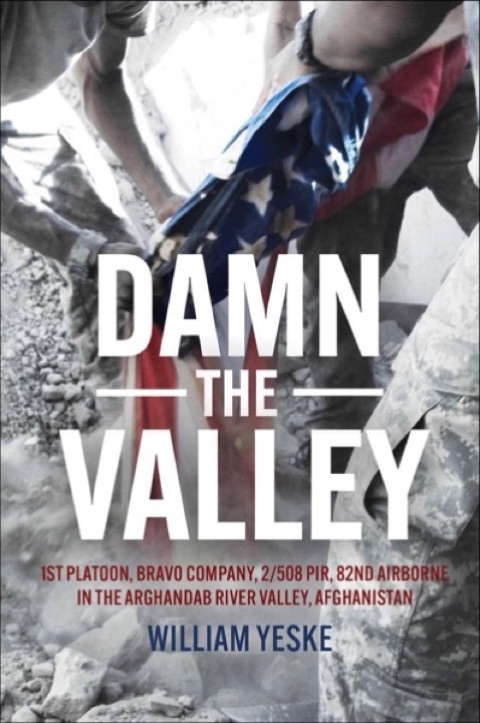
Damn the Valley: 1st Platoon, Bravo Company, 2/508 PIR, 82nd Airborne Division, 2010
Applying the lessons from "Damn the Valley" by William Yeske to your life can be a powerful catalyst for developing psychological fortitude and a deeper understanding of true leadership. Here are some ways you might integrate these lessons:
-
Cultivate Situational Awareness in High-Stakes Environments: - Just as the paratroopers had to navigate an environment where any step could be fatal, you must develop a heightened sense of awareness in your professional life. Whether in the emergency room or the boardroom, train yourself to identify the "unseen IEDs"—the hidden risks and subtle indicators of trouble—before they lead to a crisis.
-
Foster Extreme Team Cohesion: - The survival of 1st Platoon depended on absolute trust. In your ventures, move beyond mere collaboration and strive for a level of unit cohesion where every team member feels a personal responsibility for the others' success. This level of trust allows a team to function effectively even when the leader is absent or the plan falls apart.
-
Embrace the "Next Step" Mentality: - The paratroopers faced a grueling, terrifying environment by focusing on the immediate mission and the man next to them. When you are overwhelmed by the scale of a complex healthcare project or a legal challenge, break the problem down into the most immediate, actionable steps. Resilience is built by consistently taking the next right step despite fear or fatigue.
-
Lead with Transparency and Shared Sacrifice: - The most respected leaders in Yeske’s account were those who shared the risks and burdens of their men. In your leadership roles, ensure you are never asking your team to do something you aren't willing to do yourself. Authenticity in leadership is forged in the trenches, not from the safety of a distant office.
-
Prepare for the "Transition to Kinetic": - In aviation and medicine, things can go from routine to life-threatening in seconds. The soldiers in the Arghandab had to be ready to switch from a slow patrol to a high-intensity firefight instantly. You can integrate this by practicing "mental rehearsals" for worst-case scenarios, ensuring that your transition from planning to execution is seamless when a crisis hits.
-
Honor the Sacrifice of the Process: - Acknowledge that significant achievements—whether in military service, entrepreneurship, or medicine—often come at a high personal cost. Maintain humility by recognizing the contributions and sacrifices of those who supported your journey, and ensure their efforts are documented and honored within your organization’s culture.
By integrating these lessons, you will develop a more robust framework for navigating the volatility and uncertainty of high-performance fields. Like the paratroopers of the 508th PIR, your success will be defined not just by the objectives you reach, but by the character you maintain and the loyalty you inspire in those who walk the path with you.
What the book covers
"Damn the Valley: 1st Platoon, Bravo Company, 2/508 PIR, 82nd Airborne Division, 2010" by William Yeske is a raw and meticulously researched account of one of the most dangerous deployments of the Afghanistan War. The book serves as a unit history and personal memoir, focusing on the harrowing experiences of paratroopers tasked with clearing the Arghandab River Valley during the 2010 surge. Yeske provides a visceral look at the tactical, physical, and psychological toll of high-intensity counterinsurgency operations in a region infested with improvised explosive devices (IEDs) and entrenched Taliban fighters.
Summary:
-
The Arrival in the Arghandab: - The narrative begins with the 1st Platoon’s deployment to the Arghandab River Valley, a lush but lethal "Green Zone" that served as a gateway to Kandahar. The soldiers were thrust into a landscape where the dense vegetation and ancient irrigation canals provided perfect cover for an invisible enemy, forcing the paratroopers to adapt quickly to a style of warfare for which traditional training had only partially prepared them.
-
The Constant Threat of IEDs: - A central theme of the book is the overwhelming presence of IEDs, which Yeske describes as the defining feature of the Arghandab campaign. Every step outside the wire was a gamble, and the text details the agonizing tension of "stepping" into the unknown, where the ground itself was weaponized, leading to frequent catastrophic injuries and a state of constant, grinding hyper-vigilance among the men.
-
Tactical Engagements and Close Quarters Combat: - Yeske recounts specific firefights and ambushes with cinematic detail, illustrating the chaotic nature of fighting in the "Green Zone." These engagements often occurred at extremely close range, requiring split-second decision-making and a reliance on small-unit tactics that emphasized the importance of individual initiative and the cohesion of the 1st Platoon’s squads.
-
Leadership Under Extreme Duress: - The book explores the burden placed on junior leaders, including NCOs and young officers, who had to maintain morale and discipline while suffering heavy casualties. Yeske highlights how leadership in this environment meant balancing the mission's requirements with the heavy emotional weight of losing close friends and subordinates in a conflict that often felt strategically ambiguous.
-
The Medical Toll and Battlefield Medicine: - Significant portions of the narrative are dedicated to the trauma sustained by the unit and the heroic efforts of the combat medics. The book provides a sobering look at the reality of modern combat medicine, documenting the rapid response required to save lives in the aftermath of blasts and the long-term physical and psychological recovery faced by survivors.
-
The Bond of the Paratrooper: - Throughout the carnage, Yeske emphasizes the unbreakable bond between the men of Bravo Company. This "band of brothers" dynamic was the primary driver of their resilience, as they fought not for grand political goals, but for the person standing to their left and right, creating a sense of shared identity and purpose that sustained them through the darkest moments of the deployment.
-
The Long Shadow of the Surge: - The concluding sections reflect on the strategic outcomes of the deployment and the return home. Yeske grapples with the legacy of the 2/508th’s sacrifices, questioning the ultimate impact of the surge while firmly cementing the place of his fellow paratroopers in the annals of military history as men who did exactly what was asked of them in an impossible situation.
This book stands as a profound testament to the courage and sacrifice of the 82nd Airborne Division. It transcends simple military history by offering a deeply human look at the costs of war, ensuring that the names and deeds of those who fought in the Arghandab are preserved for future generations.