1776
Applying the lessons from "1776" by David McCullough to your life can be both insightful and transformative, given your rich personal experiences and values. Here are some ways you might integrate these lessons:
-
Leadership and Perseverance: - Like George Washington's leadership during the American Revolution, continue to lead with resilience and determination in your personal and professional life. Your experiences, such as overcoming near-death situations, already demonstrate a strong sense of perseverance. Use this strength to inspire others around you, whether in your family, career, or advocacy work.
-
The Role of Ordinary People: - Recognize and appreciate the contributions of those around you, just as McCullough highlights the importance of ordinary soldiers and civilians. In your advocacy work and daily interactions, continue to value and uplift the efforts of others, acknowledging that collective efforts lead to significant change.
-
Strategic Innovation: - Embrace strategic innovation and adaptability in your pursuits, much like Washington's unconventional tactics. Whether it's in your medical career, personal growth, or hobbies, be open to new approaches and ideas that can lead to success and fulfillment.
-
Unity and Division: - Navigate unity and division with empathy and understanding. Your commitment to kindness and empathy aligns with the book's theme of overcoming internal conflicts for a common goal. Apply this in your relationships and activism, striving to bridge divides and foster inclusivity.
-
The Complexity of War: - Acknowledge the complexity of challenges you face, understanding that they involve multiple facets, much like the multifaceted nature of war. Approach problems with a holistic perspective, considering not just the immediate issues but also the underlying emotions, politics, and dynamics at play.
By integrating these lessons into your life, you can continue to grow as a leader, advocate, and individual, making a positive impact on those around you and contributing to the betterment of society.
What the book covers
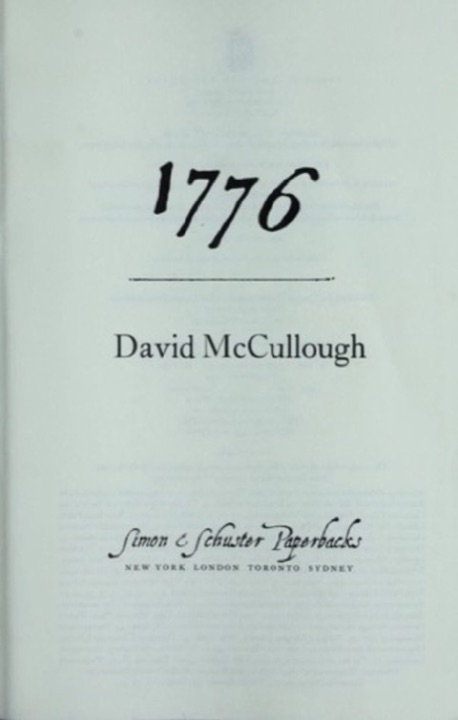
"1776" by David McCullough is a historical narrative that focuses on the pivotal year of the American Revolution. The book provides a detailed account of the events and key figures involved in the struggle for American independence, particularly highlighting the military aspects of the conflict. McCullough uses a wealth of primary sources to bring to life the experiences of both American and British participants.
Summary:
-
Setting the Stage: - The book begins with the political and social climate leading up to 1776, emphasizing the growing tensions between the American colonies and Great Britain. It highlights the challenges faced by the Continental Congress and the colonies' desire for independence.
-
Key Figures: - Central to the narrative is George Washington, whose leadership and perseverance are depicted as crucial to the American cause. McCullough also profiles other significant figures, such as King George III, General William Howe, and Nathanael Greene.
-
Military Campaigns: - The book covers several major military campaigns and battles, including the Siege of Boston, the Battle of Long Island, and the crossing of the Delaware River leading to the Battle of Trenton. McCullough provides vivid descriptions of these events, illustrating the hardships and strategic decisions faced by both sides.
-
Challenges and Hardships: - McCullough does not shy away from detailing the difficulties faced by the Continental Army, including lack of supplies, training, and morale. The book also explores the internal conflicts and differing opinions among American leaders.
-
Turning Points: - The narrative highlights key turning points in the war, such as Washington's bold decision to attack Trenton, which reinvigorated the American cause and demonstrated the potential for victory despite overwhelming odds.
-
British Perspective: - McCullough provides insight into the British perspective, detailing their strategies, challenges, and underestimations of the American resolve. This balanced view adds depth to the understanding of the conflict.
Key Takeaways and Lessons:
-
Leadership and Perseverance: - The book underscores the importance of strong leadership and perseverance in the face of adversity. Washington's ability to inspire and lead his troops through difficult times was instrumental in sustaining the revolutionary effort.
-
The Role of Ordinary People: - McCullough highlights the contributions of ordinary soldiers and civilians, emphasizing that the revolution was not just the work of famous leaders but also of countless individuals who believed in the cause.
-
Strategic Innovation: - The narrative illustrates the significance of strategic innovation and adaptability. Washington's unconventional tactics, such as the surprise attack on Trenton, were crucial in overcoming the better-equipped British forces.
-
Unity and Division: - The book explores the themes of unity and division, both within the American colonies and between the colonies and Britain. It shows how internal conflicts and differing visions for the future were navigated to achieve a common goal.
-
The Complexity of War: - McCullough presents war as a complex and multifaceted endeavor, involving not just battles and strategies but also politics, diplomacy, and human emotions. This complexity is a reminder of the multifarious nature of historical events.
In conclusion, "1776" by David McCullough offers a compelling and detailed account of a critical year in American history, providing valuable insights into the challenges and triumphs of the American Revolution. The book serves as a testament to the power of leadership, resilience, and the collective efforts of individuals striving for a common cause.