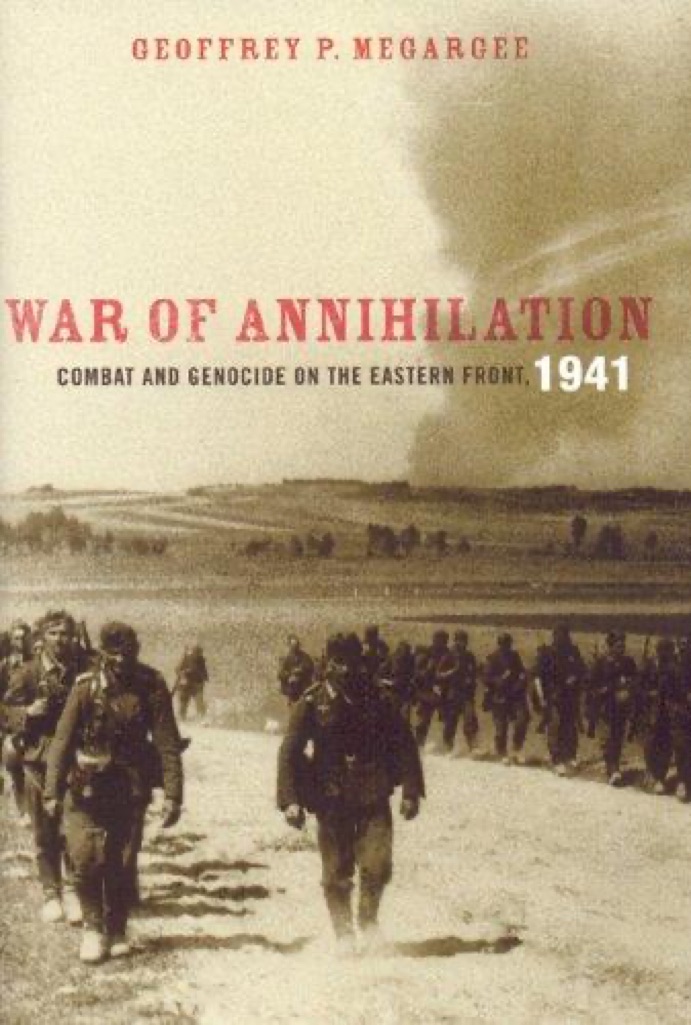
War of Annihilation: Combat and Genocide on the Eastern Front, 1941
Applying the lessons from "War of Annihilation: Combat and Genocide on the Eastern Front, 1941" by Geoffrey P. Megargee to your life can be an essential practice in maintaining ethical vigilance and strategic clarity in complex, high-pressure environments. Here are some ways you might integrate these lessons:
- Audit Your Institutional Culture for Ethical Creep: - Just as the German military’s culture was gradually eroded by radical ideology, you must remain alert to "ethical creep" in your organizations. In medicine or business, minor compromises for the sake of efficiency or growth can eventually lead to systemic failures; regularly evaluate whether your team’s culture still aligns with your core values of humility and service.
- Resist the Shield of Technical Professionalism: - Megargee demonstrates that being a "professional" is no excuse for ignoring the moral consequences of your actions. As a leader with multiple high-stakes roles, you must ensure that your specialized knowledge—whether in law, medicine, or aviation—never serves as a silo that blinds you to the broader human impact of your strategic decisions.
- Dismantle Convenient Internal Myths: - The "clean Wehrmacht" myth was a convenient lie that allowed individuals to move on without accountability. You should cultivate the courage to challenge the "convenient truths" within your own ventures—those narratives that protect the ego or the status quo but hide underlying problems that need to be addressed.
- Recognize the Peril of Dehumanizing Language: - The atrocities of 1941 were predicated on viewing others as less than human. In your professional life, be mindful of how you speak about competitors, patients, or employees; maintain the "Stay Humble" mantra to ensure everyone involved in your ecosystem is treated with inherent dignity and respect.
- Identify the Seeds of Systemic Failure in Small Actions: - The horrors of the Eastern Front began with administrative decrees and small ethical compromises. You must recognize that your response to "small" ethical dilemmas—a questionable legal loophole or a minor safety shortcut—sets the precedent for your entire organization's integrity and long-term health.
- Guard Against Hubris in Strategic Planning: - The German High Command’s failure was rooted in their arrogant underestimation of their opponent's resilience. In your role as a venture capitalist and entrepreneur, always balance your "hungry" desire for success with a realistic, evidence-based assessment of the landscape, ensuring that your biases do not obscure critical risks.
By integrating these lessons, you can ensure that your leadership is defined not just by the height of your achievements, but by the depth of your integrity, protecting your organizations from the moral rot that can accompany unchecked ambition.
What the book covers
"War of Annihilation: Combat and Genocide on the Eastern Front, 1941" by Geoffrey P. Megargee is a groundbreaking historical study that bridges the gap between traditional military history and Holocaust studies by exposing the profound complicity of the German Wehrmacht in Nazi war crimes. Megargee argues that the invasion of the Soviet Union was not a standard military operation but a coordinated effort where tactical maneuvers were inseparable from genocidal intent. Through meticulous research into primary sources and military logs, the book dismantles the postwar myth that the regular army remained untainted by the atrocities committed by the SS. Ultimately, Megargee presents a chilling portrait of a professional military establishment that became an active and essential component of the Holocaust machinery during the pivotal year of 1941.
Summary:
- The Conceptualization of the "War of Annihilation": - Megargee outlines how the planning for Operation Barbarossa was fundamentally different from previous invasions. Hitler’s vision for the East was a racial struggle for existence, and the military leadership largely accepted this framework, incorporating ideological goals into their operational orders. This blurred the lines between military necessity and racial extermination from the campaign's inception.
- The Complicity of High Command (OKH and OKW): - The book details the specific administrative steps taken by the German High Command to facilitate war crimes. Megargee highlights the drafting of the "Barbarossa Jurisdiction Decree" and the "Commissar Order," which stripped Soviet citizens and captured political officers of their rights under international law, essentially giving soldiers a license to kill without fear of prosecution.
- Logistics as a Tool of Genocide: - A significant portion of the work is dedicated to the economic and logistical planning of the invasion. Megargee explains that German planners knew their army could only be sustained by seizing food from the local population, a policy that explicitly calculated the starvation of 30 million people. This "Hunger Plan" demonstrated that the military's logistical requirements were inherently genocidal.
- The Operational Reality of the Eastern Front: - Megargee provides a day-by-day look at how combat units interacted with the Einsatzgruppen killing squads. He shows that the army did not just "look the other way" but provided these units with transport, fuel, housing, and additional manpower to carry out mass executions of Jewish populations and other groups deemed undesirable by the Reich.
- The Myth of the "Clean Wehrmacht": - One of Megargee’s most potent arguments is the deconstruction of the postwar narrative that painted German generals as honorable professionals who were "merely following orders." By examining the personal diaries and internal communications of officers, he reveals a deep-seated belief in German superiority and a willing participation in the regime's most radical policies.
- Institutional Culture and Moral Collapse: - The author explores how the institutional culture of the Prussian military tradition, with its focus on efficiency and tactical brilliance, made it vulnerable to Nazi ideology. The lack of a strong moral or legal framework outside of military duty allowed the officer corps to rationalize their participation in a war that violated every standard of human decency.
- Strategic Failure Born of Ideological Hubris: - Finally, Megargee connects the military’s ethical failures to its strategic defeat. Because the German leadership viewed the Soviets as racially inferior, they failed to account for the USSR's industrial capacity and national resolve. This ideological blind spot led to a failure to prepare for a long-term war of attrition, which eventually turned the tide against the Reich.
Geoffrey P. Megargee’s work is significant for its uncompromising look at how institutions can be corrupted when professional duty is divorced from moral accountability. By proving the military’s complicity in the Eastern Front atrocities, he challenges readers to understand how organizational systems can facilitate mass evil under the guise of necessity.