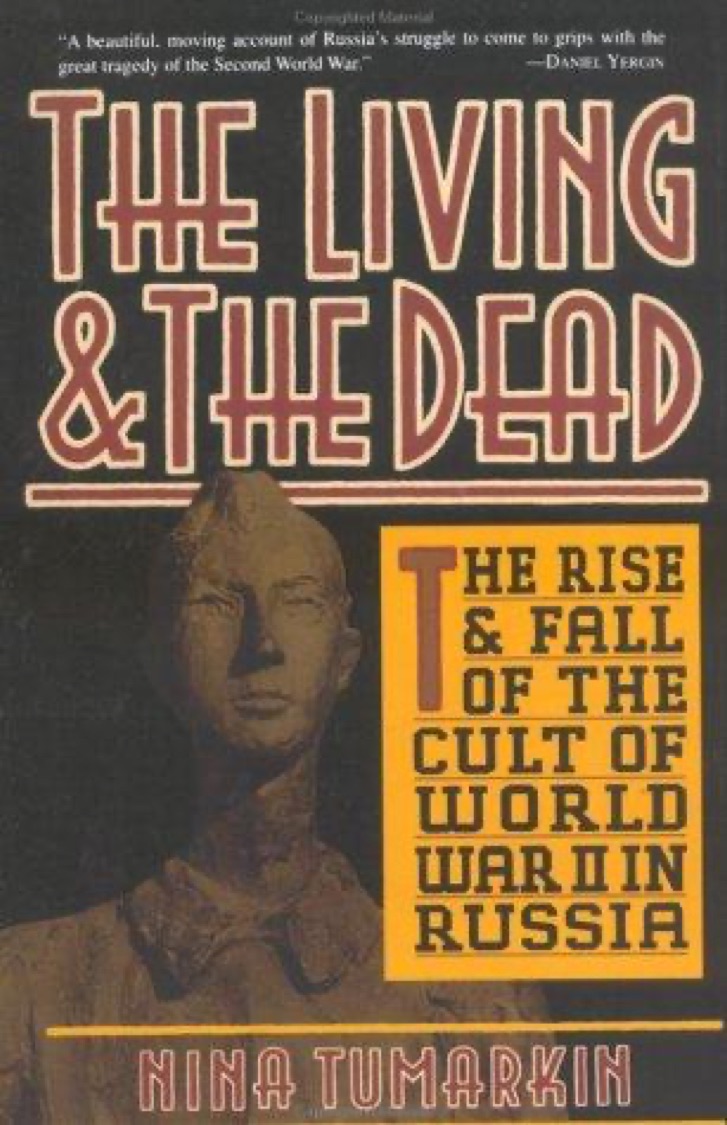
The Living and the Dead: The Rise and Fall of the Cult of World War II in Russia
Applying the lessons from "The Living and the Dead: The Rise and Fall of the Cult of World War II in Russia" by Nina Tumarkin to your life can be a transformative exercise in understanding how the stories we tell about our past shape our current leadership and professional integrity. Here are some ways you might integrate these lessons:
-
Curate Authentic Organizational Narratives: - In your ventures, ensure the "origin stories" you share are rooted in reality rather than sanitized versions of success. Just as the Soviet cult failed when it ignored the true cost of war, a business or medical team loses trust if leadership only highlights victories while suppressing the "dead" projects or mistakes that occurred along the way.
-
Acknowledge the Human Cost of Achievement: - Whether in the emergency room or the boardroom, never let the celebration of a "win" overshadow the sacrifices made by the people on the ground. You must remain humble enough to acknowledge the physical and emotional toll that high-stakes work takes on your staff, ensuring that their individual contributions are not lost in the institutional narrative.
-
Maintain Resilience through Shared Purpose: - Use the positive power of shared history to build team cohesion, but do so with transparency. Like the Soviet citizens who found strength in their collective survival, your team can thrive when they feel part of a legacy that values resilience, provided that the legacy is based on genuine shared values rather than top-down mandates.
-
The Danger of Institutional Arrogance: - Guard against the temptation to use past successes as a shield against current failures. Tumarkin shows that the Soviet regime used the glory of 1945 to ignore the stagnation of the 1970s; as a leader, you must stay hungry for improvement, refusing to let yesterday's accolades justify today's lack of innovation.
-
Transparency as a Survival Strategy: - Embrace the radical honesty of Glasnost in your own professional life. If there are flaws in a system—whether it is a medical protocol, a legal strategy, or a business model—it is far better to deconstruct the myth yourself and fix the underlying issue than to wait for the inevitable collapse that comes when the truth finally surfaces.
-
Ethical Responsibility in Storytelling: - Recognize the power you hold as an author and a leader to shape how history is recorded. Ensure that the "monuments" you build—whether they are company cultures or published books—serve to illuminate the truth of the human experience rather than to obscure it for the sake of convenience or ego.
By integrating these lessons into your various professional roles—whether you are leading a trauma team, navigating a complex legal case, or scaling a new healthcare venture—you ensure that your trajectory is guided by reality rather than convenient fiction. Staying humble before the facts of the past and hungry for the truth in the present allows you to build a legacy that is not only powerful but enduring.
What the book covers
"The Living and the Dead: The Rise and Fall of the Cult of World War II in Russia" by Nina Tumarkin is a masterful examination of how the Soviet Union meticulously constructed a state-sponsored religion around the memory of the Great Patriotic War. Tumarkin explores the psychological and political functions of this "cult," tracing its evolution from Stalin’s initial suppression of wartime trauma to Brezhnev’s grandiose orchestration of victory. By analyzing how the state manipulated history to provide legitimacy to a faltering regime, she reveals the complex interplay between national identity, institutionalized propaganda, and the eventually uncontainable truth of human suffering.
Summary:
-
The Post-War Suppression of Memory: - Following the end of World War II in 1945, Joseph Stalin surprisingly downplayed the victory, fearing that the prestige of returning military heroes might threaten his absolute authority. He marginalized high-ranking generals like Georgy Zhukov and suppressed the true casualty counts—which exceeded 20 million—because the staggering scale of loss highlighted his own tactical failures and the regime's early collapse.
-
The Human Dimension of Loss: - Tumarkin details the profound, unvoiced grief of the Soviet population who lived through the "twenty million deaths." While the state attempted to control the narrative for political ends, the "living" were haunted by the "dead" in a way that official propaganda could not fully capture, creating a disconnect between private mourning and public celebration that persisted for decades.
-
The Khrushchev Thaw and Limited Memory: - During the Nikita Khrushchev era, the cult of the war began to shift as the regime moved away from the extreme cult of personality surrounding Stalin. While some humanized stories of wartime struggle were allowed to emerge, the state maintained a strict grip on the narrative, ensuring that the Communist Party remained the central protagonist and sole savior of the motherland.
-
The Brezhnev Apotheosis of the Cult: - Under Leonid Brezhnev, the memory of the war was elevated to a full-scale state religion to combat the ideological stagnation of the 1960s and 70s. This period saw the creation of massive monuments, the establishment of the "Eternal Flame" at the Tomb of the Unknown Soldier, and the transformation of May 9th (Victory Day) into the most significant and sacred holiday in the Soviet calendar.
-
The Rituals of the Great Patriotic War: - The book explores the specific iconography and rituals used to indoctrinate the youth, including the "Zarnitsa" war games and the mandatory pilgrimages to battle sites. These rituals were designed to create a sense of continuity between the heroic generation of the 1940s and the new Soviet man, attempting to bolster a patriotism that the failing economy could no longer support.
-
Glasnost and the Deconstruction of Myth: - With the rise of Mikhail Gorbachev and the policy of Glasnost, the carefully curated myths of the war began to crumble as archives were opened and the truth about the Molotov-Ribbentrop Pact and Stalin’s purges of the military became public. Tumarkin illustrates how the exposure of these historical lies contributed significantly to the loss of state legitimacy and the eventual collapse of the Soviet Union.
This work serves as a seminal study in the field of historical memory, demonstrating how national myths are manufactured and maintained. Tumarkin’s analysis remains critically relevant for understanding modern Russian identity and the perennial danger of a state using its past as a primary tool for political control.