1434
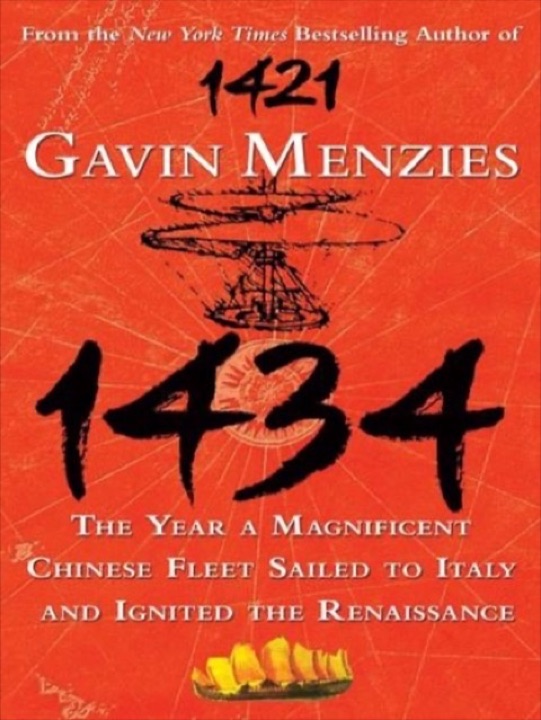
Applying the lessons from "1434: The Year a Magnificent Chinese Fleet Sailed to Italy and Ignited the Renaissance" by Gavin Menzies to your life can be an enriching experience, especially given your diverse interests and values. Here are some ways you might integrate the book's themes into your life:
-
Reevaluation of History and Personal Narratives: - Just as Menzies challenges established historical narratives, consider reevaluating your personal history and experiences. Reflect on how your past, including your near-death experiences and upbringing, has shaped your current beliefs and values. This might help you gain new insights or perspectives on your life journey.
-
Embrace Global Interconnectedness: - The book emphasizes cross-cultural exchanges and their impact on significant historical events. In your life, this could translate to embracing diverse perspectives and experiences. Whether through travel, reading, or engaging with different cultures, you can continue to expand your understanding of the world and foster a sense of global interconnectedness.
-
Critical Analysis and Open-mindedness: - Menzies' work encourages critical thinking and questioning established beliefs. Apply this mindset to your daily life by remaining open to new ideas and perspectives, even if they challenge your current understanding. This approach aligns with your philosophy of being a lifelong learner and maintaining strong convictions loosely held.
-
Persistence and Resilience: - The book's controversial nature highlights the importance of persistence in the face of skepticism. Your personal philosophy of "never, ever quit" and your resilience in overcoming challenges resonate with this theme. Continue to apply your persistence to achieve your goals and aspirations, such as living in the moment or pursuing skydiving.
-
Cross-cultural Influence and Innovation: - Just as the book suggests that Chinese innovations influenced the Renaissance, consider how you can incorporate diverse influences into your own life and work. Whether in your medical career, personal relationships, or hobbies, seek out innovative ideas and practices from different cultures to enhance your approach.
-
Fostering Debate and Growth: - The controversy surrounding Menzies' claims has stimulated debate and further research. Similarly, engage in discussions and debates that challenge your viewpoints, as this can lead to personal growth and a deeper understanding of complex issues. Your direct and humorous communication style can facilitate these conversations.
By applying these lessons, you can continue to grow and evolve, both personally and professionally, while staying true to your core values of kindness, empathy, and resilience.
What the book covers
"1434: The Year a Magnificent Chinese Fleet Sailed to Italy and Ignited the Renaissance" by Gavin Menzies is a controversial historical book that builds on the author's earlier work, "1421: The Year China Discovered America." In "1434," Menzies argues that a Chinese fleet, led by Admiral Zheng He, sailed to Italy in 1434 and brought with them a wealth of knowledge and technological advancements that sparked the European Renaissance.
Summary:
-
Premise and Thesis: - Menzies posits that the Renaissance, traditionally believed to have been sparked by the rediscovery of classical Greek and Roman knowledge, was significantly influenced by Chinese innovations and ideas. He suggests that the Chinese fleet reached Italy and shared their advanced knowledge with European scholars.
-
The Chinese Fleet: - The book describes the voyages of the Chinese treasure fleets under Admiral Zheng He, emphasizing their size, technological sophistication, and the scope of their explorations. Menzies claims that one of these fleets reached the Mediterranean.
-
Transmission of Knowledge: - Menzies argues that the Chinese shared a comprehensive map of the world and various technological and scientific advancements with the Europeans. This included knowledge in fields such as astronomy, mathematics, cartography, and engineering.
-
Impact on the Renaissance: - The book suggests that this influx of knowledge was a catalyst for the Renaissance, influencing figures such as Leonardo da Vinci and Galileo. Menzies claims that many Renaissance innovations can be traced back to Chinese origins.
-
Evidence and Controversy: - Menzies presents various pieces of evidence, including maps, documents, and accounts of Chinese inventions. However, his claims have been met with skepticism and criticism from historians and scholars, who argue that his evidence is speculative and lacks solid historical backing.
Key Takeaways and Lessons:
- Reevaluation of History:
-
Menzies' work encourages readers to question established historical narratives and consider the possibility of alternative influences and connections between cultures.
-
Global Interconnectedness:
-
The book highlights the potential for cross-cultural exchanges to shape significant historical events, emphasizing the interconnectedness of global civilizations.
-
Critical Analysis:
-
Readers are reminded of the importance of critically analyzing historical claims and the need for rigorous evidence to support new theories.
-
Controversy and Debate:
- The book serves as a case study in how controversial ideas can stimulate debate and further research, even if they are not widely accepted.
Overall, "1434" presents a provocative thesis that challenges conventional views of the Renaissance's origins, though it remains a subject of significant debate within the historical community.