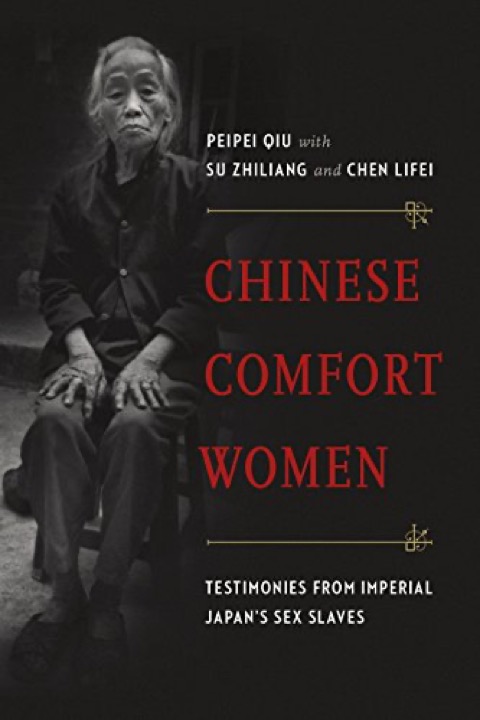
Chinese Comfort Women: Testimonies from Imperial Japan's Sex Slaves
Applying the lessons from "Chinese Comfort Women: Testimonies from Imperial Japan's Sex Slaves" by Peipei Qiu, Chen Lifei, and Su Zhiliang to your life can be a sobering yet transformative exercise in developing radical empathy and a commitment to institutional integrity. Here are some ways you might integrate these lessons:
- Advocate for the Invisible and Silenced: - As an attorney and a leader, you must recognize that history and large systems often overlook the voices of the most marginalized. You should use your influence to amplify the narratives of those who have been silenced by institutional power, ensuring that your ventures and legal practices prioritize the protection and representation of the vulnerable over the convenience of the powerful.
- Implement Trauma-Informed Leadership: - In your medical and entrepreneurial roles, it is essential to understand that people carry hidden histories of trauma that affect their behavior and well-being. By adopting a trauma-informed approach, you can lead with greater empathy, creating environments in healthcare and business that foster safety, trust, and psychological security for employees and patients alike.
- Uphold Truth as a Non-Negotiable Pillar: - Whether you are writing a book or leading a venture capital firm, you must maintain an unwavering commitment to factual integrity, even when the truth is uncomfortable or challenges established hierarchies. Integrating this means being the person in the room who refuses to accept revisionist narratives, ensuring that every project you back is built on a foundation of honesty and historical awareness.
- Harness the Power of Resilience and Humility: - The survivors depicted in this book exemplify your mantra of "Stay Hungry, Stay Humble" through their relentless pursuit of justice and their quiet, enduring strength. You can apply this by approaching your own professional challenges with a sense of perspective, remaining hungry for progress while staying humble enough to learn from the profound endurance of those who have survived far greater trials.
- Promote Systematic Ethical Oversight: - Your experience in aviation and healthcare management underscores the importance of checklists and protocols to prevent catastrophe. Applying these lessons means creating "ethical checklists" for your organizations to ensure that no part of the operation—no matter how small—is allowed to drift into exploitative or dehumanizing territory, thereby maintaining the moral health of the entire enterprise.
By integrating these lessons, you will deepen your capacity for compassionate leadership and fortify your resolve to build enterprises that are as ethically sound as they are innovative. This book serves as a reminder that the greatest measure of success is how we treat and protect those who are most at risk within the systems we create and manage.
What the book covers
"Chinese Comfort Women: Testimonies from Imperial Japan's Sex Slaves" by Peipei Qiu, Chen Lifei, and Su Zhiliang is a profound and harrowing historical documentation of the state-sponsored system of sexual slavery established by the Imperial Japanese Army during the Second Sino-Japanese War. This seminal work moves beyond traditional military history to provide an intimate, survivor-centered account of the atrocities committed against tens of thousands of Chinese women. By synthesizing archival research with deeply personal oral testimonies, the authors expose a long-veiled chapter of wartime violence and human rights abuses that remained suppressed for over half a century.
Summary:
- The Institutionalization of Sexual Slavery: - The authors provide a detailed analysis of how the Imperial Japanese Army (IJA) developed a formalized infrastructure of "comfort stations" throughout occupied Chinese territories. Unlike previous studies that focused primarily on Korean women, this research illuminates how the IJA utilized direct abduction, military force, and the cooperation of local puppet regimes to enslave Chinese women, revealing a system that was as logistically complex as any other wing of the military operation.
- Patterns of Recruitment and Violent Abduction: - Through survivor testimonies, the book documents the terrifying methods used to procure victims, which included violent military raids on villages and the kidnapping of women from their homes. These accounts dismantle the myth of voluntary participation, showing that the majority of Chinese victims were captured during combat operations or seized as "spoils of war," often enduring horrific initial assaults before being transported to permanent or semi-permanent stations.
- Daily Life and the Architecture of Abuse: - The core of the book consists of visceral descriptions of life within the comfort stations, where women were subjected to dozens of rapes per day and lived under constant threat of physical violence. The narrative highlights the dehumanizing nature of the system, where victims were treated as military supplies, subjected to mandatory medical inspections only to prevent the spread of disease to soldiers, and denied any form of agency or basic human dignity.
- The Intersection of Gender and Colonial Violence: - Qiu and her co-authors explore how the intersection of Japanese imperial ideology and patriarchal social structures facilitated this specific form of violence. They argue that the sexual enslavement of Chinese women was not an accidental byproduct of war but a calculated tool of colonial domination intended to break the spirit of the occupied population and maintain military morale at the expense of women’s bodies and lives.
- Post-War Survival and the Burden of Silence: - The book provides a poignant look at the lives of survivors after 1945, many of whom faced lifelong physical ailments, psychological trauma, and infertility. Furthermore, the authors discuss the "secondary victimization" caused by the deep-seated social stigma surrounding sexual assault in post-war China, which forced many survivors into decades of silence and prevented them from seeking medical help or public recognition of their suffering.
- The Quest for Accountability and Historical Justice: - The final section chronicles the emergence of the survivors' movement in the 1990s and the ongoing legal and political battle for an official apology and compensation from the Japanese government. It emphasizes the critical role played by "truth-telling" in the healing process and the global importance of establishing a factual record that resists the efforts of historical revisionists who seek to downplay or deny the scale of these war crimes.
"Chinese Comfort Women" is a monumental achievement in oral history that refuses to let the atrocities of the past be forgotten. By centering the narratives of the victims, Qiu and her co-authors provide a profound lesson on the necessity of historical accountability and the enduring power of the human spirit to seek justice against all odds.