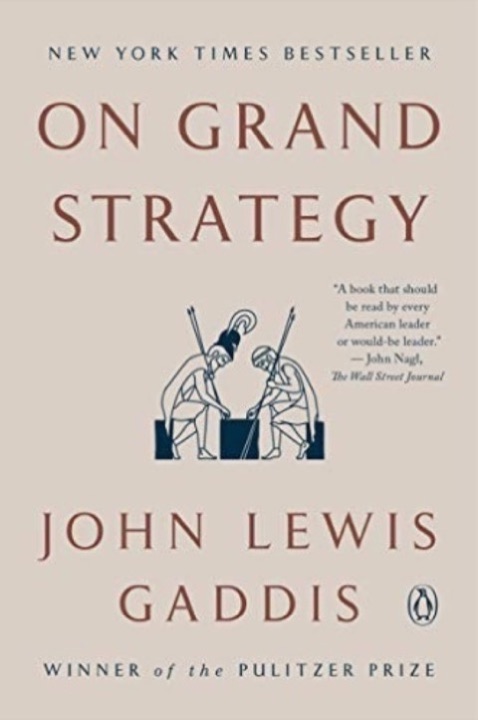
On Grand Strategy
Applying the lessons from "On Grand Strategy" by John Lewis Gaddis to your life can enhance your ability to navigate complex challenges and align your aspirations with your capabilities. Here are some ways you might integrate these lessons:
-
Balance Between Ends and Means: - Reflect on your aspirations and assess whether your resources and capabilities align with them. For instance, if you aim to live to 130 while retaining your mind and body, consider how your current lifestyle supports this goal and what adjustments might be necessary.
-
Adaptability and Flexibility: - Embrace change and be open to revising your plans as new information arises. Your experiences with near-death situations have already shown your resilience; continue to apply this adaptability in other areas of your life, such as your advocacy work or personal relationships.
-
Learning from History: - Use your love for reading and history to draw lessons from past successes and failures. This can inform your decisions, whether in your career, activism, or personal life. Consider how historical figures you admire, like Winston Churchill, approached challenges with resilience and humor.
-
Integration of Diverse Perspectives: - Continue to engage with diverse viewpoints and disciplines. Your interest in philosophers like Marcus Aurelius and Socrates can provide valuable insights into strategic thinking and decision-making.
-
The Importance of Education: - As a lifelong learner, prioritize education and personal growth. Your daily routine already reflects this commitment, but consider exploring new areas of interest, such as skydiving, to broaden your horizons.
-
Strategic Patience: - Practice patience in pursuing long-term goals. Whether it's advocating for social issues or achieving personal aspirations like living in the moment, remember that enduring objectives often require time and persistence.
By applying these principles, you can enhance your strategic thinking and decision-making, helping you navigate life's challenges with greater clarity and purpose.
What the book covers
"On Grand Strategy" by John Lewis Gaddis is a comprehensive exploration of the concept of grand strategy, drawing on historical examples and philosophical insights to illuminate how leaders have navigated complex challenges throughout history. Gaddis, a renowned historian and professor of military and naval history, examines the principles and practices that have shaped successful strategies, offering readers a deep understanding of what it means to think strategically on a grand scale.
Summary:
-
Introduction to Grand Strategy: - Gaddis begins by defining grand strategy as the alignment of potentially unlimited aspirations with necessarily limited capabilities. He emphasizes the importance of balancing ends and means, a theme that recurs throughout the book.
-
Historical Case Studies: - The book is structured around a series of historical case studies, ranging from ancient times to the modern era. Gaddis examines figures such as Xerxes, Augustus, Elizabeth I, and Lincoln, analyzing how they crafted and executed grand strategies. - Each case study highlights different aspects of strategic thinking, such as the importance of adaptability, foresight, and the ability to learn from failure.
-
Philosophical Underpinnings: - Gaddis draws on the works of philosophers like Isaiah Berlin, particularly his distinction between "hedgehogs" and "foxes." Hedgehogs focus on a single, overarching idea, while foxes pursue multiple, sometimes conflicting goals. Gaddis argues that successful strategists often embody the qualities of both. - The book also references classical thinkers like Sun Tzu and Clausewitz, integrating their insights into the broader discussion of strategy.
-
The Role of Education and Experience: - Gaddis underscores the importance of education and experience in developing strategic acumen. He suggests that studying history and engaging with diverse perspectives can enhance one's ability to think strategically.
-
Modern Implications: - The latter part of the book addresses the relevance of grand strategy in contemporary contexts, including politics, business, and personal life. Gaddis argues that the principles of grand strategy are timeless and can be applied to various domains.
Key Takeaways and Lessons:
-
Balance Between Ends and Means: - A successful grand strategy requires a careful balance between ambitions and available resources. Overreaching can lead to failure, while underutilizing resources can result in missed opportunities.
-
Adaptability and Flexibility: - The ability to adapt to changing circumstances is crucial. Leaders must be willing to revise their strategies in response to new information and evolving conditions.
-
Learning from History: - Historical examples provide valuable lessons for contemporary strategists. By studying past successes and failures, leaders can gain insights into effective strategic thinking.
-
Integration of Diverse Perspectives: - Effective strategists draw on a wide range of perspectives and disciplines. This diversity of thought can lead to more innovative and resilient strategies.
-
The Importance of Education: - A broad and deep education, particularly in the humanities and history, is essential for developing strategic thinking skills. Understanding human nature and historical patterns can inform better decision-making.
-
Strategic Patience: - Grand strategy often requires patience and the ability to think long-term. Immediate gains should not overshadow the pursuit of enduring objectives.
In "On Grand Strategy," John Lewis Gaddis provides a rich tapestry of historical analysis and philosophical reflection, offering readers a profound understanding of what it means to think and act strategically. The book serves as both a guide and a cautionary tale for leaders seeking to navigate the complexities of their own grand challenges.