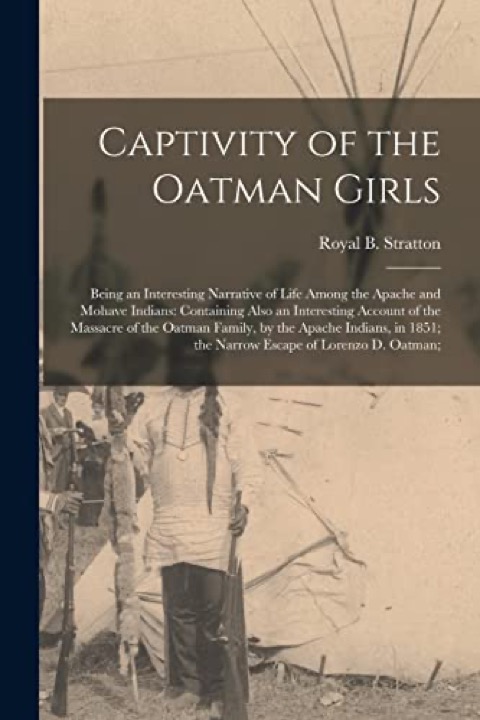
Captivity of the Oatman Girls: Being an Interesting Narrative of Life Among the Apache and Mohave Indians
Applying the lessons from "Captivity of the Oatman Girls" by Royal B. Stratton to your life can be a sobering exercise in understanding the limits of human endurance and the complexities of identity in the face of total loss. Here are some ways you might integrate these lessons:
-
Build Resilience Before the Crisis: - Just as Olive Oatman had to rely on an internal reservoir of strength during her five-year ordeal, you must cultivate mental and spiritual fortitude during times of peace. In the high-stakes environments of medicine or entrepreneurship, your ability to withstand a "worst-case scenario" depends on the psychological habits you establish long before the crisis hits.
-
Practice Strategic Adaptability: - Olive survived because she was able to adapt to two radically different tribal cultures while maintaining her core will to live. When your business model or professional environment shifts unexpectedly, you must be willing to learn the new "language" and customs of that environment without losing your foundational identity.
-
Understand the Risk of Isolation: - The Oatman family’s tragedy was largely a result of their decision to break away from the larger wagon train and travel through hostile territory alone. Whether in law, aviation, or venture capital, this serves as a reminder of the danger of "solo missions" and the vital importance of having a support network and conducting thorough risk assessments.
-
Take Control of Your Own Narrative: - Olive’s story was filtered through Stratton’s Victorian biases, often misrepresenting her experiences for public consumption. As a leader and an author, you must ensure that you are the primary architect of your own story, being transparent about your "tattoos"—the marks of your past struggles—rather than letting others define their meaning for you.
-
Find Humanity in the "Other": - Despite the trauma of her capture, Olive found a mother figure in the Mohave woman Aspan. You should strive to look past superficial or cultural divides to find allies in unlikely places, recognizing that empathy is a powerful tool for survival and growth even in adversarial conditions.
-
Value Persistence Over Speed: - The rescue of Olive was not a sudden event but the result of years of persistence by her brother Lorenzo and the messenger Francisco. In any long-term venture, success often goes to those who refuse to stop searching for a solution, even when the trail appears to have gone cold.
By integrating these lessons, you develop a more profound appreciation for the tenacity of the human spirit and the importance of community and caution in the pursuit of ambitious goals. Olive Oatman’s life teaches us that while we cannot always control the tragedies that mark us, we can control how we endure them and the integrity with which we return to tell the story.
What the book covers
"Captivity of the Oatman Girls: Being an Interesting Narrative of Life Among the Apache and Mohave Indians" by Royal B. Stratton is a gripping and historically significant account of the 1851 massacre of the Oatman family and the subsequent five-year captivity of Olive and Mary Ann Oatman. Written by a Methodist minister based on Olive’s own recollections, the book serves as a primary source for understanding the perils of the American westward expansion and the cultural clashes of the mid-19th century. It documents a harrowing journey of loss, survival, and the eventual return of a woman who had become physically and culturally marked by her captors.
Summary:
-
The Ill-Fated Migration: - The Oatman family, led by Royce Oatman, were members of a splinter group of Mormons known as Brewsterites who left Illinois for the "Land of Bashan" at the mouth of the Colorado River. Driven by religious conviction but plagued by internal disputes and poor planning, the family eventually found themselves traveling alone through the dangerous Gila River valley in present-day Arizona.
-
The Massacre at the Gila River: - In February 1851, the family was approached by a group of Tonto Apaches who initially asked for food before launching a brutal attack. Most of the family members were clubbed to death; however, fourteen-year-old Olive and seven-year-old Mary Ann were taken captive, while their brother Lorenzo, left for dead, miraculously survived to seek help from westward travelers.
-
Early Enslavement by the Apache: - The girls were forced on a grueling march to the Apache mountain strongholds where they lived for approximately one year. Their lives were characterized by extreme physical labor, frequent beatings, and near-starvation, as they were treated as low-status slaves within the tribe and forced to perform menial tasks under constant threat.
-
Trade to the Mohave Nation: - In 1852, the girls were traded to the Mohave tribe in exchange for blankets, beads, and horses. The Mohave treated the sisters with significantly more humanity; they were taken into the household of a chieftain named Kohot and his wife Aspan, who provided them with their own plot of land to farm and offered a degree of protection and emotional support.
-
The Blue Chin Tattoo: - During their time with the Mohave, both sisters were given traditional blue tattoos on their chins and arms, a practice common among tribal women. While Stratton’s narrative later framed these as marks of slavery to appease Victorian readers, modern scholarship suggests the tattoos were likely signs of tribal belonging and a means to ensure they would be recognized as Mohave in the afterlife.
-
The Death of Mary Ann: - A severe regional drought led to a catastrophic famine that decimated the Mohave population. Despite the efforts of their adoptive Mohave family to share what little food remained, young Mary Ann succumbed to starvation, leaving Olive as the sole survivor of the initial capture and forcing her to find the internal strength to continue without her last family connection.
-
The Ransom and Release: - News of a "white woman with blue tattoos" eventually reached Fort Yuma, leading to a rescue effort spearheaded by a Yuman messenger named Francisco. After intense negotiations and the threat of military intervention, Olive was ransomed for blankets and beads in 1856 and brought to the fort, where she was eventually reunited with her brother Lorenzo.
-
Post-Captivity Life and Narrative Bias: - Upon her return, Olive’s story became a national sensation, and Stratton penned this account to raise funds for the surviving siblings' education. The text is heavily influenced by the era's prejudices, portraying the indigenous tribes in a villainous light and emphasizing Olive’s "salvation," though her later life suggested a complex psychological bond with her Mohave years.
This work remains a cornerstone of the American captivity narrative genre, illustrating the brutal realities of the frontier. It serves as a vital record of the human capacity for endurance and the profound, often traumatic, ways that different cultures collided during the era of Manifest Destiny.